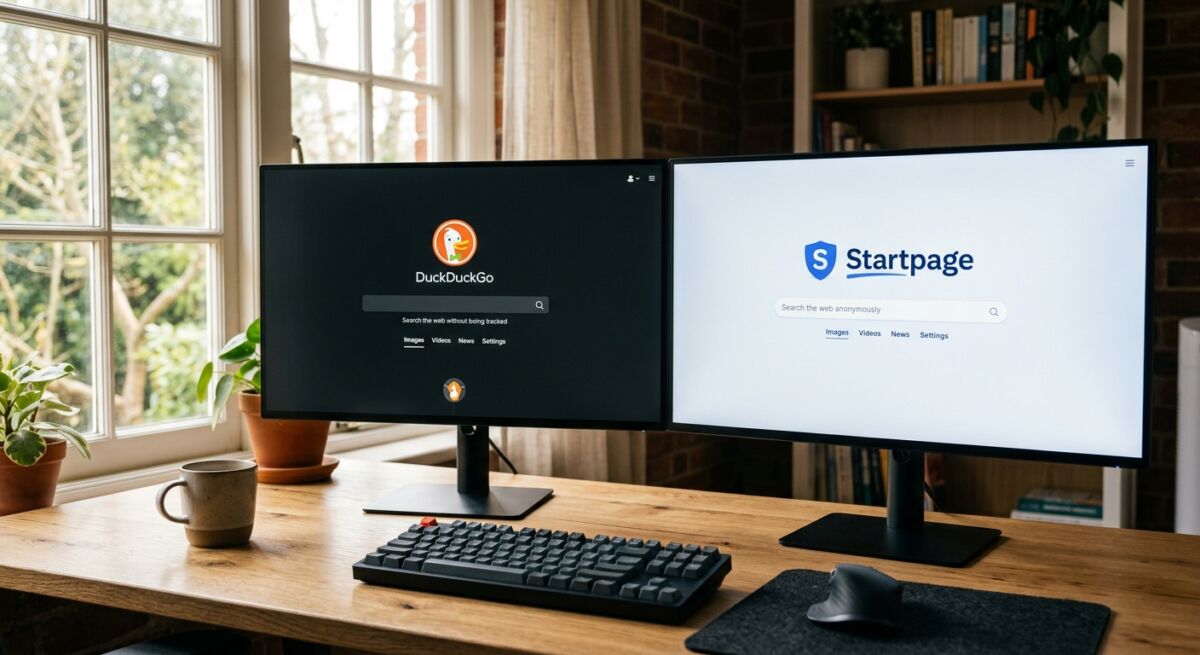
Discover the 9 best AI powered search engines for research in 2026. Get accurate facts, scientific citations, and data summaries faster than ever before.
Stop Scrolling Through Blue Links
Finding accurate data used to take hours of manual digging. You would type a query, click five links, and hope one of them wasn’t a sales pitch. But things changed. In April 2026, research is no longer about finding links. It is about getting answers. If you are still relying on traditional search for deep research, you are wasting time. You are also likely missing the best data.

At Infineural Technologies, we have seen how these tools change the game for marketers and analysts. Do you want to find a specific statistic from a 2025 whitepaper in seconds? Or do you want to compare three different market theories without opening 20 tabs? That is what the top AI powered search engines for research do for you today. They do the heavy lifting of reading, and you do the high-level thinking.
1. Perplexity AI: The Gold Standard for Citations
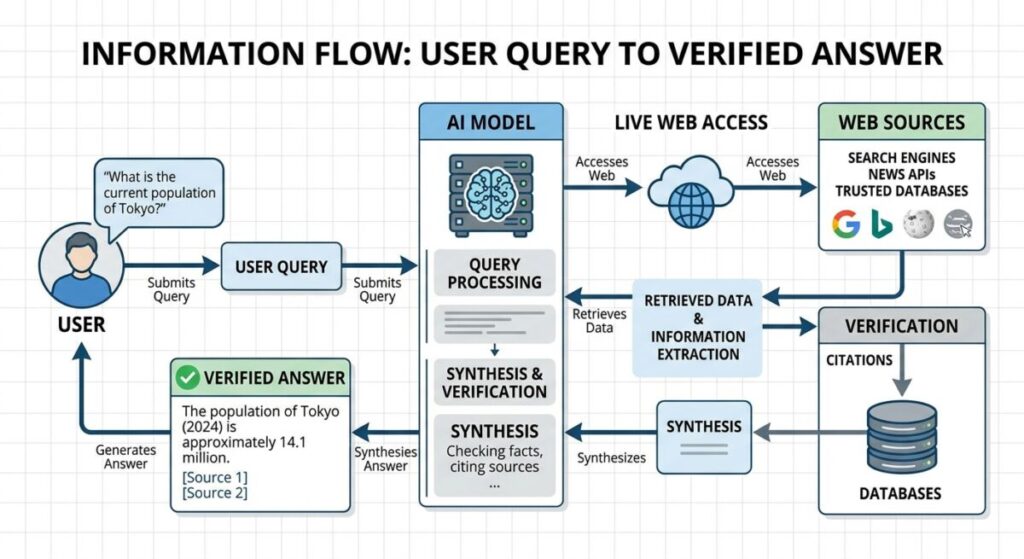
Perplexity is still the king of research in 2026. Why? Because it tells you exactly where it got its information. Most AI tools just give you a paragraph and hope you believe it. Perplexity acts like a research assistant that shows its work. It uses a combination of advanced models to scan the live web and summarize findings with footnotes.
And here is the best part. You can follow up. If you ask about 2026 search trends, it gives you a summary. But then you can ask, “What about the impact on mobile users?” It keeps the context. It feels like a conversation with a person who has read the entire internet. For those looking for a broader view of the market, check out our Top Search Engines List: 12 Best Platforms for Traffic (2026) to see how Perplexity fits into the bigger picture.
2. Google Search Generative Experience (SGE)
Google didn’t stay behind. By now, in early 2026, Gemini is baked into every search result. When you search for complex topics, Google gives you an AI overview at the very top. It is fast and integrates with your Google Workspace. If you find a data point, you can move it straight into a Google Doc or a Sheet with one click.
But be careful. Google still prioritizes its own ecosystem. While it is great for general facts, it might not go as deep into academic papers as specialized tools. In our work, we find it best for quick verification of current events or broad industry stats. It is the most convenient tool, but is it the most accurate? Usually, yes, but always check those citations.
3. Consensus: The Scientific Powerhouse
Are you looking for peer-reviewed evidence? This is where Consensus wins. It is one of the best AI powered search engines for research when you need scientific backing. It doesn’t just search the web; it searches millions of research papers. If you ask, “Does caffeine improve memory?” it won’t give you a blog post. It will give you a consensus of what the actual studies say.
This is essential for anyone writing whitepapers or technical guides. It removes the fluff. You get the data, the sample size, and the conclusion. If you need more options for scholarly work, you should see our list of 10 Best Academic Search Engines Beyond Google Scholar (2026). Using these tools ensures your content has actual authority, not just AI-generated opinions.
4. SearchGPT by OpenAI
OpenAI changed search forever when they fully released SearchGPT. By April 2026, it has become a primary tool for people who want a clean, ad-free experience. It doesn’t feel like a search engine. It feels like a smart interface. It visualizes data better than almost any other tool. If you ask for a comparison of 2026 GPU prices, it builds a table for you automatically.
The speed is the real draw here. It uses a specialized version of GPT-5 (or its latest iteration) to process information in real-time. You get a direct answer with clear links to the source. But here is a tip: always check if the source is behind a paywall. Sometimes SearchGPT can summarize the content, but you might need a subscription to see the full context of the original source.
5. Elicit: The Automated Research Assistant
In 2026, Elicit has evolved from a simple paper finder to a full-scale automated research assistant. While tools like Perplexity provide quick answers, Elicit is built for the heavy lifting of systematic reviews. It uses advanced language models to scan over 200 million papers, but its true power lies in data extraction. If you provide a set of 50 PDFs, Elicit can build a table summarizing the methodology, sample size, and outcomes of every single one in under a minute.
Why Researchers Prefer Elicit in 2026
- Data Extraction: It doesn’t just read; it organizes. It identifies variables across multiple studies simultaneously.
- Custom Columns: You can define specific attributes you want to find, such as ‘geographic focus’ or ‘funding source.’
- Synthesis: It provides a high-level synthesis of what the top papers say about a specific hypothesis.
For those performing high-level industry analysis, this tool is indispensable. It bridges the gap between a standard search and a full academic literature review. If you are a student or a technical writer, using Elicit alongside our recommended 10 best academic search engines beyond Google Scholar will give you a significant edge in data accuracy.
6. You.com: The Multi-Modal Search Interface
You.com has carved out a niche in 2026 by focusing on customization and multi-modal results. Unlike the rigid structure of Google SGE, You.com allows researchers to toggle between different ‘modes’ such as Research, Genius, and Create. This flexibility is vital when you need to switch from finding a hard fact to generating a visual representation of that fact.
The Power of Custom Search Engines
One of the standout features is the ability to follow specific ‘apps’ within the search results. If you only want data from Reddit, GitHub, or Stack Overflow, You.com prioritizes those sources without cluttering the interface with general web fluff. This is particularly useful for technical research. For instance, developers often use it as one of the best search engines for developers to find code snippets because it indexes documentation more cleanly than traditional engines.
By 2026, You.com has also integrated advanced privacy features, making it a top choice for corporate researchers who cannot risk their queries being used to train public models. If privacy is your primary concern, you might also want to compare it against our list of best private search engines that don’t track data.
7. You.com: The Customized Search Assistant
Do you want to control which sources your AI trusts? You.com lets you do that. It is a highly customizable search experience. You can tell it to prioritize Reddit for community opinions or Stack Overflow for coding help. In 2026, this level of control is vital. It prevents the AI from getting stuck in a loop of the same three major news sites.
We often use You.com when we need a mix of technical data and user sentiment. It bridges the gap between “What is the official stat?” and “What are people actually saying?” This is a great way to get a balanced view for market research. If privacy is your main concern while using these tools, look into the Best Private Search Engines That Don’t Track Data (2026).
8. Phind: Research for the Technical Mind
If your research involves code, software, or technical engineering, Phind is the answer. It is optimized for developers. Most search engines struggle with technical documentation. They give you outdated tutorials. Phind stays current with the latest 2026 API changes and library updates. It explains the “why” behind the technical data, which is a massive time-saver.
Think of it as a senior engineer who has memorized every documentation page on the web. It doesn’t just give you a snippet; it explains how to implement it. This is a perfect example of how AI search is moving away from general answers and toward niche expertise.
9. Elicit: The AI Research Assistant
Elicit is similar to Consensus but focuses more on the workflow of research. It helps you find papers, but it also helps you extract data from them. If you have 50 PDFs to read, Elicit can summarize the main findings across all of them at once. It is a massive productivity booster for 2026. Why spend a week reading when you can get the summary in ten minutes?
It uses language models to answer questions based strictly on the papers it finds. This reduces hallucinations significantly. If the answer isn’t in the data, Elicit often tells you it couldn’t find it. That honesty is what makes it a trusted tool for serious researchers.
How to Choose the Right Tool for Your Project
Which one should you use? It depends on your goal. Are you writing a quick blog post? Go with Perplexity or SearchGPT. Are you writing a deep industry report with 2026 statistics? Use Consensus or Elicit. The key is to use more than one. In our testing at Infineural Technologies, we found that cross-referencing AI results is the only way to ensure 100% accuracy.
Never take the first answer as the absolute truth. AI search is powerful, but it is still a tool. You are the expert. Use these engines to find the raw materials, then use your brain to build the house. That is how you win in 2026.
FAQ: AI Search Engines in 2026
What is the best AI search engine for cited research? Perplexity AI is widely considered the best for citations because it provides clear footnotes for every claim. It allows users to verify sources instantly without leaving the chat interface.
Is Google Search still relevant for research in 2026? Yes, Google remains relevant because it indexes the most content and integrates with productivity tools. Its Gemini-powered summaries provide quick answers for general queries.
Are AI search engines accurate for scientific data? Specialized tools like Consensus and Elicit are highly accurate as they only pull from peer-reviewed journals. General AI tools can sometimes hallucinate, so they require more verification.
Can I use AI search engines for free? Most top AI search engines offer a free tier with daily limits on advanced models. Premium versions usually provide unlimited searches and access to more powerful reasoning engines.
How does SearchGPT differ from ChatGPT? SearchGPT is specifically designed for real-time web browsing and information retrieval with citations. Standard ChatGPT focuses more on creative writing and general logic without always checking the live web.
Do AI search engines track my data? Many AI search engines track queries to improve their models, but some prioritize privacy. If you are concerned, look for tools with “incognito” modes or dedicated privacy-first AI platforms.
Which AI is best for technical or coding research? Phind is the top choice for technical research because it is optimized for documentation and code. It provides more accurate technical explanations than general-purpose AI assistants.
Can AI search engines summarize long research papers? Yes, tools like Elicit are designed specifically to summarize multiple long-form documents. They can extract specific data points like sample sizes or outcomes across many papers at once.
Master Your Search Strategy Today
The world of search is moving faster than ever. If you are still doing things the old way, you are leaving insights on the table. Whether you are a marketer, a researcher, or a business owner, these AI tools are your competitive advantage. But technology is only half the battle. You need a strategy that puts it all together.
At Infineural Technologies, we help brands navigate the complex world of search and AI. We don’t just follow trends; we help you stay ahead of them. Are you ready to optimize your content for the 2026 search market? Let us help you build a digital presence that stands the test of time. Contact Infineural Technologies today and let’s start building your future.
How to Optimize Your Content for AI Research Engines (AIO)
As we move deeper into 2026, simply ranking on Google isn’t enough. You need to be the source that these AI engines cite. This is known as AI Overview Optimization (AIO). To be selected by tools like Perplexity or SearchGPT, your content must be structured for machine readability and high factual density.
Key Strategies for AIO Success
- Factual Density: AI engines look for ‘entities’ and ‘claims.’ The more verifiable facts you include per 100 words, the more likely you are to be cited as a primary source.
- Structured Data: Use schema markup extensively. In 2026, specialized schemas for datasets and research findings are critical.
- Direct Answer Formatting: Use H3 headings that mirror common research questions and follow them immediately with a concise, 2-3 sentence summary.
For a deeper dive into these tactics, read our comprehensive AI Overview Optimization guide. Understanding how these algorithms ‘think’ is the only way to maintain traffic in a world where users rarely click through to the third link. Furthermore, if you are targeting specific demographics in India, check out our Technical SEO Guide to Hindi, Tamil, and Bengali SGE to ensure your research reaches a regional audience.
Frequently Asked Questions
Which AI search engine is best for peer-reviewed research in 2026?
Consensus and Elicit are the top AI powered search engines for research involving peer-reviewed papers. They prioritize scientific databases over general web content, ensuring high data integrity for academic work.
Are AI search engines replacing traditional Google search?
In 2026, AI search engines are not replacing Google but rather augmenting it through Google SGE. While traditional search is better for local queries, AI engines are preferred for complex research and data synthesis.
How do I ensure my content is cited by AI search engines?
To be cited, focus on AI Overview Optimization (AIO) by using clear factual statements, structured data (Schema), and answering specific ‘People Also Ask’ questions directly within your content.
Infineural is a digital marketing, development and hosting company based in Nashik, India, founded in 2018. It runs SEO, Google Ads, performance and WhatsApp marketing, builds custom WordPress sites, web apps and mobile apps, manages hosting, and makes Infineural CRM and WhatsInfi. Every engagement starts with a written scope and runs through a client dashboard showing the work log, billing and results.
- Search Engine & Generative Engine Optimization Specialists
- Google Ads Management & Performance Marketing Experts
- Advanced WordPress & Custom Web Application Developers
- B2B, D2C & Enterprise Conversion Rate Optimization (CRO) Leaders
- Digital Growth Partners for Hospitality, Healthcare, and Education