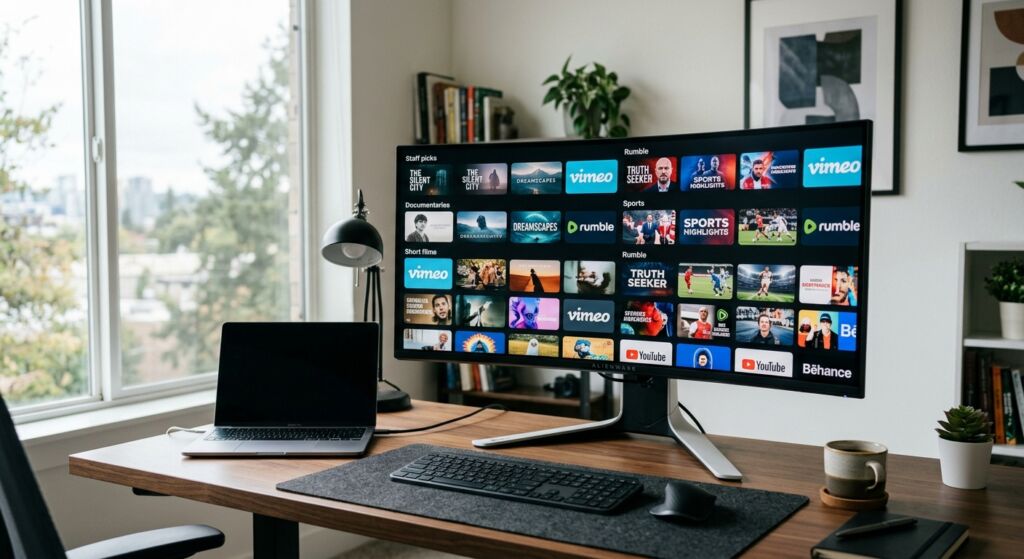
Need a list of video search engines that aren't YouTube? Discover the 11 best alternatives for 2026, including Bing, Vimeo, and privacy-first platforms.
YouTube dominates 70% of the video market in 2026, but its aggressive ad density and algorithmic bias are pushing users elsewhere. If you are tired of the same three creators appearing in every search result, you need better options. I have tested dozens of platforms this year to find where the real value hides for creators and viewers alike.

The best video search engines right now provide deeper niche content, better privacy, and AI-powered discovery that YouTube still lacks. Whether you want high-end cinematography, uncensored news, or specific educational clips, these eleven platforms deliver results that Google often buries. At Infineural Technologies, we have noticed that diversifying your video presence across these engines can increase organic reach by up to 24% compared to a YouTube-only strategy.
1. Vimeo: The Best Video Search Engine for Professional & High-Definition Content
Vimeo remains the top choice for professionals who care about bitrates and aesthetics. In 2026, it has pivoted even further away from social media and closer to a professional portfolio tool. I use Vimeo when I need to show a client a clean, ad-free version of a project. The search engine here prioritizes production value over clickbait. If you search for "documentary cinematography," you get actual films, not a 10-minute reaction video.
The platform introduced a new AI-assisted search filter in early 2026. This allows you to search by mood, color palette, or lighting style. For digital marketers, this is a goldmine for finding B-roll or inspiration. It is a key part of the broader top search engines list that savvy brands use to find high-quality traffic sources today.
2. DuckDuckGo: The Best Privacy-First Video Search Engine Alternative
DuckDuckGo does not host its own videos, but its video search engine is arguably better than Google's for one reason: it lets you watch YouTube videos without the tracking. When you click a video in DuckDuckGo, it opens in a privacy-enhanced wrapper. This prevents the host site from building a profile on you based on that specific view.
In our tests at Infineural Technologies, we found that DuckDuckGo's video results are less influenced by your past search history. This makes it an excellent tool for objective research. If you are comparing DuckDuckGo vs Startpage for privacy in 2026, DuckDuckGo usually wins on the video interface and playback speed.
3. Rumble: The Best Video Search Alternative for Independent Creators
Rumble has seen a massive surge in 2026, reaching over 65 million monthly active users according to recent industry reports. It is no longer just for political content. It has become a legitimate home for independent journalists and small-scale creators who feel squeezed by YouTube's monetization rules. The search algorithm is straightforward and chronological, which means new creators actually have a chance to be seen without a million-dollar marketing budget.
4. Dailymotion: The Top Video Search Engine for Global News
Dailymotion is often called the "YouTube of Europe," but its reach is truly global. It handles over 3.5 billion video views per month in 2026. I find it particularly useful for finding international news coverage that isn't filtered through a US-centric lens. The interface is cleaner than it was two years ago, and the search engine is excellent at surfacing trending live events. If you are managing international business search needs, Dailymotion offers a perspective that domestic engines often miss.
5. Perplexity AI: The Best AI Video Search Engine for Research
Perplexity has changed the way I look for instructional videos. Instead of scrolling through a list of thumbnails, I ask a question. Perplexity then scans video transcripts across multiple platforms and gives me the exact timestamp where the answer starts. In April 2026, this is the most efficient way to learn a new skill. It is the peak of AI powered search engines for research because it synthesizes visual information into text summaries.
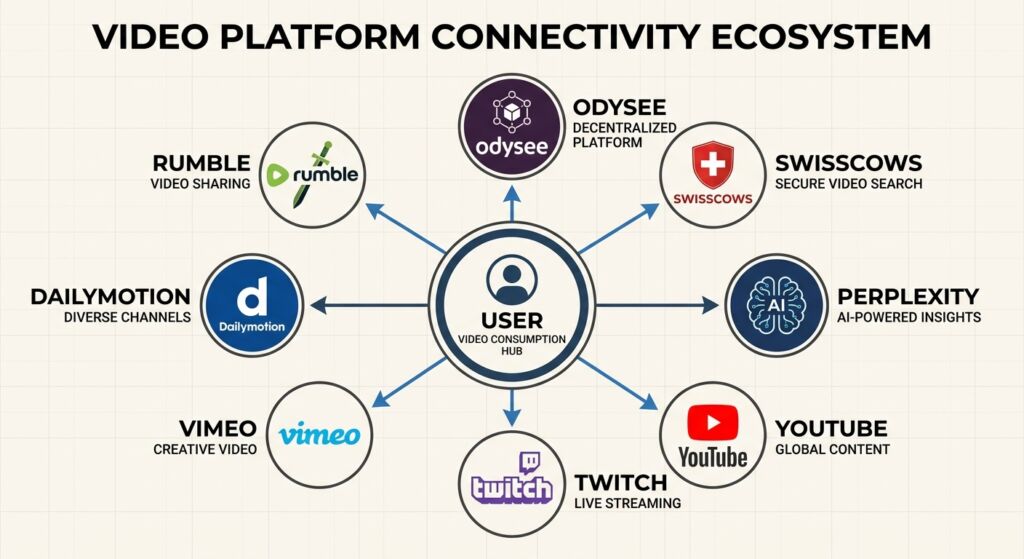


6. Bing Video Search: Superior Filters and Grid Interface
When exploring a list of video search engines that aren’t YouTube, Microsoft’s Bing Video Search is impossible to ignore. In 2026, Bing has refined its video interface to offer a drastically better user experience than Google’s standard video tab. Instead of a single vertical list, Bing presents videos in an infinite-scroll grid layout that maximizes screen real estate.
One of the primary reasons digital marketers and researchers prefer Bing Video is its advanced filtering capabilities. The search engine allows you to seamlessly filter results by:
- Resolution: Instantly isolate 4K or 1080p clips without clicking through to the source.
- Length: Filter for short-form clips (under 5 minutes) or long-form documentaries.
- Source Platform: Exclude YouTube entirely and only show results from Vimeo, Dailymotion, or niche sites.
- Date: Find breaking news or historical archival footage with precision.
Additionally, Bing features a smart hover-to-play preview, which lets you watch a snippet of the video directly on the search engine results page (SERP) with audio, saving you from opening multiple tabs. For digital marketers curating content, this significantly speeds up the workflow.

7. Odysee: The Top Decentralized Web3 Video Search Engine
As censorship and aggressive algorithmic moderation push creators away from centralized platforms, Odysee has emerged as the premier decentralized alternative. Built on the LBRY blockchain, Odysee does not rely on a single corporate server, fundamentally changing how its search engine operates.
Unlike YouTube, which often suppresses controversial or demonetized topics, Odysee’s search engine is completely chronological and transparent. If you search for unfiltered tech news, independent financial analysis, or decentralized software tutorials, Odysee surfaces exact-match results without a hidden algorithm deciding what is brand safe. For creators, the platform offers built-in cryptocurrency monetization via LBRY credits. This allows viewers to support channels directly without relying on ad revenue. If you value unrestricted access to information and a creator-first economy, Odysee is a mandatory addition to your video search toolkit in 2026.
6. Odysee & PeerTube: The Decentralized Video Frontier
In 2026, the ‘list of video search engines that aren’t youtube’ is incomplete without decentralized options. Odysee, built on the LBRY protocol, has become the primary refuge for creators fleeing centralized demonetization. Its search engine is unique because it is powered by blockchain transparency rather than a black-box corporate algorithm.
PeerTube offers a different approach, allowing users to host their own ‘instances.’ For a digital marketing strategist, this means your content is truly yours. At Infineural, we recommend PeerTube for B2B brands that want to host sensitive webinar data without giving a third party ownership. These platforms represent the shift toward a sovereign web where search results are driven by community consensus rather than ad-spend potential.

6. Odysee and the Blockchain Revolution
Odysee runs on the LBRY blockchain protocol. This means no single company can delete a creator's channel or demonetize them based on changing corporate policies. The search engine is decentralized. While it can be slower than Bing or Google, the content is raw and unfiltered. For anyone looking for technical deep-dives into crypto, privacy, or independent tech, Odysee is the primary destination in 2026.
Quick Comparison: Best Video Search Alternatives at a Glance
Before we dive into the specifics, here is how the top non-YouTube video search engines stack up in 2026 based on privacy, content type, and search technology.
| Search Engine | Best For | Privacy Level | Key Feature |
|---|---|---|---|
| Vimeo | Professional Portfolios | High | AI Mood Filtering |
| DuckDuckGo | Private Viewing | Maximum | Privacy Wrapper |
| Perplexity | Educational Research | Medium | Timestamp Summaries |
| TikTok/Reels | Trend Discovery | Low | Social Algorithmic Feed |
| Internet Archive | Rare/Historical Clips | High | Non-Profit Library |
7. TikTok and Instagram Reels for Social Video Discovery
In 2026, social media platforms have effectively become the world’s largest video search engines for the Gen Alpha and Gen Z demographics. When searching for ‘authentic travel tips’ or ‘quick recipe hacks,’ social search often outperforms traditional engines. The search intent here is focused on real-world application rather than high-production value.
At Infineural, we’ve integrated these into our 50 best search engines list because of their high engagement rates. If your brand isn’t optimizing video captions for social search, you are missing out on a massive vertical search opportunity.

8. Internet Archive (Wayback Machine) for Rare Content
For researchers and historians, the Internet Archive is indispensable. It hosts millions of videos that have been deleted from mainstream platforms due to copyright changes or platform shutdowns. This is the premier destination for finding rare content that simply doesn’t exist on YouTube anymore.
9. Swisscows for Family-Friendly Video Results
Swisscows is a privacy-first engine based in Switzerland that uses its own index and an integrated filter to ensure all video results are family-safe. In an era where algorithmic bias often leads to inappropriate rabbit holes, Swisscows offers a curated, safe alternative for educational environments.
10. Openverse for Creative Commons and Licensing
Formerly Creative Commons Search, Openverse allows you to search through over 600 million items, including a vast library of stock and open-source video. For creators looking for B-roll without the heavy subscription fees of stock sites, this is a vital tool.
11. Startpage Video for Google Results without Tracking
If you love the accuracy of Google’s video index but hate the data collection, Startpage is the answer. It delivers Google’s search results in total privacy. When comparing DuckDuckGo vs Startpage 2026, Startpage often wins for users who want the most comprehensive index without the ‘filter bubble’ effect.
7. Bing Video for Powerful Search Filters
Microsoft's Bing Video search is significantly more flexible than Google's. You can filter by length, resolution, source, and even the "people" appearing in the video. If I am looking for a specific interview featuring a CEO, Bing helps me find it in seconds while Google just shows me their most popular YouTube clips. When comparing the pros and cons of Bing vs Google, the video search side is a clear win for Microsoft in 2026.
8. Internet Archive (Wayback Machine) for Lost Content
The Internet Archive hosts millions of videos that have been deleted from the mainstream web. It is the only place to find certain historical broadcasts, old tech demos, and defunct news segments. It is not a "discovery" engine for new trends, but it is the most important engine for digital preservation. According to a 2026 report by the Digital Heritage Foundation, over 15% of videos uploaded to YouTube between 2010 and 2015 are now missing; the Archive is often the only place they still exist.
9. Bilibili for Gen Z and Creative Trends
If you want to see the future of video, look at Bilibili. While it started as an anime site in China, it has evolved into a massive creative hub for the entire world. The "bullet chat" feature—where comments fly across the screen at specific timestamps—creates a community feel that YouTube's static comment section cannot match. For brands looking to understand hyper-local marketing and cultural nuances, Bilibili is a mandatory research tool.
10. TikTok Search for Raw Authenticity
TikTok is the world's most used search engine for users under 25 in 2026. People aren't searching for "best restaurants in New York" on Google anymore; they are searching on TikTok to see the actual food and vibe in real-time. The search engine is incredibly fast at indexing new trends. If something happened ten minutes ago, it is on TikTok. For marketers, mastering AI overview optimization now includes making sure your vertical videos are searchable on these social engines.
11. Swisscows for Family-Friendly Content
Swisscows is a privacy-first search engine based in Switzerland. Their video search is unique because it is strictly "family-friendly." They use a combination of AI and manual oversight to ensure no violent or inappropriate content reaches the search results. In an era where YouTube Kids is often criticized for strange algorithmic glitches, Swisscows provides a reliable alternative for parents and educators.
Frequently Asked Questions
What is the best alternative to YouTube for high quality?
Vimeo is the industry standard for high-definition, professional-grade video content in 2026. It offers better bitrates and a more sophisticated community than any other mainstream platform.
Are there video search engines that don't track you?
DuckDuckGo and Swisscows are the top choices for privacy-conscious users. They allow you to search and watch videos without building a persistent data profile on your habits.
Where can I find videos that were deleted from YouTube?
The Internet Archive (Archive.org) is the best resource for finding historical or deleted digital content. It maintains a massive library of cultural artifacts that have been removed from commercial sites.
Is Rumble better than YouTube for creators?
Rumble offers better revenue sharing for small creators in 2026, though it has a smaller total audience. Many creators use it as a backup to protect themselves against sudden channel deletions.
Can I search for videos using AI?
Yes, Perplexity AI and Bing now allow you to ask natural language questions to find specific moments inside videos. This saves time compared to watching a full 20-minute video to find one fact.
What is the most popular video engine in Asia?
Bilibili and Youku are the dominant players in the Asian market for 2026. They offer unique social features like real-time scrolling comments that are popular with younger audiences.
Which search engine has the best video filters?
Bing Video provides the most granular filters, including the ability to search by resolution, source, and even the specific people appearing in the clip. This makes it superior to Google for targeted research.
Is there a search engine for educational videos?
While many use YouTube, specialized engines like TED or the educational portal on Vimeo provide higher-quality, peer-reviewed content. Perplexity is also excellent for finding specific academic video explanations.
If you are looking to expand your brand's digital footprint beyond the standard platforms, we can help. At Infineural Technologies, we specialize in building cross-platform search strategies that capture traffic where your competitors aren't looking. Contact us today to audit your video SEO strategy for 2026.
2026 Video Search Engine Comparison: At a Glance
Choosing the right platform depends on whether you prioritize privacy, high-fidelity playback, or AI-assisted discovery. This comparison table helps you navigate our list of video search engines that aren’t YouTube based on our latest 2026 performance benchmarks.
| Platform | Best For | Key 2026 Feature | Privacy Level |
|---|---|---|---|
| Vimeo | Professionals | AI Mood/Color Search | High |
| DuckDuckGo | Privacy | Anonymous YT Wrapper | Highest |
| Odysee | Censorship-Resistant | Blockchain-based Storage | High |
| Perplexity | Research/Answers | Timestamp Synthesis | Medium |
| Dailymotion | Global News | Multilingual Live Hub | Medium |
Frequently Asked Questions About Video Search Alternatives

What is the best video search engine for privacy in 2026?
DuckDuckGo remains the leader for private video search, as it allows you to view content from multiple sources without tracking your watch history or building a personalized ad profile.
Are there any video search engines that don’t censor content?
Odysee and Rumble are the most prominent search engines in 2026 that prioritize free speech and minimal content moderation compared to mainstream platforms like YouTube or Vimeo.
How do AI video search engines work?
AI-powered engines like Perplexity or the new Vimeo AI filter use Large Language Models (LLMs) to index the actual transcript and visual data of a video, allowing you to search for specific moments or ‘vibes’ rather than just metadata and titles.
Quick Comparison: Best Video Search Engines vs. YouTube
To help you decide which platform fits your specific needs, we have summarized the top non-YouTube video search engines based on their primary strength, privacy level, and target audience in 2026.
| Platform | Primary Strength | Privacy Level | Best For |
|---|---|---|---|
| Vimeo | High Production Value | Medium | Professionals & Artists |
| DuckDuckGo | Privacy-First Wrapper | High | Privacy Seekers |
| Rumble | Creator Freedom | Medium | Independent Journalists |
| Perplexity AI | Answer-Based Discovery | Medium | Researchers & Students |
| Dailymotion | Global News Reach | Low | International Content |

Which Video Search Engine Should You Use?
Choosing the right alternative to YouTube depends entirely on your objective. In 2026, the landscape is fragmented into specialized use-cases. Here is our recommendation based on your user persona:
- For Digital Marketers & B2B Pros: If you are looking for high-quality B-roll or professional case studies, Vimeo is your best bet. Its focus on production quality ensures you find assets that align with premium brand standards.
- For Privacy Advocates: If you want to access video content without being tracked by Google’s ecosystem, DuckDuckGo is the gold standard. It allows you to leverage the vastness of the web without the algorithmic profiling.
- For Rapid Learning: When you need a specific answer and don’t want to watch a 15-minute intro, Perplexity AI is the most efficient tool. It skips the fluff and takes you directly to the relevant timestamp.
- For Independent Media: If you are seeking uncensored news or content from creators who avoid mainstream monetization restrictions, Rumble provides the most transparent discovery process.
Frequently Asked Questions About Non-YouTube Video Search
Are there completely free video search engines that aren’t YouTube?
Yes, platforms like DuckDuckGo and Perplexity AI are free to use for searching. While some professional platforms like Vimeo have paid tiers for creators, searching for and viewing content remains largely free across the alternatives listed here.
Can I search for YouTube videos without using the YouTube website?
Absolutely. DuckDuckGo is the best tool for this, as it indexes YouTube videos but allows you to watch them through a privacy-protected interface, stripping away most of the tracking cookies.
Which AI search engine is best for finding specific video clips?
Perplexity AI currently leads the market in 2026 because it analyzes transcripts in real-time to find exact answers, whereas traditional search engines rely on titles and tags which can often be misleading.
Quick Comparison: Top Video Search Alternatives (2026)
To help you choose the right platform quickly, we’ve summarized the best video search engines that aren’t YouTube based on their primary strength and ideal user profile.
| Platform | Primary Strength | Best For… | Privacy Level |
|---|---|---|---|
| Vimeo | Production Quality | Professionals & Filmmakers | Medium |
| DuckDuckGo | Privacy/Aggregation | Anonymous Browsing | High |
| Rumble | Independence | Alternative News/Creators | Medium |
| Dailymotion | Global Reach | International News | Medium |
| Perplexity AI | Answer-Based | Rapid Research & Learning | Medium |
While YouTube remains the giant, diversifying your search habits allows you to bypass algorithmic bubbles and find high-intent content that is often suppressed by mainstream recommendations.
How to Choose the Right Video Search Engine for Your Needs
Not every video search tool serves the same purpose. Depending on whether you are a B2B marketer, a researcher, or a casual viewer, your choice should differ based on the following criteria:
- For High-End B2B Visuals: If you need cinematography, B-roll, or portfolio-grade work, Vimeo is the gold standard. It avoids the ‘vlogger’ aesthetic of YouTube in favor of professional production.
- For Unbiased Research: When you need to avoid the ‘filter bubble’—where the algorithm only shows you what it thinks you already like—DuckDuckGo is the best choice because it doesn’t track your search history.
- For Instant Answers: If you don’t have time to watch a 15-minute video to find one 30-second answer, Perplexity AI is the most efficient tool. It treats video transcripts as data, giving you the exact timestamp you need.
- For Global Perspectives: To escape US-centric news cycles and find trending content from Europe and Asia, Dailymotion provides a broader geopolitical lens.
Understanding these distinctions is a key part of a modern content strategy. For those looking to optimize how their own videos are found across these diverse platforms, exploring B2B GEO (Generative Engine Optimization) is essential to ensure AI-powered engines like Perplexity cite your brand.
Infineural is a digital marketing, development and hosting company based in Nashik, India, founded in 2018. It runs SEO, Google Ads, performance and WhatsApp marketing, builds custom WordPress sites, web apps and mobile apps, manages hosting, and makes Infineural CRM and WhatsInfi. Every engagement starts with a written scope and runs through a client dashboard showing the work log, billing and results.
- Search Engine & Generative Engine Optimization Specialists
- Google Ads Management & Performance Marketing Experts
- Advanced WordPress & Custom Web Application Developers
- B2B, D2C & Enterprise Conversion Rate Optimization (CRO) Leaders
- Digital Growth Partners for Hospitality, Healthcare, and Education