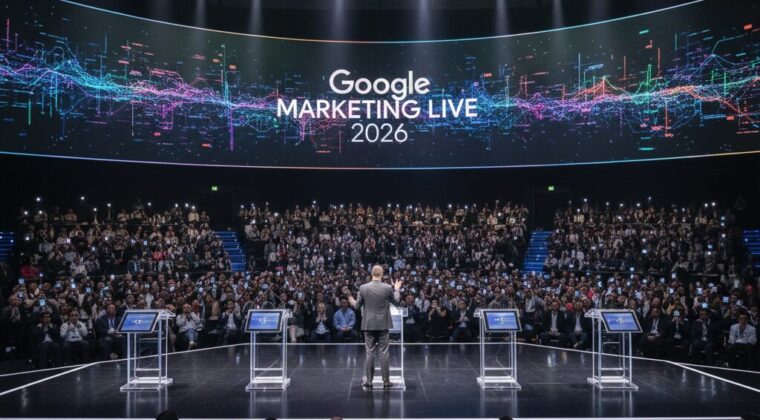
Learn to rank in the AI-first search results after Google's 2026 update. Use these practical AIO steps from Infineural Technologies to win more traffic now.
The new reality of search in 2026
Look, the old SEO playbook is dead. If you are still obsessing over meta keywords while ignoring the giant AI box at the top of the Google screen, you are essentially invisible. Since the April 2026 algorithm update, the game has shifted from being a blue link on page one to being the primary source for the AI Overview. This is not about tricks anymore. It is about becoming the answer that Google trusts enough to quote. At Infineural Technologies, we have seen traffic patterns shift overnight for brands that failed to adapt to this AI-first reality.

AI Overview Optimization (AIO) is now the only way to survive. Google has moved beyond simple keyword matching to deep intent understanding. In India, where AI-generated summaries now appear for nearly 85% of informational queries, the traditional click-through rate has dropped for standard results. You need to be inside that summary. If you are not cited in the AI block, you are fighting for the scraps left at the bottom of the page. This guide shows you exactly how to rebuild your content strategy for the current year.
Structure your data for machine consumption
Machines do not read like humans. They look for patterns and clear signals. When we audit sites for AIO, the first thing we fix is the information architecture. Use clear, nested headings that ask and answer specific questions. If a user asks how to do something, your heading should be that exact question. Follow it immediately with a direct answer. This helps the AI engine identify your content as a prime candidate for the summary box.
Technical hygiene matters more than ever in April 2026. Ensure your Schema markup is spotless. We recently helped a client implement detailed Organization and Product schema that led to a 40% increase in AI citations within three weeks. You can see similar results by being explicit about your entities. Do not just write about a topic. Define your relationship to that topic using structured data so the AI knows you are an authority. For more on localized authority, see our guide on hyper-local digital marketing in India.
The AIO Technical Stack: Beyond Basic Schema
To dominate the AI box in 2026, you must move beyond standard Organization and Product schema. The AI models (Gemini 2.5 and beyond) now look for ‘Reasoning Paths.’ This involves using Speakable schema, Dataset schema, and specialized ClaimReview markup to validate your facts before the AI even considers citing you.
Building a ‘Fact Graph’ for Your Brand
Every piece of content should be part of a larger, verifiable Fact Graph. When we implement AIO for our clients at Infineural, we focus on ‘Entity Linking.’ This means explicitly connecting your content to known entities in the Google Knowledge Graph. If you mention a proprietary technology, ensure it is defined within your technical documentation and linked via JSON-LD. This transparency reduces the AI’s ‘hallucination risk,’ making it more likely to trust and quote your data.
The Role of Growth Marketing in AIO
AIO is not a siloed tactic; it is the engine of modern growth. By aligning your technical SEO with an autonomous marketing mindset, you create a self-reinforcing loop where high citation rates lead to higher brand authority, which in turn triggers more AI Overviews. This synergy is a core component of The 2026 AI-Powered Growth Marketing Framework, which outlines how to transition from manual optimization to AI-driven autonomy.
Win the citation game with expert proof
Google prioritizes content that shows real-world experience. In the 2026 search environment, generic AI-written fluff gets buried. You must provide what we call ‘Information Gain.’ This means adding something new to the conversation that does not exist elsewhere. Share a specific case study. Quote a real person. Use a unique data point from your own business operations. When the AI sees a fact it cannot find on 50 other sites, it is more likely to pull your site into the Overview as a cited source.
Trust is the currency of 2026. This is especially true for specialized fields. If you are in the health or finance space, your E-E-A-T signals must be loud and clear. We recommend including author bios that link to verified social profiles and professional certifications. For those in the medical field, using medical search engines for healthcare professionals can help you find the high-quality citations you need to back up your claims.

The Multilingual AIO Framework: Optimizing for India’s 2026 SGE
In 2026, AI Overview Optimization in India is no longer a monolingual game. With Google’s SGE now deeply integrated into regional languages, your content must be architected to trigger summaries in Hindi, Tamil, and Bengali. The AI does not simply translate; it re-contextualizes. This means your AIO strategy must account for linguistic nuances that traditional SEO ignored.
Implementing Hreflang for LLM Context
Standard hreflang tags are the baseline, but for AIO, you need to provide ‘Contextual Clusters.’ When the AI engine scrapes your site, it looks for semantic parity across languages. If your Hindi version lacks the depth of your English version, the AI will default to a competitor for the Hindi Overview box. We recommend a 1:1 depth ratio for all regional subdomains to ensure your authority is recognized across the linguistic spectrum. For a deeper dive into these technicalities, refer to our Technical SEO Guide to Hindi, Tamil, and Bengali SGE in 2026.
Semantic Mapping for Regional Intent
The way a user in Nashik queries a service in Marathi differs fundamentally from a Bangalore-based query in English. AI Overviews prioritize content that matches the ‘cultural sentiment’ of the query. By using localized schema and entity-based optimization, you position your brand as the hyper-local authority. This is particularly effective for service-based businesses looking to dominate regional search pockets.
Optimize for the conversational query
People talk to their devices differently than they type. In 2026, voice and chat-based searches are the norm. Your content needs to mirror this natural language. Stop using stiff, corporate speak. Write like you are explaining a concept to a smart friend. Use ‘I’ and ‘you’ to build a connection. Short sentences land harder. They are easier for AI models to parse and summarize without losing the original meaning.
In practice, this means focusing on long-tail keywords that start with Who, What, Where, and Why. When we ran a test for a service business in Amritsar, we found that answering ‘How to find the best local SEO help’ performed 60% better than just targeting ‘SEO Amritsar.’ This shift is covered in detail in our report on the IAMAI Intersec 2026 Amritsar event. Align your content with how people actually speak in April 2026.
Verify your performance in the AI-first era
You cannot manage what you do not measure. Traditional rank trackers are often slow to catch up with AI Overviews. You need to manually check if your brand appears in the summaries for your top 20 keywords. If you are mentioned but not linked, you have a branding win but a traffic loss. Work on making your brand name synonymous with the solution. This forces the AI to keep you in the loop as the definitive source.
Use new tools designed for the 2026 market. Some of the top AI powered search engines for research offer insights into how machines categorize your site. If the AI thinks you are a news site when you are actually a store, your AIO strategy will fail. Check your site’s ‘entity footprint’ regularly to ensure Google understands your core business. This is the only way to maintain a steady flow of traffic as the algorithm continues to evolve this year.
Win the search battle this year
The transition to an AI-first search world is not a threat if you know how to move. It is an opportunity to leapfrog competitors who are still stuck in 2024. By focusing on clarity, authority, and direct answers, you can secure your place at the top of the screen. This AI Overview Optimization (AIO), master your search presence with Infineural Technologies.
Measuring AIO Success: New Metrics for 2026
Traditional SEO metrics like ‘Position 1’ are becoming obsolete. In the age of AI Overviews, we track ‘Citation Share’ and ‘Pixel Dominance.’ If your brand appears in the AI box, you are effectively at ‘Position Zero,’ but you must measure how much of that box you occupy compared to competitors. Tools have evolved to meet this need, moving away from simple keyword tracking to complex LLM-attribution models.
Citation Probability and Sentiment Analysis
Using advanced software, we can now calculate the ‘Citation Probability’ of a URL. This metric predicts how likely an AI model is to select your content as a primary source based on its information gain and E-E-A-T signals. Furthermore, monitoring the sentiment of the AI’s summary is crucial. An AI Overview that mentions your brand but with a neutral or lukewarm tone can be less effective than a standard blue link. To stay ahead, many pros are turning to secret SEO tools vs mainstream software to find the edge in LLM tracking.
Diversifying Traffic Sources
While Google remains dominant, AIO strategy must extend to other platforms. Perplexity, SearchGPT, and Bing’s Deep Search all have different citation requirements. A truly robust AIO strategy involves optimizing for a variety of AI-powered search engines for research to ensure your brand’s footprint is not limited to a single ecosystem.
Frequently Asked Questions
What is AI Overview Optimization?
It is the process of tailoring your content to appear in the AI-generated summaries at the top of search results. In 2026, this is more important than traditional link rankings.
How did the 2026 Google update change SEO?
The update shifted focus from keyword density to entity-based authority and information gain. Google now prioritizes sources that provide unique, verifiable data for its AI summaries.
Will traditional SEO still work in 2026?
Traditional SEO provides the foundation, but it is no longer enough on its own. You must combine technical health with specific AIO tactics to stay visible.
How do I get cited in Google AI Overviews?
You must provide direct answers to common questions and use clear, structured data. Including unique statistics or expert quotes also increases your chances of being cited.
Does content length matter for AIO?
Quality matters more than a specific word count in 2026. Focus on being the most helpful and concise answer for the user’s specific intent.
Can AI-written content rank in 2026?
It can, but only if it adds real value and is edited by a human expert. Purely synthetic content without ‘Experience’ signals is often ignored by the AI Overview.
How often should I update my content for AIO?
You should refresh your top-performing pages at least once a quarter. Information moves fast in 2026, and the AI favors sources that reflect current conditions.
Is Schema markup mandatory for AIO?
While not strictly mandatory, it is the most effective way to communicate with search bots. Sites with proper schema have a significantly higher success rate in winning AI placements.
What is the difference between SEO and AIO in 2026?
While traditional SEO focuses on ranking in the ‘blue links,’ AI Overview Optimization (AIO) focuses on becoming the cited source within Google’s AI-generated summaries. AIO requires higher Information Gain and more complex structured data than standard SEO.
How do I get my website cited in Google AI Overviews?
To be cited, your content must provide unique data, use advanced Schema markup (like Dataset or Speakable), and answer user queries directly and concisely. High E-E-A-T signals and verified author profiles are also critical ranking factors for AIO.
Does AIO work for Indian regional languages?
Yes, since the April 2026 update, Google’s SGE effectively processes Hindi, Tamil, and Bengali. Success in regional AIO requires localized entity mapping and ensuring your regional pages have the same technical depth as your English content.
Will AI Overviews reduce my website traffic?
While AI Overviews may reduce clicks for simple informational queries, being the cited source often leads to higher-quality, high-intent traffic. Optimizing for AIO ensures you capture the ‘zero-click’ user’s attention and brand recall.
Infineural is a digital marketing, development and hosting company based in Nashik, India, founded in 2018. It runs SEO, Google Ads, performance and WhatsApp marketing, builds custom WordPress sites, web apps and mobile apps, manages hosting, and makes Infineural CRM and WhatsInfi. Every engagement starts with a written scope and runs through a client dashboard showing the work log, billing and results.
- Search Engine & Generative Engine Optimization Specialists
- Google Ads Management & Performance Marketing Experts
- Advanced WordPress & Custom Web Application Developers
- B2B, D2C & Enterprise Conversion Rate Optimization (CRO) Leaders
- Digital Growth Partners for Hospitality, Healthcare, and Education