Stop deepfakes and synthetic fraud. Implement a zero-excuse AI brand protection strategy to verify authenticity and neutralize misinformation in real-time.
The strategic failure of reactive brand monitoring
A single deepfake video can incinerate ten years of brand equity in ten minutes. As synthetic media becomes indistinguishable from reality, trusting your gut is no longer a leadership trait—it is a liability. Most companies treat brand protection as a monitoring task. They wait for a ping, then scramble to issue a denial. That isn’t a strategy. It’s a panic response.
A real AI brand protection strategy ignores monitoring and focuses on provenance. You cannot win a “he said, she said” war against a perfect AI clone. The math is against you. You win by making your authentic content mathematically verifiable, which means you stop arguing about what is fake and start proving what is real. This guide provides a zero-excuse framework to move from damage control to an active, real-time defense.
The mechanics of a modern AI brand protection strategy
Strategy is the act of diagnosing a critical challenge and creating a coherent set of actions to overcome it. Here, the diagnosis is simple: the collapse of visual and auditory evidence. When anyone can mimic your CEO’s voice or your product’s appearance, the very evidence of your identity vanishes. You are effectively invisible in a storm of noise.
Identifying synthetic vulnerabilities in your current funnel
The danger lives where your brand interacts with third parties. In the real world, the highest risk isn’t a viral tweet; it’s in your customer support channels and executive communications. Imagine your CFO receiving a voice note from you—your exact cadence, your specific phrasing—ordering an emergency $50k wire transfer to a “new vendor.” By the time you realize the call never happened, the money is gone. If your internal verification relies on “knowing the voice,” your system is broken.
Audit your touchpoints. Every moment a human trusts a digital signal is a vulnerability. We have seen companies lose six-figure contracts in a single afternoon because a synthetic email, paired with a cloned voice note, convinced a procurement officer to change payment details. The failure here isn’t technical. It’s the mistake of relying on human intuition in a synthetic environment.
The cost of inaction: Calculating the ROI of brand safety
Most executives frame brand safety as an insurance policy. That is a mistake. It is actually the prevention of equity evaporation. According to a 2026 report by the Digital Trust Institute, companies that suffered a synthetic media crisis saw an average 14% drop in customer trust scores within 48 hours. It took those brands an average of seven months to recover that ground.
The ROI of brand safety shows up in your Customer Acquisition Cost (CAC). If your brand is perceived as unstable, your CAC spikes because you have to rebuild trust at every single stage of the funnel. A verified brand identity removes this friction. It enables AI-powered growth by ensuring your automated lead generation doesn’t accidentally amplify synthetic noise and kill your conversion rates.
Moving from fragmented tools to an integrated defense
Many SMBs buy three different tools: one for social listening, one for legal takedowns, and one for cybersecurity. This is a fragmented mess that creates latency. In a synthetic crisis, latency is death.
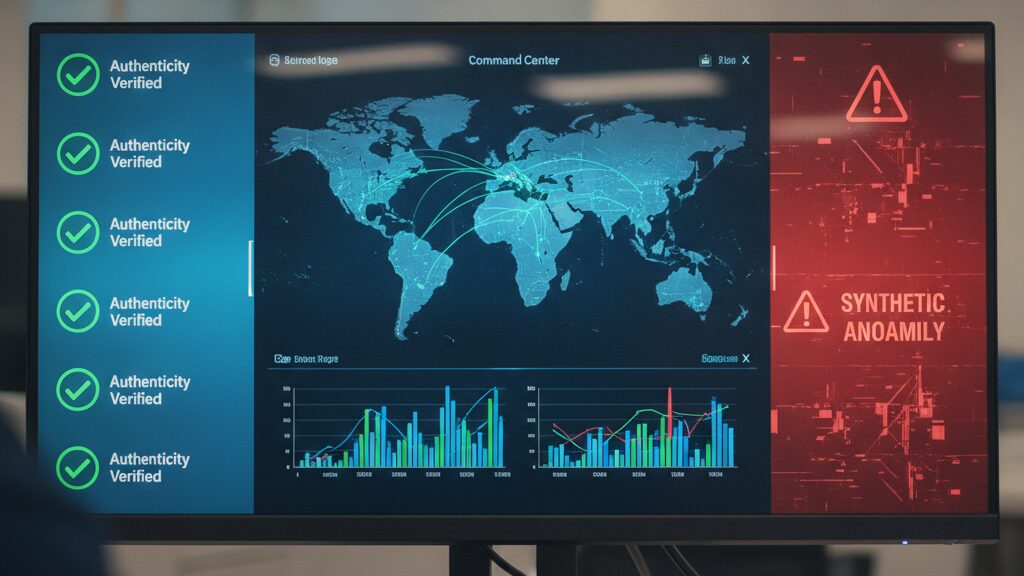
You need an integrated stack where detection triggers an immediate, pre-set response. When a synthetic anomaly is flagged, the system should automatically notify the legal team, update the internal real-time dashboard, and trigger an authenticity alert on your primary channels. Bringing this under one roof cuts the gap between detection and neutralization from hours to seconds.
Implementing brand authenticity verification protocols
You cannot stop people from creating fakes. You can, however, make the truth impossible to fake. This is the pivot from detection to verification.
C2PA and the rise of content provenance
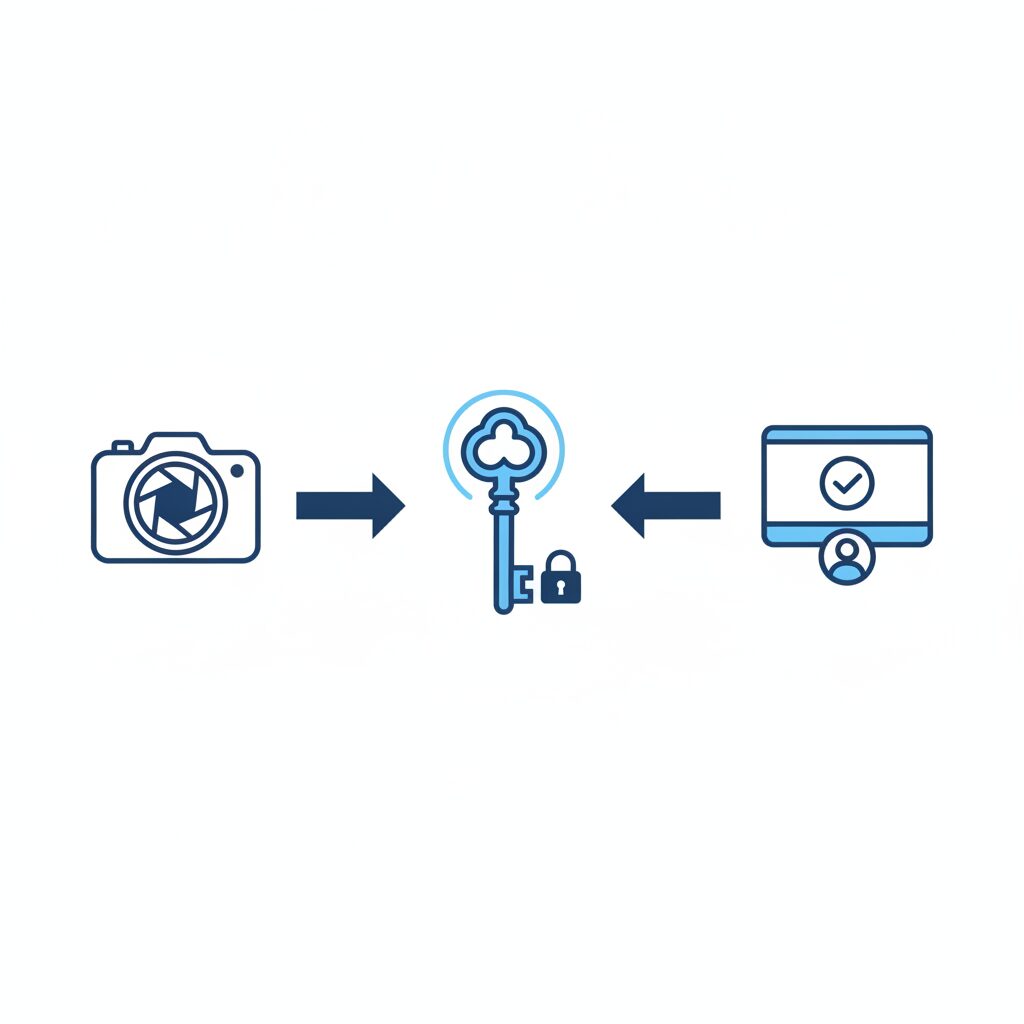
The Coalition for Content Provenance and Authenticity (C2PA) provides the technical standard for this. C2PA attaches a cryptographically signed manifest to a file. Think of it as a digital birth certificate that records who created the content, when it happened, and how it was edited.
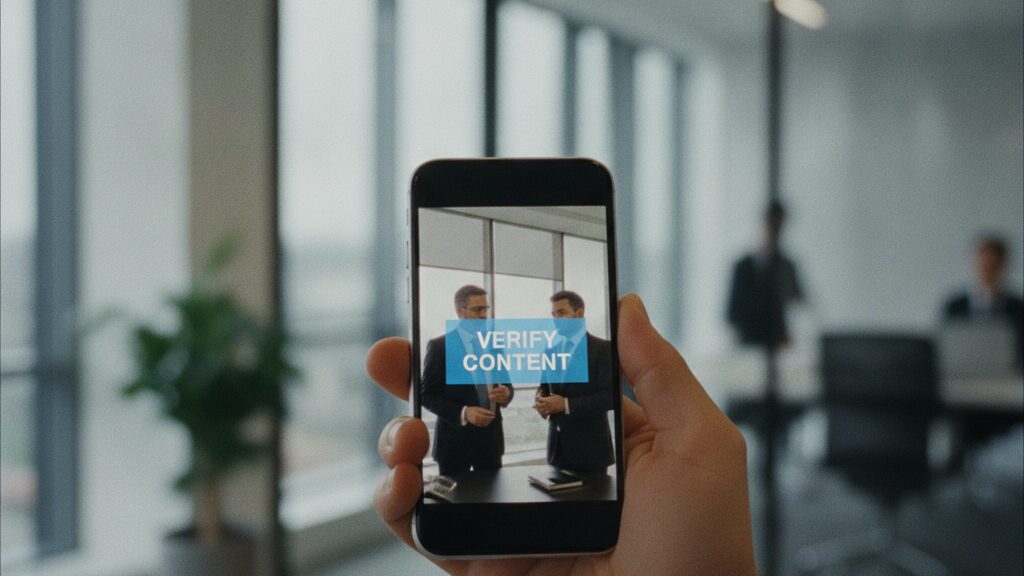
When you publish a corporate video, this metadata proves its origin. A user clicks “Verify” and sees the chain of custody. If a deepfake version appears, it will lack this signature. The absence of the signature becomes the proof of the fake. This flips the script, putting the burden of proof back on the attacker.
Digital watermarking and cryptographic signing for corporate assets
C2PA is great for the public, but high-value assets need cryptographic signing. This uses a private key to sign a hash of the file. If a bad actor changes a single pixel using an AI tool, the signature breaks instantly.
At Infineural, we tell clients to implement these signatures for all executive communications and pricing sheets. When a partner receives a document, they don’t guess if it’s real. They run a check against your public key. This removes the guesswork that leads to fraud.
Establishing a ‘Source of Truth’ portal for stakeholders
Your website should be more than a marketing brochure; it must be a verification hub. Build a dedicated “Verified Communications” portal. This is a read-only, cryptographically secured archive of every official statement, video, and press release.
Tell your clients and partners to check this portal if they receive an unexpected high-stakes request. By directing all trust to a single, secure point, you make external synthetic clones irrelevant. This is how you apply automation to trust management.
AI misinformation defense: Proactive detection and neutralization
Verification protects the truth, but detection kills the lie. You need a system that finds synthetic anomalies before they hit a critical mass of views.
Real-time monitoring for synthetic anomalies
Modern detection tools look for “artifacts” that the human eye misses—things like inconsistent light reflections in pupils or unnatural blood flow patterns in the skin (PPG signals). By 2026, the most effective tools use multi-modal analysis to check if audio frequencies match lip movements at a millisecond level.
Set alerts for specific keywords paired with high-velocity sharing. If a video of your CEO mentions “bankruptcy” and the share rate is 5x your average, the system must flag it for immediate human review. Detection must be tied to velocity, or your team will drown in noise.
Automating the identification of AI-generated clones
Attackers usually use the same base models to target multiple brands. By analyzing the noise patterns in the synthetic media, you can often identify the specific AI model used. Once you have the model’s “fingerprint,” you can search for other variations of the attack across different platforms before they even hit your radar.
This moves you from playing “whack-a-mole” to mapping the attacker’s infrastructure. If you know the source, you can predict where the next fake will land.
Collaborating with platforms to accelerate takedowns
The traditional legal process for takedowns is a joke when compared to the speed of AI. You need direct API integrations with major platforms to report synthetic media under “coordinated inauthentic behavior” policies.
Keep a pre-verified relationship with platform trust and safety teams. When you submit a takedown request backed by a C2PA verification failure, removal time drops from days to minutes. It is the only way to stop a viral lie before it becomes a perceived truth.
Synthetic media crisis management: The rapid response playbook
Despite the best defenses, a breach will happen. The difference between a footnote and a catastrophe is what you do in the first 60 minutes.
The first hour: Triage and verification
Minutes 0–15: Detection. Identify the source, the reach, and the claim. Do not engage publicly. Don’t tweet a denial in a panic.
Minutes 15–30: Verification. Run the content through your detection stack and check the Source of Truth portal. Confirm with the executive that the content is synthetic.
Minutes 30–60: Strategy selection. Is this staying under the radar or going viral? If the reach is low, a quiet takedown is best. If it’s high-reach, you must move to radical transparency.
Radical transparency: Communicating the breach
When a deepfake goes viral, a standard “this is fake” statement is useless. You must show your work. Post the original, verified version of the content side-by-side with the fake. Use call-outs to highlight the synthetic artifacts—the blurring around the mouth or the weird eye reflections.
Explain exactly how the fake was made if you can. This educates your audience and positions your brand as the expert in the room. Radical transparency removes the mystery, and when the mystery is gone, the fake loses its power.
Post-incident forensic analysis
After the fire is out, conduct a forensic audit. How did the synthetic media bypass detection? Was there a leak of high-quality training data—like an internal raw video file—that made the clone more convincing?
Adjust your guiding policy based on the failure. If the attack succeeded because of a gap in internal communication, automate that gap. This loop ensures that every attack makes your brand harder to target next time.
Integrating protection into your growth marketing stack
Brand protection isn’t an IT task. It’s a growth function. If your customers don’t trust your digital signals, your marketing is just expensive noise.
Connecting brand safety to your real-time dashboard
Your marketing dashboard needs a “Trust Health” metric. This should track the volume of synthetic mentions, the speed of takedowns, and the percentage of your content verified via C2PA.
When Trust Health dips, your ad spend should automatically throttle. There is no point in paying to drive traffic to a brand that is currently under a synthetic attack. This prevents wasted spend and protects your long-term ROI.
Training teams on synthetic media red flags
The human is always the weakest link. Your sales and support teams must be trained to spot synthetic red flags, specifically “urgency traps” paired with slight audio distortions or sudden requests to move to unverified channels.
Implement a “challenge-response” protocol for high-value internal requests. If an executive asks for a wire transfer via voice note, the employee must ask a question that only the real person would know. A simple human check is a powerful backup to any technical system.
Frequently Asked Questions
How can I tell if a corporate video is a deepfake?
Look for unnatural blinking and lighting inconsistencies between the subject and the background. Better yet, use a C2PA-compliant viewer to check for a cryptographically signed provenance manifest.
What is the difference between brand monitoring and AI brand protection?
Monitoring tells you that something is being said. AI brand protection uses technical verification to prove what is authentic and neutralize clones.
Do I need a legal team or a technical team to handle synthetic media crises?
You need both in one unit. The technical team secures the provenance; the legal team manages the platform takedowns.
How does C2PA certification help with brand authenticity verification?
It attaches an unchangeable record of origin to the file, allowing anyone to verify the source and any edits made since the content was created.
What are the most common AI-driven threats to SMBs in 2026?
Voice-cloning for financial fraud and “synthetic social proof,” where fake AI personas are used to praise competitors or systematically attack your brand.
Can AI detection tools guarantee 100% accuracy?
No. AI evolves too fast. This is why detection is a secondary defense; cryptographic verification (provenance) is the only way to get absolute certainty.
Is digital watermarking enough to stop deepfakes?
No. Watermarks can be stripped. Cryptographic signing is superior because any change to the file breaks the signature entirely.
How often should a brand audit its AI vulnerabilities?
Quarterly. Synthetic capabilities shift every few months, and your detection protocols need to shift with them.
Secure your digital footprint
Brand trust is no longer a given; it is a technical achievement. A robust AI brand protection strategy ensures your growth is built on verified authenticity rather than fragile assumptions. Stop the guesswork and secure your digital footprint before a synthetic crisis does it for you.
Contact Infineural today for a radical transparency audit of your brand’s AI vulnerability. Get a complete gap analysis of your provenance stack with no upfront commitment.
Infineural is a digital marketing, development and hosting company based in Nashik, India, founded in 2018. It runs SEO, Google Ads, performance and WhatsApp marketing, builds custom WordPress sites, web apps and mobile apps, manages hosting, and makes Infineural CRM and WhatsInfi. Every engagement starts with a written scope and runs through a client dashboard showing the work log, billing and results.
- Search Engine & Generative Engine Optimization Specialists
- Google Ads Management & Performance Marketing Experts
- Advanced WordPress & Custom Web Application Developers
- B2B, D2C & Enterprise Conversion Rate Optimization (CRO) Leaders
- Digital Growth Partners for Hospitality, Healthcare, and Education


