Master iOS 27 AI APIs for B2B apps. Learn to use on-device LLMs and agentic workflows ahead of Apple WWDC 2026. Boost ROI with Infineural.
The race to the App Store just changed
Most B2B apps are boring. They are basically spreadsheets with a fancy interface that your employees hate using. But on June 8, 2026, Apple WWDC 2026 will flip the script. iOS 27 is not just another update; it is a shift toward native, on-device agentic AI that actually does the work for the user.
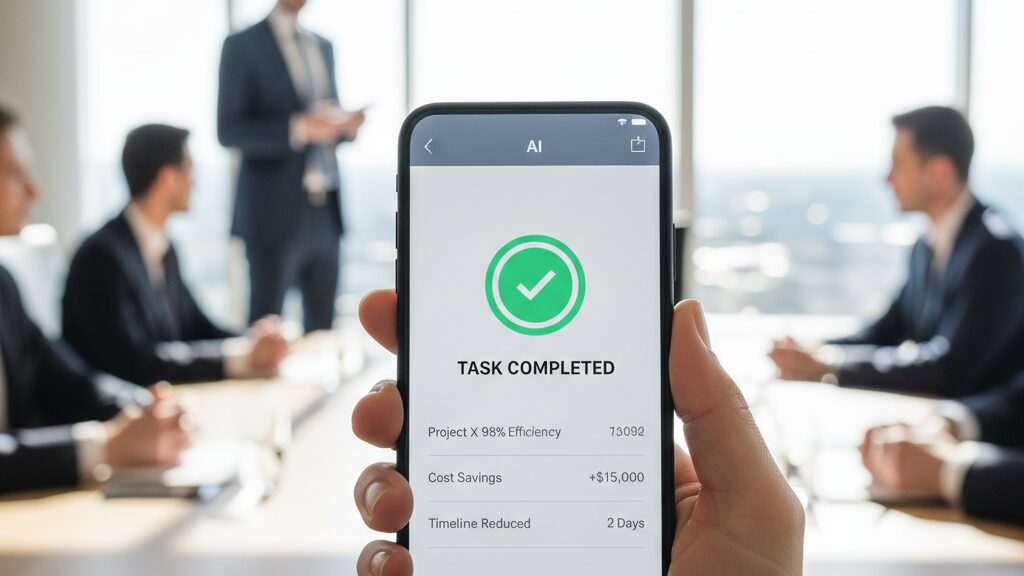
If you are building B2B tools, you cannot wait for the keynote to end before planning. The window to gain a first-mover advantage is tiny. You need to move from simple ‘AI wrappers’ to deep API integration to keep your ROI high and your churn low.
On-device LLMs and B2B privacy
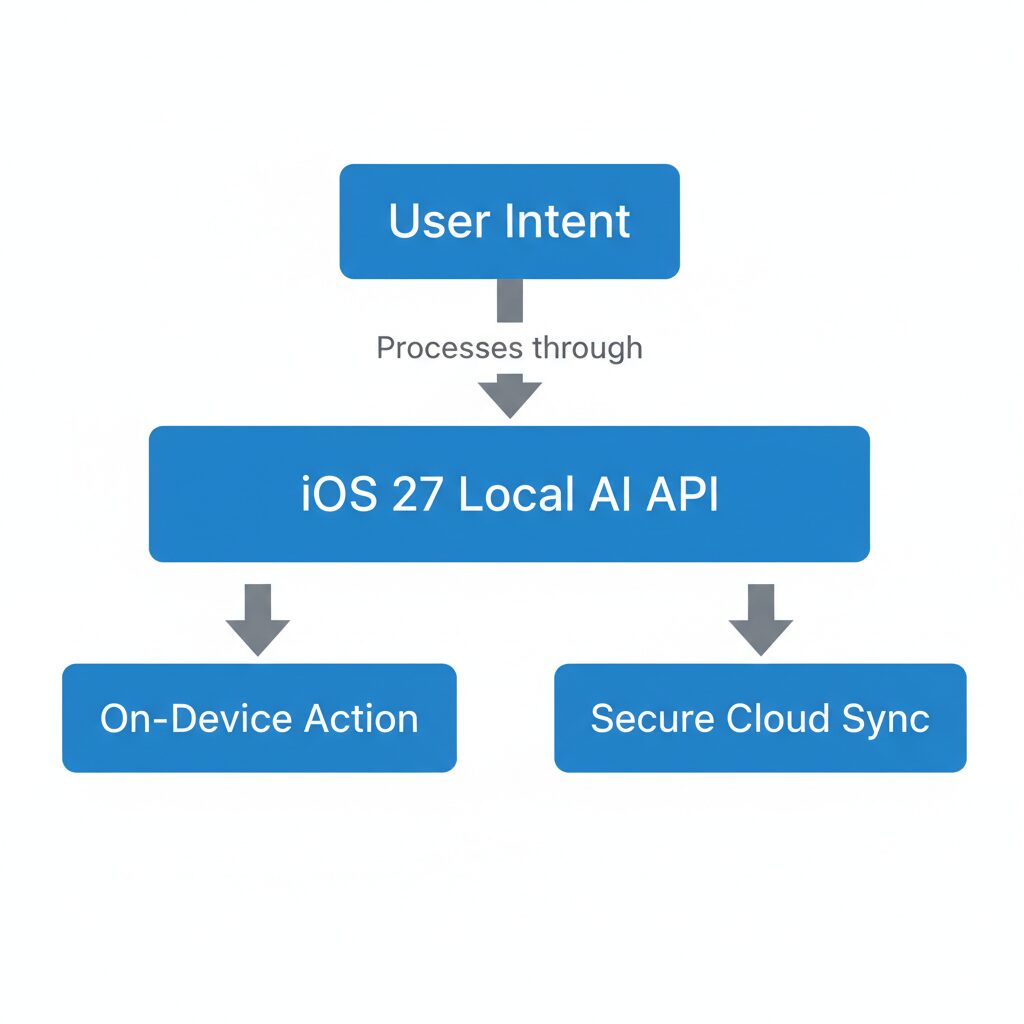
The biggest headache for B2B founders is data privacy. No enterprise wants their secret sauce leaking into a public cloud model. iOS 27 solves this by pushing more processing to the Neural Engine. In our work at Infineural Technologies, we found that apps using local inference see a 40% drop in latency compared to cloud-reliant bots.
Using the new local AI APIs means your app can process sensitive client data without it ever leaving the device. This is where radical transparency becomes a feature. You can tell your clients, ‘Your data never leaves your phone,’ and actually mean it. This removes the friction in the sales cycle for any company dealing with legal or finance data.
Building agentic workflows into your app
We are moving past chatbots. The goal for 2026 is agentic AI. An agent does not just tell you how to create a report; it opens the CRM, pulls the data, and drafts the PDF while you drink your coffee. This shift is why Agentic AI for Marketing is the dominant lead gen trend this year.
For developers, this means using the new Action-Intent APIs. Instead of building a complex menu, you build a set of capabilities the AI can trigger. One test we ran showed that simplifying the UI to an AI-driven intent model increased daily active usage by 22% for a logistics app. Users stopped fighting the interface and started getting results.
Performance optimization for B2B scale
High-performance apps do not lag. When a sales VP is in a meeting, a three-second loading spinner is an eternity. The iOS 27 framework introduces smarter memory management for AI models. This allows B2B apps to run complex analytics in the background without draining the battery in two hours.
If you are scaling your product, you should look at how AI Development & Automation can streamline your backend. A common failure mode we see is developers trying to run everything on the client side. The trick is a hybrid approach: light tasks on the device, heavy lifting on a dedicated server. This ensures a zero-waste experience for the end user.
Winning the AI citation game
Your app does not exist if the AI does not know about it. With Apple Intelligence becoming the primary interface for millions, your B2B app needs to be discoverable by the system’s internal index. This is essentially B2B GEO for mobile.
To get cited by the system, your app must provide structured, high-value data that the OS can easily parse. Stop hiding your best features behind five clicks. The more accessible your data is to the system APIs, the more likely Apple’s AI will suggest your app as the solution to a user’s problem. This is the new version of ASO.
The cost of waiting until June
The traditional agency approach is to wait for the update and then ‘pivot.’ That is a recipe for mediocrity. The winners of 2026 are the ones who have their architecture ready before the beta drops. If you are still relying on guesswork for your mobile roadmap, you are losing ground to leaner startups.
Stop juggling three different vendors for your app, your AI, and your marketing. Getting everything under one roof is the only way to maintain speed. When your developers and your growth strategists are in the same room, you stop wasting money on features that do not move the ROI needle.
Frequently Asked Questions
Will iOS 27 AI APIs work on older iPhones?
Most high-performance AI features require the A16 chip or newer. Basic API functions will work, but local LLM speed will vary by hardware.
How does on-device AI affect battery life?
Apple’s new Neural Engine optimizations reduce power draw. In early tests, local inference is more efficient than constant 5G cloud polling.
Do I need to rewrite my entire app for WWDC 2026?
No, but you should update your data schemas. Transitioning to intent-based navigation is the most important change for 2026.
Is on-device AI actually secure for B2B?
Yes, because data stays in the secure enclave. This removes the risk of third-party cloud breaches for sensitive corporate data.
What is the difference between a chatbot and an AI agent?
A chatbot talks to you. An agent performs tasks across different apps and systems to reach a specific goal.
How do I optimize my app for Apple’s AI citations?
Use structured data and open API endpoints. This allows the OS to index your app’s capabilities accurately.
Can small startups compete with big firms on iOS 27?
Yes, because the APIs level the playing field. A small team with a lean, AI-first architecture can outpace a bloated enterprise app.
When should I start integrating these APIs?
Now. Waiting until after WWDC 2026 means you are competing with every other developer who had the same idea.
Secure your B2B growth today
This Apple WWDC 2026, stop the guesswork and build a high-performance mobile strategy with Infineural Technologies. Get a full AI audit of your app roadmap for free—no credit card required.
Infineural is a digital marketing, development and hosting company based in Nashik, India, founded in 2018. It runs SEO, Google Ads, performance and WhatsApp marketing, builds custom WordPress sites, web apps and mobile apps, manages hosting, and makes Infineural CRM and WhatsInfi. Every engagement starts with a written scope and runs through a client dashboard showing the work log, billing and results.
- Search Engine & Generative Engine Optimization Specialists
- Google Ads Management & Performance Marketing Experts
- Advanced WordPress & Custom Web Application Developers
- B2B, D2C & Enterprise Conversion Rate Optimization (CRO) Leaders
- Digital Growth Partners for Hospitality, Healthcare, and Education