
Part of our complete guide: Google Ads Business Names: Critical Policy Rules for Brands
- Ad platforms frequently double-count sales because client-side conversion tags cannot track actions that occur after a lead form submission.
- Marketing teams misallocate an average of 26% of paid media spend when relying solely on self-reported ad network metrics.
- Client-side browser cookies fail across long sales cycles due to ad blockers, device switching, and privacy restrictions.
- First-party server-side tagging routes data through custom domains, allowing tracking cookies to persist across multi-week consideration windows.
Google Ads claims twenty sales. Meta Ads claims fifteen. Your bank account shows eight. If your company sells high-ticket services, commercial real estate, or B2B contracts, this discrepancy occurs constantly. Ad platform dashboards routinely double-count sales because each platform grades its own homework using client-side conversion tags that cannot track what happens after a lead form submission.
Solving this problem requires moving beyond third-party browser cookies to first-party server-side tracking, and pairing that data pipeline directly with your sales records. When you map every customer interaction from the initial ad click to the final cleared invoice inside Infineural CRM, you replace conflicting ad metrics with verified commercial reality.
The mechanics behind inflated ad network metrics
Ad platforms exist to sell ad inventory. Because of that economic reality, their default attribution settings take credit for revenue they only touched in passing. When a prospect clicks a Meta ad on Monday, searches your brand name on Google on Wednesday, and fills out a form on your site, both networks take credit. Meta counts a view-through or click-through conversion. Google logs a search conversion. Each platform claims 100% of the deal value.

According to research published by Gartner in 2024, marketing teams that rely solely on self-reported ad network metrics misallocate an average of 26% of their paid media spend. The root problem sits inside the browser. Traditional client-side pixels run as JavaScript snippets in the user’s web browser. When an ad blocker blocks the script, or Apple Safari’s Intelligent Tracking Prevention (ITP) caps the cookie lifespan to 24 hours, the attribution chain snaps. The platform loses the original ad click identity. If the prospect converts three days later, Google and Meta either lose the event entirely or misattribute the transaction to direct traffic.
For brands selling lower-cost consumer products with a ten-minute purchase cycle, browser cookies capture enough signal for the ad platform algorithms to function. For high-ticket sales pipelines, where closing a contract takes four to twelve weeks, browser cookies fail completely. The customer deletes their cookies, switches devices, or consults a sales representative via WhatsApp or phone. By the time money enters your bank account, the client-side pixel has forgotten the user ever existed.
The transition to first-party server-side tagging
To establish durable measurement, engineering teams now deploy server-side tagging using Google Tag Manager (sGTM) paired with direct application programming interfaces like Meta Conversions API (CAPI) and Google Enhanced Conversions. Instead of sending behavioral events from the user’s browser to Facebook or Google, the browser sends an event to your own cloud server running on your custom domain, such as tracking.yourdomain.com.
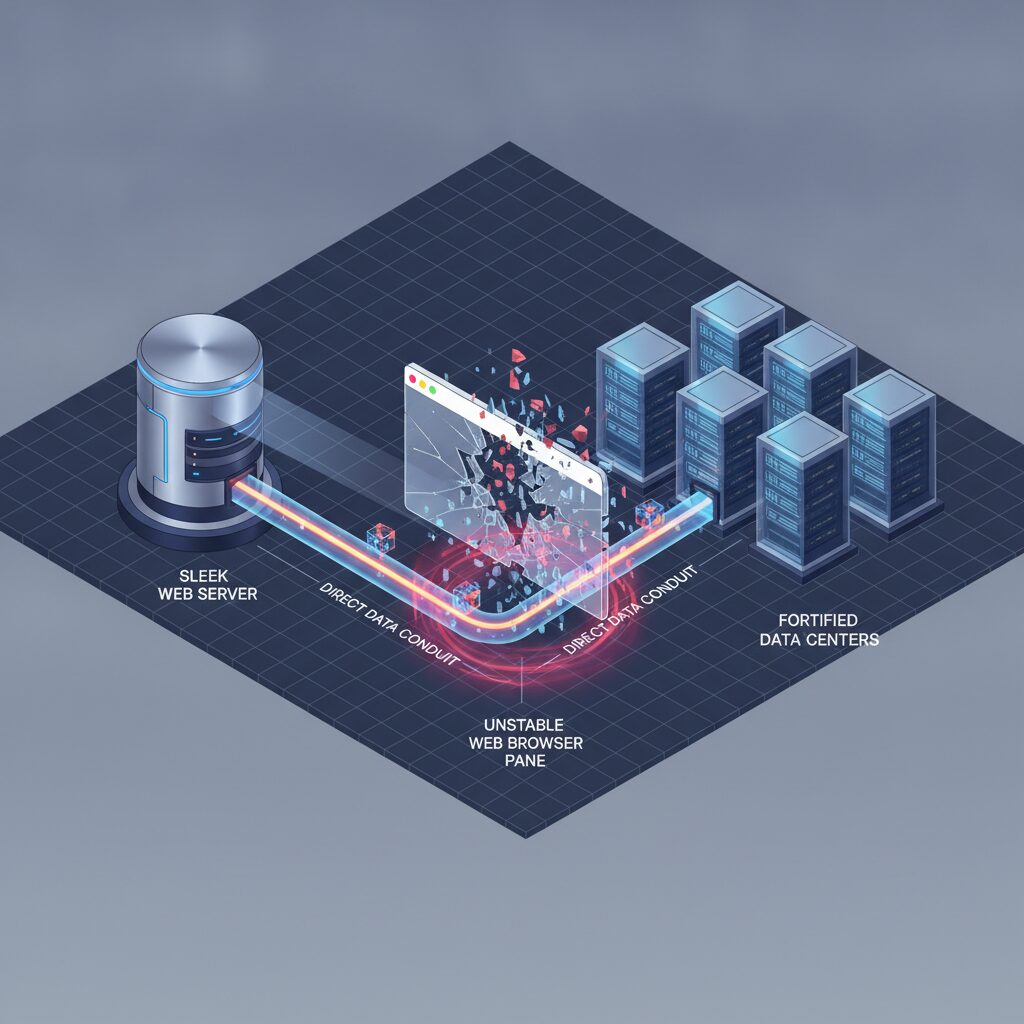
This architecture changes the security and persistence of your marketing data. Because the server container sits on your first-party subdomain, the browser treats the cookies it sets as genuine first-party data rather than third-party tracking cookies. Safari ITP and browser privacy extensions allow these cookies to persist across multi-week consideration windows. Your server receives the incoming payload, scrubs unnecessary personally identifiable information (PII), enriches the payload with historical customer data from your database, and sends the verified event directly to Google and Meta over a secure server-to-server connection.
Consider how this operates during a high-ticket transaction in the education or commercial real estate sector. A prospective buyer visits your landing page after clicking a paid search ad for an executive program. The server container captures the Google Click Identifier (GCLID), the Facebook Click Identifier (FBCLID), and the client IP address, and issues a secure, first-party cookie named _inf_uid. When the prospect submits the application, the web server writes those click parameters and session timestamps into the lead record in Infineural CRM. Even if the student does not pay tuition for another six weeks, that original ad interaction remains anchored to their permanent CRM profile.
Comparing attribution models for long-cycle sales pipelines
Once your server-side collection pipeline functions cleanly, you must decide how to distribute credit across touchpoints. Ad networks push advertisers toward automated models, but selecting the right framework depends entirely on your sales cycle length and deal volume.

First-touch attribution awards 100% of the credit to the channel that introduced the user to your brand. If someone discovered your firm through a cold LinkedIn campaign or a non-brand Google Search campaign, that channel receives all the revenue credit, even if the prospect visited your site seven more times over three months before buying. In practice, this model rewards cold discovery channels and punishes remarketing. It helps founders identify which campaigns expand top-of-funnel reach, but it ignores the mid-funnel content and closing mechanisms that actually convince someone to sign a contract.
Linear attribution divides credit evenly across every touchpoint recorded before the conversion. If a prospect interacts with a YouTube ad, an organic search article, a Meta retargeting video, and a sales sequence on WhatsApp, each channel receives 25% of the deal value. This approach avoids giving undue credit to the final click, but it introduces a different distortion: it assumes every touchpoint carries identical commercial weight. A five-second impression on a social graphic receives the same mathematical influence as a sixty-minute technical consult booked through WhatsApp Cloud API for SMBs.
Data-driven attribution (DDA) uses algorithmic modeling to evaluate how the presence or absence of specific touchpoints shifts conversion probability. Google Ads and Meta use proprietary machine learning to calculate incremental lift across millions of ad journeys. In high-volume environments, such as retail and D2C stores processing thousands of transactions weekly, data-driven attribution provides the most balanced view of channel performance. However, DDA breaks down when applied to low-volume, high-value pipelines. According to documentation published by Google Ads, data-driven models require a minimum of 300 conversion events and 3,000 ad interactions within a rolling 30-day window to maintain statistical confidence. If your B2B sales team closes eight enterprise accounts a month, Google’s algorithmic model lacks the raw volume needed to assign fractional weights accurately. It begins guessing, often assigning exaggerated value to branded search terms that were merely navigational shortcuts for buyers who were already committed to purchasing.
| Attribution Model | Credit Distribution | Best Suited For | Primary Vulnerability in B2B |
|---|---|---|---|
| First-Touch | 100% to first recorded interaction | Aggressive top-of-funnel discovery campaigns | Completely ignores sales follow-up and closing touchpoints |
| Linear | Equal division across all recorded points | Broad brand campaigns with balanced touchpoints | Treats passive ad impressions as equal to substantive sales calls |
| Data-Driven (DDA) | Fractional algorithmic weighting based on lift | High-volume e-commerce and high-velocity SaaS | Fails on low transaction volumes below 300 conversions a month |
| CRM Revenue Mapping | Tied to milestone advancement and paid invoices | High-ticket B2B, consulting, real estate, healthcare | Requires strict tagging discipline and offline data uploads |
The offline disconnect: Why ad platform ROAS diverges from cash
The core vulnerability of digital advertising dashboards is their inability to observe offline sales milestones. A campaign manager logging into Meta Ads Manager sees an account-level return on ad spend (ROAS) of 4.2x. Based on that figure, the agency recommends doubling the budget. But inside the company’s accounting software, cash collections have remained flat. How does this divergence occur?
When you run performance campaigns for legal services, enterprise software, or real estate development, the conversion event sent to the ad network is typically a form submission or a phone call. Because the ad network has no visibility into what happens after the form submit, its algorithmic bidding engines optimize to find people who fill out forms cheaply. Those users often turn out to be job seekers, tire kickers, competitors, or people who enter fake phone numbers. The ad network algorithm declares victory because it drove one hundred leads at ₹500 each. The sales team, meanwhile, discards ninety-two of those leads as unqualified junk.
By failing to feed verified revenue milestones back to the ad networks, you force bidding algorithms to optimize for spam. When you manage campaigns through our performance marketing workflows, conversion tracking is wired directly to your commercial outcomes. You do not optimize for raw leads; you optimize for qualified pipeline value and realized revenue.
Reconciling platform claims with Infineural CRM
True attribution requires a closed-loop system where revenue recorded in your sales software updates the ad platforms automatically. Infineural approaches this problem through a structured, four-step reconciliation framework that eliminates discrepancies between marketing reports and bank statements.

Step one: Persistent parameter capture on the website. When a visitor lands on your custom website built by our WordPress development team, our custom scripts capture the full UTM parameter set, the Google Click ID (GCLID), the Meta Click ID (FBCLID), and the client timestamp. These values are stored inside first-party browser cookies and passed into hidden fields within every web form. If the user chooses to chat directly instead of submitting a form, our WhatsApp marketing strategy frameworks attach those same tracking identifiers to the initial chat payload inside WhatsInfi.
Step two: Lead creation and deal pipeline attachment. When the lead enters Infineural CRM, the system generates a distinct record containing both the contact details and the origin tracking string. As the sales representative works the deal, they update stage values: Contacted, Discovery Call Completed, Proposal Sent, Contract Signed, and Payment Received. Every movement along the pipeline carries a monetary value and a verified status.
Step three: Automated offline conversion export. When an opportunity reaches the ‘Contract Signed’ or ‘Payment Received’ stage, Infineural CRM fires an automated webhook. The webhook formats the event according to the specifications required by Google Ads Offline Conversion Tracking and Meta Conversions API for Offline Events. It sends the original GCLID or hashed customer details, the precise conversion name, the event time, and the exact rupee or dollar amount paid. No human intervention or manual spreadsheet exports are required.
Step four: Closed-loop algorithmic re-training. Once Google Ads and Meta receive the offline conversion file, their Smart Bidding and Advantage+ algorithms shift behavior. Instead of hunting for individuals who submit forms and never answer the phone, the bidding models analyze the shared characteristics of the accounts that actually cleared payment. Within four to six weeks of feeding back offline revenue data, ad platforms stop spending your budget on irrelevant leads and begin competing for prospects who mirror your highest-paying clients.
Technical implementation of server-side data infrastructure
Deploying this infrastructure requires coordinating your web hosting, tag management server, and CRM endpoints. You cannot deploy enterprise attribution through third-party WordPress plugins that inject generic script tags into your website footer. Those plugins slow down page loading times, break under core updates, and fail to pass click IDs securely.
Our infrastructure deploys a dedicated server container through Google Tag Manager, hosted on our WordPress optimized hosting environment. The web container captures client-side actions and sends them directly to the server container via an HTTP post request over an encrypted connection. The server container evaluates the payload against strict consent parameters, strips any unhashed PII to maintain compliance with privacy standards, and distributes the data simultaneously to Google Analytics 4, Meta CAPI, and your internal webhook listener.
For organizations operating across multiple regional markets or running multi-location operations, this setup operates with complete transparency. In our client dashboard, founders and marketing heads inspect the live work log and itemised billing showing exactly how tags are configured, which endpoints are receiving payloads, and how data flows across systems. Because you own the accounts and the code, your analytics assets remain your property permanently. There are no proprietary black-box wrappers or locked vendor portals.
A concrete scenario: Real estate and B2B consulting pipeline
To see how this framework functions in the real world, consider a mid-sized real estate firm marketing commercial office spaces. The company spends ₹4,00,000 per month across Google Search and Meta Ads. A typical lease agreement represents ₹15,00,000 in annual recurring value, and the evaluation cycle spans forty-five days.

Under a conventional agency setup using standard browser pixels, the agency reports 320 leads at an average cost of ₹1,250 per lead. The ad dashboard indicates an estimated ROAS of 6.0x based on self-reported pipeline estimates. However, the commercial leasing team complains that fewer than 15% of the inquiries are genuine commercial tenants; the remainder are residential inquiries, brokers looking for sub-listings, or individuals seeking employment.
When the firm shifts to our integrated tracking model, the workflow changes completely:
- The website captures the visitor’s GCLID and FBCLID and stores them in secure, first-party server cookies.
- Inquiry forms pass these click IDs into Infineural CRM, logging the initial touchpoint as an active commercial lead.
- The leasing manager qualifies the prospect on a discovery call, marking the deal as ‘Qualified Site Visit Scheduled’ inside the CRM.
- Infineural CRM sends an offline event to Google Ads tagged as ‘Site Visit Scheduled’ with an arbitrary pipeline value of ₹50,000. Google’s bidding algorithm immediately receives a signal distinguishing this visitor from the 85% who never picked up the phone.
- Thirty days later, the client signs the commercial lease. The CRM automatically triggers a final offline conversion event to Google and Meta with the cleared transaction value of ₹15,00,000.
Within two billing cycles, the ad platforms re-align their automated targeting. The total volume of form submissions drops from 320 down to 140, but the volume of scheduled site visits increases by 40%. The cost per lead appears higher in the ad manager, but the cost per closed lease falls significantly. This represents zero-waste PPC: eliminating low-grade ad spend by teaching machine learning models to care only about real commercial revenue.
Navigating privacy regulations and first-party consent
Capturing attribution data must never compromise user trust or legal compliance. Data privacy laws across global jurisdictions, including India’s Digital Personal Data Protection Act (DPDPA) and the European Union’s General Data Protection Regulation (GDPR), mandate strict consent protocols for processing user identifiers.
Server-side tracking does not bypass consent; it enforces consent more rigorously than browser scripts ever could. In a traditional client-side pixel implementation, third-party JavaScript libraries execute within the browser, occasionally scraping sensitive page content, email fields, and browsing history without explicit filtering. With a first-party server container, your infrastructure controls the data gate. If a user declines marketing cookies on your consent banner, your server drops the ad platform identifiers while maintaining anonymous session counts for basic operational analytics. Furthermore, all customer identifiers sent through offline APIs, including email addresses and phone numbers, undergo SHA-256 cryptographic hashing on your server before transmission, ensuring that plain-text personal information never travels across ad network pipes.
For organizations that manage client conversations across chat apps, WhatsInfi handles opt-ins natively. When a prospect engages via WhatsApp, our automated flows request explicit opt-in confirmation before logging marketing preferences. This keeps your data architecture clean, compliant, and defensible during regulatory audits.
Building your measurement roadmap with written scope
Fixing performance marketing attribution is not a cosmetic switch you flip in an afternoon. It is an engineering task that bridges marketing operations, software development, and sales workflow design. When agencies treat attribution as a routine marketing add-on, it inevitably breaks during the next browser update or CRM migration.
At Infineural, our Growth & Marketing and Design & Development teams work as one unit. We begin every project with a written scope and a fixed quote. You receive an itemised proposal detailing every step of the integration: from the deployment of custom server containers on your domain to the precise webhook listeners configured inside Infineural CRM. There are no surprise invoices, no lock-in contracts, and no hidden vendor margins. Our work proceeds month-to-month based on documented progress recorded in your live client dashboard.
If you are tired of reconciling conflicting ad agency spreadsheets with your actual monthly revenue, stop letting ad networks grade their own tests. Align your tracking infrastructure with your real-world pipeline, feed validated offline sales data back to your bidding models, and build a marketing engine anchored in radical transparency.
Frequently Asked Questions
What is the difference between client-side and server-side attribution?
Client-side attribution relies on JavaScript running inside the visitor’s web browser to track events and set third-party cookies. Server-side attribution sends event data directly from your custom web server to ad network endpoints, bypassing ad blockers and browser cookie restrictions.

Why does Meta Ads report more sales than my CRM actually recorded?
Meta claims credit for purchases based on seven-day click and one-day view attribution windows, often claiming sales that were closed by other channels or repeat buyers. Without server-side deduplication and CRM reconciliation, the platform routinely claims credit for transactions it did not directly produce.
Can high-ticket B2B companies rely on Google’s Data-Driven Attribution?
Google’s Data-Driven Attribution model requires high conversion volumes to assign fractional values accurately across touchpoints. B2B firms with fewer than 300 monthly conversions should rely on direct CRM revenue tracking rather than platform-generated algorithmic estimates.
How does Meta Conversions API (CAPI) improve ad performance?
Meta CAPI sends server-side purchase and lead events directly to Meta servers, restoring signals lost to browser ad blockers and short cookie lifespans. This accurate conversion data helps Meta’s bidding algorithms find higher-quality prospects at a lower cost per acquisition.
What click identifiers are required to track offline sales in a CRM?
You must capture the Google Click Identifier (GCLID) for Google Ads and the Facebook Click Identifier (FBCLID) for Meta campaigns when a user submits a web form. Storing these values in your CRM allows you to upload offline conversion records that match back to the original ad click.
Does server-side tracking comply with global data privacy laws?
Server-side tracking improves privacy compliance because your server filters and hashes personal information before transmitting data to third parties. It also respects user consent by dropping tracking payloads when a visitor opts out on your consent management banner.
How does WhatsInfi integrate into marketing attribution?
WhatsInfi captures inbound inquiries originating from click-to-WhatsApp ads and attaches marketing campaign parameters directly to the contact record. This ensures that sales conversations closing inside WhatsApp are properly attributed to the original ad spend.
Can I export offline sales data from Infineural CRM back to Google Ads?
Infineural CRM includes built-in webhook and automated export capabilities that format closed revenue milestones for Google Ads and Meta CAPI. This automatically trains ad platform algorithms to optimize for paying customers rather than low-quality form submissions.
Audit your attribution infrastructure
Stop paying for ad spend that fails to produce verified bank deposits. Submit your tracking configuration for a diagnostic review with our technical team. You will receive an itemised audit identifying broken conversion signals and a written scope showing how to connect your ad accounts directly to revenue milestones inside Infineural CRM with no lock-in and zero obligation.