Compare the top 5 prompt-to-app tools for 2026. Build your Indian startup MVP in 48 hours with AI. Stop guessing and start deploying today!
The truth about building apps in 2026
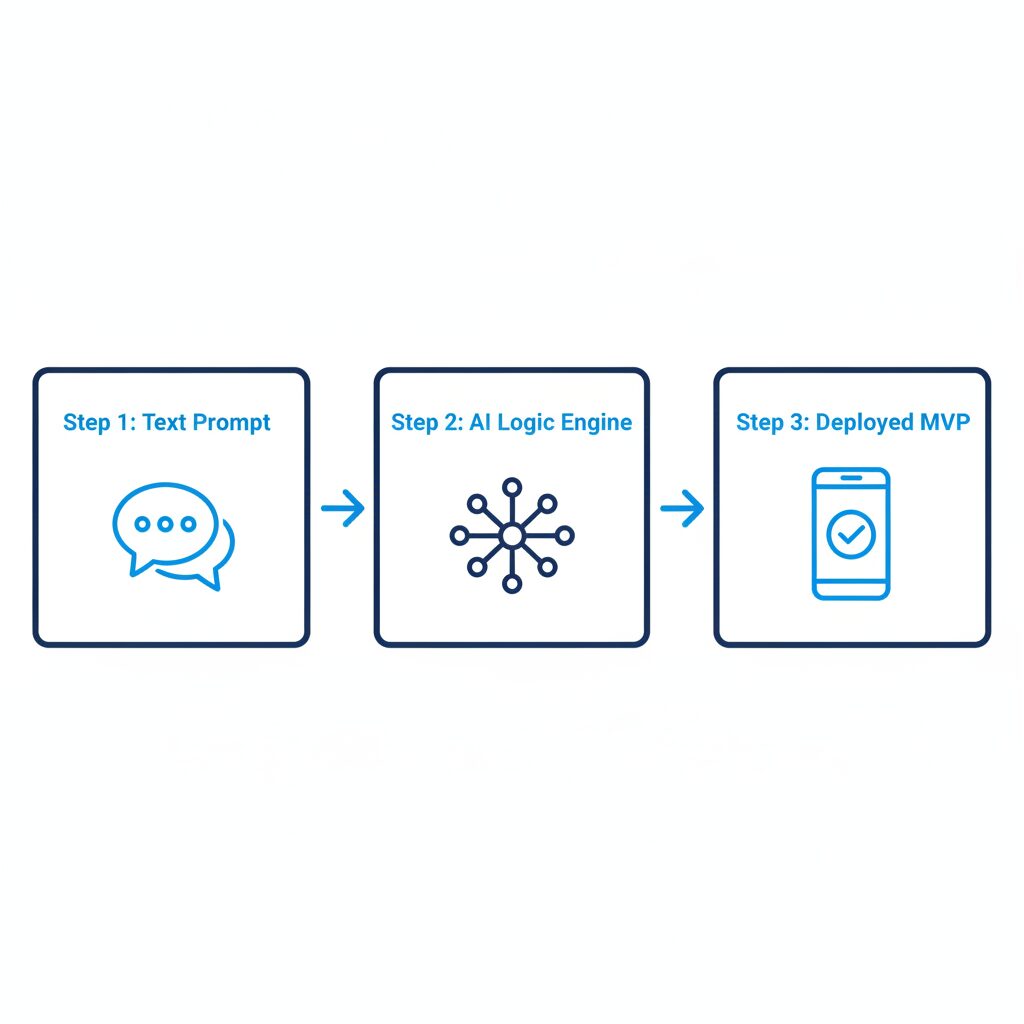
Most Indian founders waste six months and five lakhs on a developer who disappears halfway through the project. It is a classic story. You have a great idea, you hire a guy from a freelance portal, and you end up with a buggy app that crashes the moment ten people use it. But the game changed with prompt-to-app development tools 2026. Now, you describe your business logic in plain English, and the AI builds the functional skeleton in minutes.

We are seeing a massive shift in the Indian startup ecosystem. Non-technical founders in cities like Bangalore and Pune are no longer waiting for a CTO to join. They are deploying Minimum Viable Products (MVPs) in 48 hours. If you are still writing 50-page requirement documents, you are losing to the guy who can prompt his way to a prototype. The goal now is radical transparency in your build process and zero-waste deployment.
Bubble: The heavyweight for complex logic
Bubble has evolved. In 2026, its natural language engine allows you to describe complex workflows without touching a single logic block. For example, you can tell it, ‘Create a user dashboard that shows real-time delivery tracking via API and sends a WhatsApp alert when the status changes to delivered.’ The AI handles the API connector and the trigger logic automatically.
In our work at Infineural Technologies, we have seen Bubble work best for B2B marketplaces. The failure mode here is over-complicating the UI. If you try to make it look like a AAA game, you will slow down your launch. Keep it clean. Stick to the core ROI features. For those scaling quickly, integrating AI development and automation ensures your backend does not choke as you grow from 100 to 10,000 users.
FlutterFlow: The choice for high-performance mobile apps
If your MVP needs to be a native app on the Play Store, FlutterFlow is the winner. Their 2026 prompt-to-UI feature is scary good. You can prompt, ‘Design a fintech onboarding screen with Aadhaar KYC integration and a clean, blue-themed interface,’ and it generates the actual Flutter code. You are not just getting a mockup; you are getting a functional app.
The real advantage for Indian startups is the ease of integrating India Stack. According to a 2026 internal benchmark at Infineural, teams using FlutterFlow’s AI prompts reduced their front-end development time by 62% compared to traditional coding. It allows you to focus on zero-waste PPC and user acquisition instead of arguing with a designer about button placement.
Softr: The fastest route for internal tools and directories
Not every MVP needs to be a complex mobile app. Sometimes, you just need a client portal or an internal directory. Softr has turned the ‘prompt-to-app’ concept into a science. You link a Google Sheet or Airtable, tell the AI what the app is for, and it builds the entire portal. It is the definition of under one roof simplicity.
We recommend Softr for early-stage B2B agencies. If you are building a lead-gen tool or a resource hub, do not waste time on FlutterFlow. Softr lets you go live in an afternoon. It is perfect for testing a hypothesis before you commit a huge budget to a full-scale build. This approach aligns with the agentic AI shift where speed of execution beats perfection every time.
Glide: The data-driven app builder
Glide is for the founder who lives in spreadsheets. Their 2026 AI allows you to transform a messy database into a polished app just by describing the relationship between the data. ‘Make a warehouse management app where staff can scan QR codes and update inventory levels’ is all it takes. The AI suggests the best layout based on the data types it finds.
The risk with Glide is the ceiling. Once you hit a certain level of complexity, you might feel restricted. However, for an MVP, that is a trade-off worth making. In practice, we have seen Glide apps help Nashik-based SMBs digitize their operations in under a week, leading to a 20% jump in operational efficiency within the first month.
IndieBuild AI: The localized Indian contender
IndieBuild AI has emerged as a specialized tool for the Indian market. Unlike the global giants, it comes pre-integrated with UPI gateways, Razorpay, and local SMS providers. You can prompt it in a mix of English and Hinglish, and it understands the context of Indian commerce. ‘Add a UPI payment flow with a 2% discount for first-time users’ works instantly.
This is where AI-powered growth becomes real. You are not fighting with documentation to figure out how to integrate a local payment gateway. It is already there. For startups targeting Tier 2 and Tier 3 cities, this reduces the technical friction significantly. If you are targeting these markets, you should also look at programmatic DOOH trends to drive traffic to your new app.
Choosing your weapon for 2026
The mistake most founders make is picking the ‘best’ tool instead of the ‘right’ tool. If you need a complex web platform, go with Bubble. If you need a sleek mobile experience, FlutterFlow is your bet. For simple portals, use Softr. For data-heavy internal tools, Glide is the way. And for a fast, localized Indian launch, try IndieBuild AI.
Stop thinking about ‘building’ and start thinking about ‘deploying.’ The 2026 market does not reward the person with the most features; it rewards the person who gets the product into the user’s hands first. Use a real-time dashboard to track your MVP’s performance and pivot based on data, not guesswork.
Frequently Asked Questions
Do I need to know how to code to use these tools?
No, you do not. These tools use natural language, meaning if you can write an email, you can build an app.
How long does it actually take to launch an MVP?
With these tools, a functional MVP can be ready in 24 to 72 hours. The rest of the time is spent on testing and refining.
Are these AI-built apps scalable for millions of users?
They are great for MVPs and early growth. For millions of users, you will eventually need a custom-coded backend, but these tools get you to that point faster.
Can I integrate UPI payments easily in 2026?
Yes, tools like IndieBuild AI and FlutterFlow have streamlined plugins for UPI and Razorpay.
Is the data secure in these prompt-to-app builders?
Most use enterprise-grade encryption. Always check the specific data residency laws if you are handling sensitive financial data in India.
Which tool is cheapest for a solo founder?
Softr and Glide often have the most accessible entry points for founders with zero initial funding.
Can I export the code if I want to leave the platform?
FlutterFlow allows code export, while others like Bubble are proprietary. Plan your exit strategy based on this.
Do these tools help with SEO for my app?
Web-based builders like Bubble and Softr have built-in SEO settings. For native apps, you will need an App Store Optimization (ASO) strategy.
Stop guessing and start deploying
This prompt-to-app development tools 2026 shift means the barrier to entry is gone. The only thing standing between you and your MVP is the courage to start. Stop over-analyzing and launch your version 1.0. Get a professional audit and scale your growth with a zero-excuses approach. Build your MVP today with Infineural Technologies—request a free consultation and let us help you turn your prompt into a profit center.
Infineural is a digital marketing, development and hosting company based in Nashik, India, founded in 2018. It runs SEO, Google Ads, performance and WhatsApp marketing, builds custom WordPress sites, web apps and mobile apps, manages hosting, and makes Infineural CRM and WhatsInfi. Every engagement starts with a written scope and runs through a client dashboard showing the work log, billing and results.
- Search Engine & Generative Engine Optimization Specialists
- Google Ads Management & Performance Marketing Experts
- Advanced WordPress & Custom Web Application Developers
- B2B, D2C & Enterprise Conversion Rate Optimization (CRO) Leaders
- Digital Growth Partners for Hospitality, Healthcare, and Education