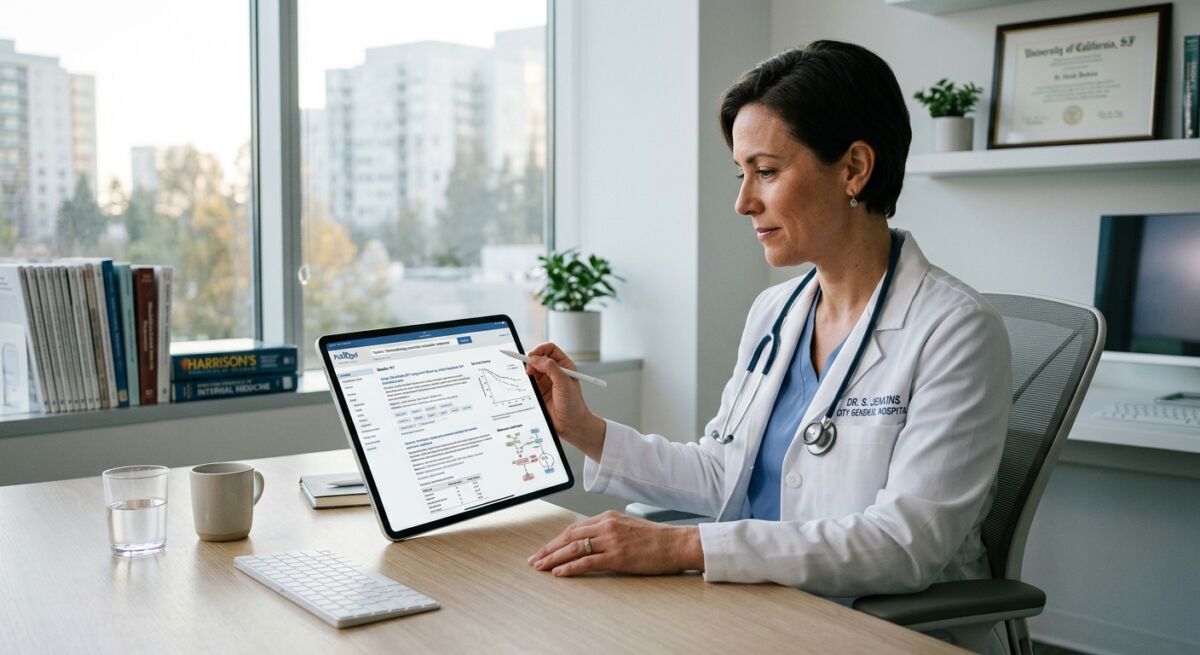
PubMed, Cochrane, TRIP, and the AI tools worth using in 2026, plus what independent research says about trusting AI-summarized medical literature
Stop Using General Search for Medical Expertise
Most people reach for Google without a second thought, and for everyday questions that’s fine. But when you’re chasing down specific clinical data or a rare drug interaction, general search usually gets in its own way. It surfaces SEO-optimized patient blog posts ranked for volume, not the peer-reviewed data a clinician actually needs. What you need instead is a small set of tools built specifically for this kind of search, and knowing which one fits which question.

The volume of low-quality health content online keeps climbing, which makes the case for specialized tools stronger every year, not weaker. Finding real evidence-based answers means going to where the data actually lives: purpose-built databases and search tools for the healthcare field specifically. Here’s what’s actually worth using right now, and where each one falls short.
The Gold Standard: PubMed and Beyond
PubMed remains the default starting point for medical research, and the National Library of Medicine has kept iterating on it: better reference-list formatting, date stamps on saved searches, cleaner sharing tools, all useful, none of it flashy. PubMed itself still doesn’t summarize papers for you. What has changed is the layer of third-party AI tools now built on top of its data: Elicit, SciSpace, and a newer entrant called PubMed.ai all let you ask a question in plain language and get back a synthesized answer with citations, instead of a page of abstracts to read manually. They’re genuinely useful for a first pass. Treat the summary as a starting point, not the final word, and confirm anything load-bearing against the source abstract. Don’t skip the Advanced Search Builder either. Filtering by MeSH terms, Medical Subject Headings, still finds things a natural-language query misses.
For the highest level of evidence, go to the Cochrane Library. Cochrane built its reputation on systematic reviews, the kind of rigorous, transparent synthesis that tells you whether a treatment actually works or whether the enthusiasm around it is running ahead of the evidence. Cochrane is also, notably, one of the more cautious voices on AI in this space: it has an independent study running through 2026 specifically testing whether AI tools can be trusted to replicate parts of a systematic review, precisely because it doesn’t want to take vendor claims at face value. That caution is worth taking seriously. If you want a broader view of how general search stacks up against tools like this, our Top Search Engines List: 12 Best Platforms for Traffic (2026) covers the wider landscape.
The Rise of AI-First Medical Search Engines
Tools like Consensus and Elicit search across millions of papers and return answers backed by citations, and they’ve genuinely changed how a first-pass literature search feels. But the accuracy story is more mixed than the marketing suggests. Elicit’s own validation, tested against nearly a thousand Cochrane reviews, reported search sensitivity above 95 percent. An independent comparison published in Cochrane’s own methods journal found something different: in that study, Elicit’s search sensitivity came in well below what a traditional multi-database search achieved. Both results can be true at once, since a lot depends on how the tool is used and what it’s being asked to do. The practical takeaway is the one that matters: these tools are strong for a preliminary search or for surfacing papers you might otherwise miss, and weak as a full replacement for a proper systematic search. Always trace a citation back to the actual paper before it goes anywhere near a clinical decision.
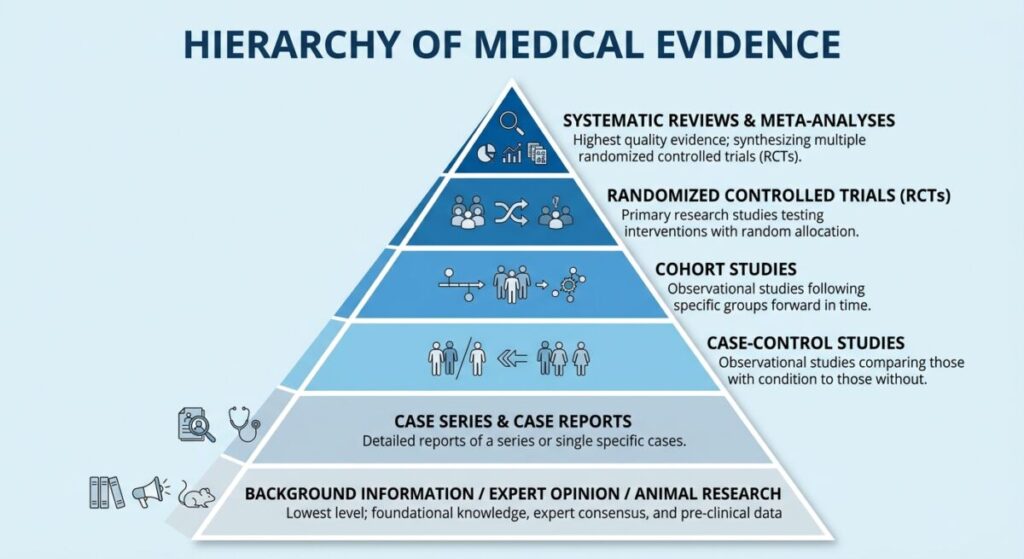
Beyond the AI layer, the TRIP Database (Turning Research Into Practice) is worth knowing specifically because of how it sorts results. It ranks by the hierarchy of evidence, systematic reviews and guidelines first, single small studies further down, so you’re not digging through a pile of low-quality data to find the one thing that matters. Medical research overlaps heavily with scholarly search more broadly, and if that’s useful context, our 10 Best Academic Search Engines Beyond Google Scholar (2026) covers where the two fields intersect.
Niche Tools for Drugs and Rare Diseases
For drug information specifically, DailyMed is the official source for FDA label data and updates daily, making it the most reliable place to check package inserts and side-effect profiles rather than a summary someone else wrote about them. For rare diseases, the Genetic and Rare Diseases Information Center (GARD) is purpose-built for exactly that gap: it connects you to research and trial data that a general search engine, or even PubMed’s default ranking, tends to bury under more common conditions.
Search privacy matters more in this kind of research than people usually think about, particularly when a search history could reveal something about a specific patient case. If that’s a live concern for your workflow, our 7 Best Private Search Engines for Total Anonymity in 2026 covers the options for keeping that research off the open web.
How to Use These Engines Like a Pro
Knowing the list is only half of it. The PICO framework, Population, Intervention, Comparison, Outcome, is what actually separates a productive search from a frustrating one. Feed those four elements into a tool like TRIP or PubMed’s Advanced Search instead of a loose string of keywords, and the results narrow to what you’re actually asking rather than everything vaguely adjacent to it.
Set up saved search alerts too. Nearly every tool on this list, PubMed and Cochrane included, will email you when new papers match a saved query. Given how fast a research area can move, that’s a meaningfully better system than remembering to check back manually, and it’s the difference between reading a study when it publishes and reading about it three months later, after someone else has already acted on it.
The Future of Clinical Search in 2026
The more interesting shift right now isn’t in search itself but one layer behind it, in how the underlying data gets verified. Pharmaceutical companies and clinical research organizations have started piloting blockchain-based systems to create tamper-proof audit trails for trial data, driven partly by decentralized trials pulling data from patient homes and wearables rather than a single controlled site. It’s a data-integrity story more than a search story, but it feeds directly into how much a clinician can trust the results a search tool eventually surfaces. Worth watching, even if it won’t change how you search next week.
The actual gain from using the right tool isn’t abstract. It’s the difference between finding a definitive answer in a few minutes versus losing half an hour to a general search engine’s patient-facing content before you even reach a primary source. That time difference compounds across a career, and it’s exactly what a specialized search stack is for.
Frequently Asked Questions
What is the best medical search engine for clinical trials in 2026? ClinicalTrials.gov remains the most comprehensive source for ongoing and completed trials globally, and it’s the standard starting point for finding experimental treatments and study results.
How does PubMed differ from Google Scholar? PubMed is curated by the National Library of Medicine and stays strictly within life sciences and biomedicine. Google Scholar casts a much wider net, which means it also includes non-peer-reviewed content that needs more scrutiny before it factors into a clinical decision.
Is there a free search engine for drug interactions? Medscape and Drugs.com both offer interaction checkers that are free for healthcare providers and pull from current FDA data, making them solid first-line tools for a quick check.
Can I trust AI search engines for medical advice? Not on their own. Independent testing of tools like Elicit has found real gaps between vendor-reported accuracy and how the tools perform against a traditional systematic search. Use AI tools to find and summarize papers quickly, then verify anything important against the original source before it informs a decision.
What is the TRIP database? TRIP, Turning Research Into Practice, is a search engine built to surface high-quality clinical evidence quickly. It ranks results by the hierarchy of evidence, systematic reviews and guidelines above individual studies, so the strongest evidence surfaces first.
Are there search engines specifically for rare diseases? Yes. The Genetic and Rare Diseases Information Center (GARD) is a specialized tool for finding research on orphan diseases, a genuinely useful resource for clinicians treating uncommon conditions that general search tends to underserve.
How do I stay updated on the latest medical research? Save your search criteria on PubMed or Cochrane and turn on alerts. Both will notify you by email when new research matches your specialty, which is a more reliable system than checking back manually.
What is MeSH and why should I use it? MeSH, Medical Subject Headings, is the controlled vocabulary PubMed uses to index articles. Searching with MeSH terms instead of free-text keywords consistently returns more precise, relevant results.
Ready to Master the Search Game?
The tools above will get you to better evidence faster, and that’s worth the small investment of learning where each one fits. If you’re a clinician or researcher, that’s really the whole story: pick the right database for the question in front of you, and treat any AI summary as a first draft rather than a final answer.
If you landed here instead because you run a healthcare practice or a health-tech product and you’re thinking about how your own content shows up in search, that’s a different problem with a different playbook, and it’s the one we actually work on at Infineural Technologies. Reach out if you want to talk through what that looks like for your site.
Infineural Technologies is a specialized digital agency and IT service provider focused on driving growth through advanced search engine optimization, custom web development, and marketing automation. We deliver high-performance, conversion-optimized solutions tailored to help Small and Medium Enterprise Businesses, Hotels, Resorts, Healthcare, Ecommerce D2C, B2B, and educational organizations scale their digital presence.
- Search Engine & Generative Engine Optimization Specialists
- Google Ads Management & Performance Marketing Experts
- Advanced WordPress & Custom Web Application Developers
- B2B, D2C & Enterprise Conversion Rate Optimization (CRO) Leaders
- Digital Growth Partners for Hospitality, Healthcare, and Education