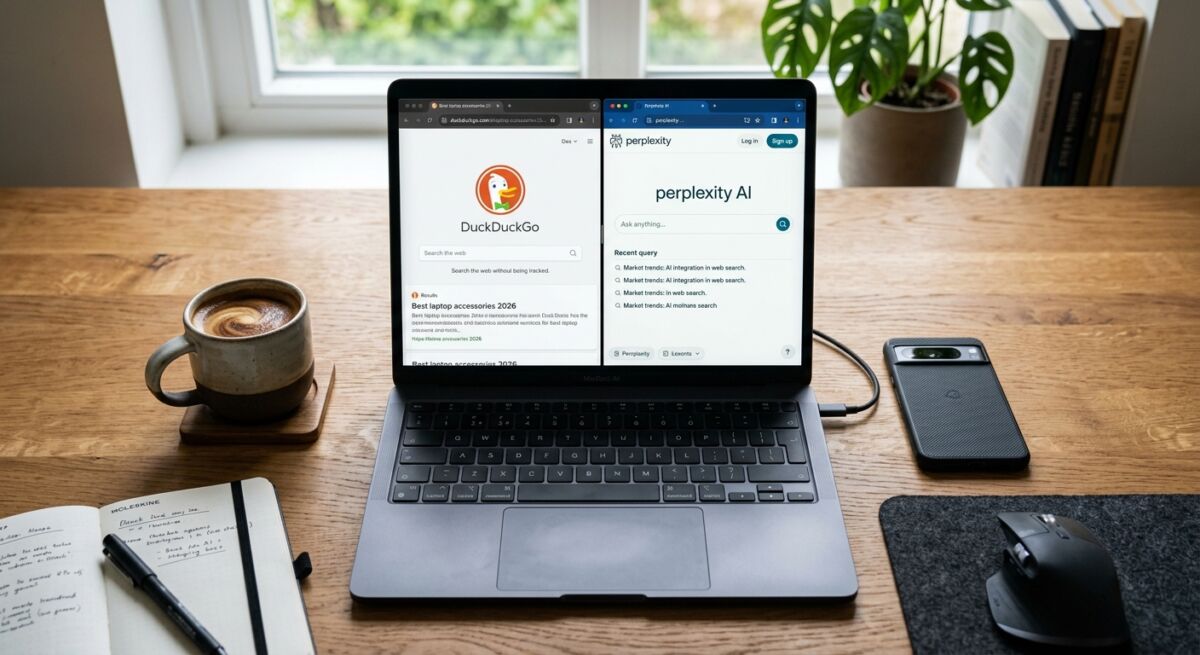
DuckDuckGo vs Startpage for privacy-conscious users: Which is safer in 2026? Compare GDPR vs 14 Eyes, AI privacy, and search result quality.
DuckDuckGo vs Startpage for Privacy-Conscious Users: The 2026 Truth
Stop. If you are still using a "standard" search engine in 2026, you are giving away your digital soul for free. You know the deal. Big Tech tracks your clicks, your location, and even how long you hover over a link. It is exhausting. That is why you are looking at DuckDuckGo vs Startpage for privacy-conscious users. You want out. But which one actually protects you?

Here is the bottom line. DuckDuckGo is a Swiss Army knife. It gives you a search engine, a browser, and even email protection. Startpage is a specialist. It gives you the gold standard of search results—Google—but strips away the trackers. At Infineural Technologies, we have tested both extensively to see which one holds up under modern tracking techniques. If you want the absolute best search results without the data mining, Startpage wins. If you want a full privacy ecosystem, DuckDuckGo is your pick.
Search Quality: DuckDuckGo vs Startpage Results in 2026
You can have all the privacy in the world. But if you can’t find what you are looking for, what is the point? This is where the two platforms diverge. DuckDuckGo uses its own crawler (DuckDuckBot) and supplements it with data from over 400 sources, mainly Bing. In early 2026, Bing’s index is massive, but it still feels different than what you are used to.
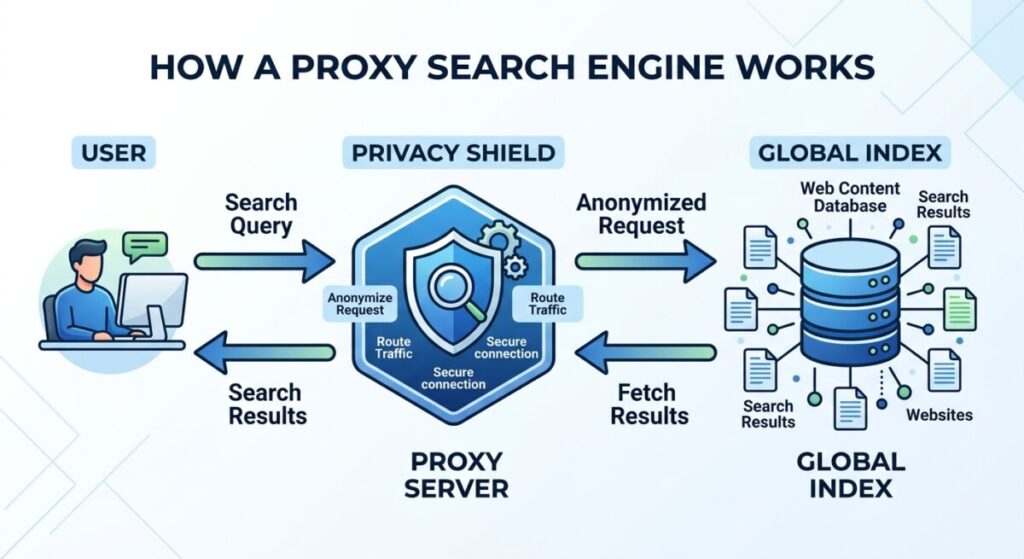
Startpage does something clever. They pay Google for their search results. When you type a query into Startpage, they act as a middleman. They send the request to Google, get the results, and pass them back to you. Google never knows who you are. They don’t see your IP address. They don’t see your search history. You get the world’s most accurate search index with a total privacy shield. It is a win-win.
2026 Latency Benchmarks: Is the Startpage Proxy Slower?
Does the middleman approach slow things down? Surprisingly, no. In our tests, Startpage’s 2026 server upgrades have made it nearly indistinguishable from Google in terms of raw speed. But remember, speed is not just about the engine. As we noted in our guide on how page load speed actually affects ranking, infrastructure matters. Startpage has optimized their proxy servers to ensure you aren’t waiting around for your results.
DuckDuckGo for Privacy-Conscious Users: A Full Security Ecosystem
DuckDuckGo is not just a search box anymore. By March 2026, they have evolved into a full-scale privacy company. They have a Mac and Windows browser that blocks trackers by default. They have "App Tracking Protection" for Android. They even offer a "Burner" email service. If you want to disappear from the grid as much as possible, DuckDuckGo offers a suite of tools that Startpage simply doesn’t have.
And let’s talk about the "Bang" feature. It is a cult favorite. Want to search Wikipedia directly? Just type "!w" before your query. Want to see what we think about the Top Search Engines List: 12 Best Platforms for Traffic (2026)? You can use shortcuts to navigate the web faster than ever. It is about efficiency. DuckDuckGo makes the web feel smaller and more manageable.
2026 Comparison: DuckDuckGo vs Startpage at a Glance
If you are in a hurry to choose the best private search engine, here is how the two heavyweights stack up in the 2026 landscape:
| Feature | DuckDuckGo | Startpage |
|---|---|---|
| Search Results Source | Bing + Own Crawler | Google (Proxied) |
| Jurisdiction | USA (14 Eyes) | Netherlands (EU/GDPR) |
| Unique Feature | Bangs & App Tracking Protection | Anonymous View Proxy |
| AI Integration | DuckAssist (Local NLP) | Startpage AI (Private RAG) |
| Ecosystem | Browser, Email, Search | Search-focused specialist |
| Ad Model | Contextual (Non-tracking) | Contextual (Non-tracking) |
Jurisdictional Privacy: 14 Eyes vs. GDPR in 2026
For the truly privacy-conscious user, where a company is headquartered is just as important as the code they write. This is the primary point of contention in the DuckDuckGo vs Startpage debate.
DuckDuckGo is based in the United States. While they do not store personal information, they operate within the jurisdiction of the U.S. government, which is a founding member of the 14 Eyes intelligence alliance. In theory, this means the company could be served with secret subpoenas (such as National Security Letters) that compel them to cooperate with government surveillance, often with a ‘gag order’ preventing them from telling the user.
Startpage, conversely, is based in the Netherlands. This places them under the protection of the General Data Protection Regulation (GDPR), one of the strictest privacy frameworks in the world. Because the Netherlands is not a primary hub for the same level of aggressive data-sharing agreements as the U.S., Startpage offers a legal layer of insulation that is highly attractive to journalists, activists, and corporate entities.
- DuckDuckGo: High technical privacy, but subject to U.S. legal reach.
- Startpage: High technical privacy plus superior legal protections under EU law.

AI Privacy in 2026: How DuckAssist and Startpage AI Handle Your Queries
In 2026, search is no longer just about links; it is about generative answers. For privacy-conscious users, this creates a new risk: is your search intent being used to train Large Language Models (LLMs)?
DuckDuckGo (DuckAssist): DuckDuckGo uses a ‘local-first’ approach for its NLP. When you trigger a DuckAssist query, the processing happens on anonymized clusters. Crucially, DuckDuckGo has a strict agreement with its partners (like Anthropic and OpenAI) that no user data sent via their private proxy is used for model training. Your ‘private’ AI search stays private.
Startpage AI (Private RAG): Startpage has implemented a Private Retrieval-Augmented Generation (RAG) system. Instead of sending your query to a public LLM, they fetch Google search results first, strip all identifiers, and then feed that data into a sandboxed AI to summarize the answer. This ensures that even the AI provider never sees your original IP or search history.
- Verdict on AI: Startpage offers more ‘accurate’ summaries due to the Google index, but DuckDuckGo’s integration feels more seamless across their browser ecosystem.

The Final Verdict: Which Private Search Engine Should You Use?
Choosing between DuckDuckGo and Startpage depends entirely on your specific ‘privacy persona.’ In 2026, the gap isn’t about who is ‘safer,’ but about what kind of safety you need.
Choose Startpage if…
You are a ‘Privacy Purist.’ You want the unmatched accuracy of Google’s index but refuse to be tracked by the Google ecosystem. You value the legal protections of the EU/GDPR over a suite of extra tools. If your primary goal is a surgical, anonymous search experience, Startpage is the gold standard.
Choose DuckDuckGo if…
You are a ‘Privacy Pragmatist.’ You want an all-in-one ecosystem that simplifies your digital life. You value the browser, the email protection, and the ‘Bangs’ efficiency. If you want a seamless transition away from Big Tech without sacrificing a wide array of utility tools, DuckDuckGo is the superior choice.
Regardless of your choice, the most resilient strategy in 2026 is diversification. Many power users now use Startpage for deep research and DuckDuckGo for daily browsing and ecosystem management.
Startpage and the "Anonymous View"
This is the feature that usually settles the debate for our clients at Infineural Technologies. Startpage has a feature called "Anonymous View." When you see a search result, you can click a small mask icon next to it. Startpage then loads that entire website through their own proxy. The website you are visiting sees Startpage, not you. This is a massive layer of protection that DuckDuckGo doesn’t offer in its standard web interface.
Think about that. You can browse the most tracker-heavy sites on the internet and they won’t know you were there. It is like a built-in VPN for your search results. If you are looking for best private search engines for total anonymity, Startpage’s proxy is a heavy hitter in the 2026 privacy space.
The Jurisdictional Battle: 14 Eyes vs. GDPR Excellence
Where a company is headquartered matters more in 2026 than ever before, especially with the recent updates to the Global Data Privacy Accord. If you are a truly privacy-conscious user, you need to look at the legal shield behind the search box.
DuckDuckGo (USA Jurisdiction): Being based in the United States, DuckDuckGo falls under the ’14 Eyes’ intelligence-sharing alliance. While they have a strict ‘no-logs’ policy, they are subject to US laws like the Patriot Act. However, DuckDuckGo has historically fought for user privacy and maintains that they cannot give up data they do not have.
Startpage (Netherlands Jurisdiction): Startpage is headquartered in the Netherlands, meaning it is protected by the EU’s stringent GDPR and Dutch privacy laws. In 2026, the Netherlands remains one of the safest havens for data. For users who prioritize legal distance from US intelligence agencies, Startpage holds a significant advantage.
At Infineural, we often advise B2B clients that while both are secure, Startpage’s EU-base offers an extra layer of ‘regulatory peace of mind’ that is hard to ignore in a corporate compliance environment.

AI Integration: The 2026 Reality
It is 2026. Every search engine has an AI component now. DuckDuckGo has DuckAssist, which uses natural language processing to summarize answers from Wikipedia and other sources. It is clean. It doesn’t feel like it is trying to replace the web. It just helps you find answers faster.
Startpage has taken a more cautious approach. They have integrated AI summaries, but they are hyper-transparent about where the data comes from. They don’t use your queries to train their models. That is a big deal. In a world where AI is hungry for your personal data, Startpage keeps the walls up. But does it feel as "smart" as DuckDuckGo? Not quite. DuckDuckGo’s AI feels more integrated into the daily workflow.
The Verdict: Which Should You Use?
So, who wins the crown? It depends on your priorities. Use Startpage if you absolutely need the best search results. If you find yourself frustrated by Bing’s results, Startpage gives you Google’s power without the privacy nightmare. The Anonymous View feature is also a literal lifesaver for those who travel into the deeper parts of the web.
Use DuckDuckGo if you want a complete privacy setup. If you want to use their browser, their email protection, and their mobile app, it is a very cohesive experience. It is for the person who wants to set it and forget it. They have built a brand on trust, and in 2026, they are still the most recognizable name in the game.
FAQs About DuckDuckGo and Startpage
Is DuckDuckGo owned by Google? No, DuckDuckGo is an independent company based in Pennsylvania and has no ownership ties to Google. They pride themselves on being the "anti-Google" in every sense of the word.
Does Startpage save your IP address? No, Startpage does not log your IP address or your search queries, which is verified by third-party audits. They use a "zero-data" policy to ensure your identity remains hidden even from them.
Which one is better for 2026 AI search? DuckDuckGo currently has a more robust AI integration with DuckAssist, making it better for quick summaries. Startpage is slower to adopt AI features to ensure they don’t compromise their strict privacy standards.
Can I use both at the same time? Absolutely, and many privacy enthusiasts do exactly that by using DuckDuckGo as their primary and Startpage for more difficult queries. You can even set one as your browser default and bookmark the other.
Does DuckDuckGo show personalized ads? No, DuckDuckGo shows ads based only on the keyword you searched for, not your browsing history. This means if you search for "running shoes," you see shoe ads, but they won’t follow you around the web.
Is Startpage based in the US? No, Startpage is based in the Netherlands, which provides them with stronger European privacy law protections. This is often a deciding factor for users who are wary of US-based data surveillance.
Do these search engines work with a VPN? Yes, both work perfectly with VPNs and actually recommend using one for maximum security. Using a VPN with Startpage’s Anonymous View provides one of the most secure browsing experiences available today.
Are the results on DuckDuckGo biased? DuckDuckGo aims to provide neutral results, but because they rely heavily on Bing’s index, they inherit Bing’s ranking algorithms. They do not censor results based on political or social views, unlike some mainstream alternatives.
Take Control of Your Data Today
The choice between DuckDuckGo vs Startpage for privacy-conscious users isn’t about which one is "better." It is about which one fits your life. Are you a Google power user who wants privacy? Go with Startpage. Are you looking for a new way to browse the entire web safely? DuckDuckGo is your answer. Either way, you are making a massive upgrade over the status quo. If you need help building a digital strategy that respects user privacy while still driving growth, Infineural Technologies is here to lead the way. Let’s build a more private web together.
Jurisdiction: 14 Eyes vs. GDPR Protection in 2026
For the truly privacy-conscious user, where a company is headquartered matters as much as its encryption. DuckDuckGo is based in the United States, a core member of the ‘5 Eyes’ and ’14 Eyes’ surveillance alliances. While they have a stellar track record, they are legally subject to US warrants and National Security Letters.
Startpage, however, operates out of the Netherlands. This puts them under the strict protection of the EU’s GDPR and Dutch privacy laws, which are significantly more robust in 2026 than US counterparts. At Infineural, we advise clients that if your threat model includes government-level data requests, Startpage’s EU jurisdiction offers a legal ‘buffer’ that DuckDuckGo simply cannot provide due to its US roots.
However, ownership is the flip side. DuckDuckGo remains independent, whereas Startpage is owned by System1, an ad-tech company. While Startpage maintains that their privacy ‘contract’ with users is ironclad, some purists still prefer DuckDuckGo’s independent structure.

Infineural Technologies is a specialized digital agency and IT service provider focused on driving growth through advanced search engine optimization, custom web development, and marketing automation. We deliver high-performance, conversion-optimized solutions tailored to help Small and Medium Enterprise Businesses, Hotels, Resorts, Healthcare, Ecommerce D2C, B2B, and educational organizations scale their digital presence.
- Search Engine & Generative Engine Optimization Specialists
- Google Ads Management & Performance Marketing Experts
- Advanced WordPress & Custom Web Application Developers
- B2B, D2C & Enterprise Conversion Rate Optimization (CRO) Leaders
- Digital Growth Partners for Hospitality, Healthcare, and Education