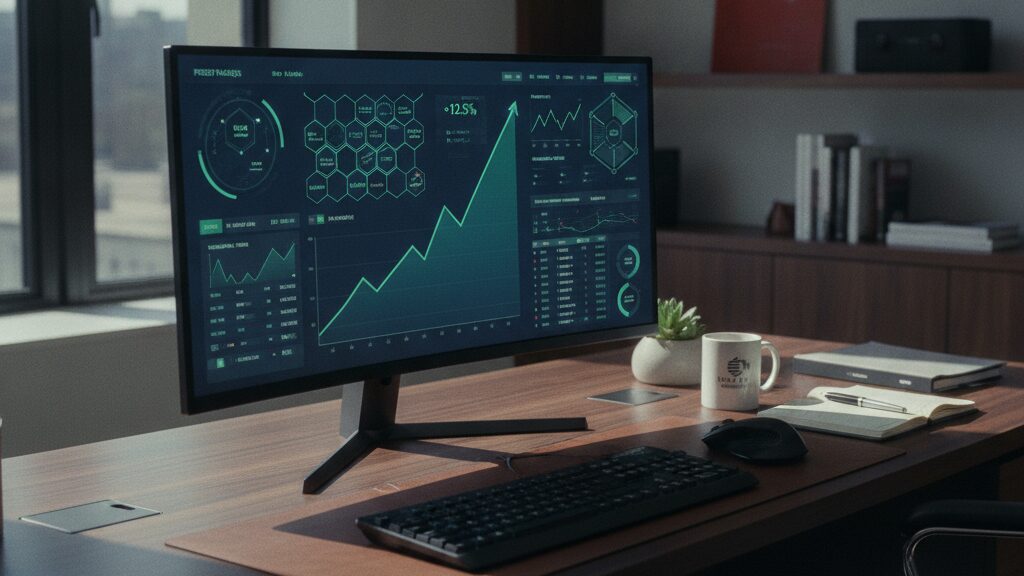
Stop leaving money on the table. Use an AI pricing strategy to implement automated price optimization and maximize profit margins with radical transparency.
Guesswork is the most expensive line item on your P&L
Most companies treat pricing as a “set it and forget it” task. They glance at a competitor’s website, add a rough margin to their costs, and leave that number alone for six months. This isn’t just a mistake; it is a structural failure. In a volatile market, static pricing creates a lose-lose scenario: you either overprice and watch a hot lead walk away, or you underprice and bleed margin on every single sale.

The objective here isn’t to stumble upon a single “perfect” number. That number doesn’t exist. The real goal is to build a system that identifies the right number for you in real time. An AI pricing strategy replaces the dead price list with an algorithmic engine, which means you can capture the maximum amount a customer is willing to pay at any given moment without destroying your brand trust.
At Infineural, we view this as the core of AI-powered growth. Look, you have to stop guessing where the market is and start reacting to where it actually lives. This shift gives you a dashboard that protects your profit floor and removes the awkward friction from the closing process.
How algorithmic pricing models eliminate revenue leakage
The failure of static pricing in a volatile market
Static pricing assumes that value is a constant. It isn’t. Value swings wildly based on demand, competitor stock levels, and how desperately a buyer needs a solution today. When you lock in a fixed price, you are betting that the entire market will stay frozen in time.
Market analysis suggests that companies relying on manual price updates lose roughly 12% of their potential annual revenue to “leakage.” This is the money that simply slides through the cracks. It happens when a lead drops off because the price was 5% too high for their budget, or when a long-term client signs a contract that is 15% below the current market value. You are essentially paying a “guesswork tax” every month.
Core mechanics of AI-driven price adjustments
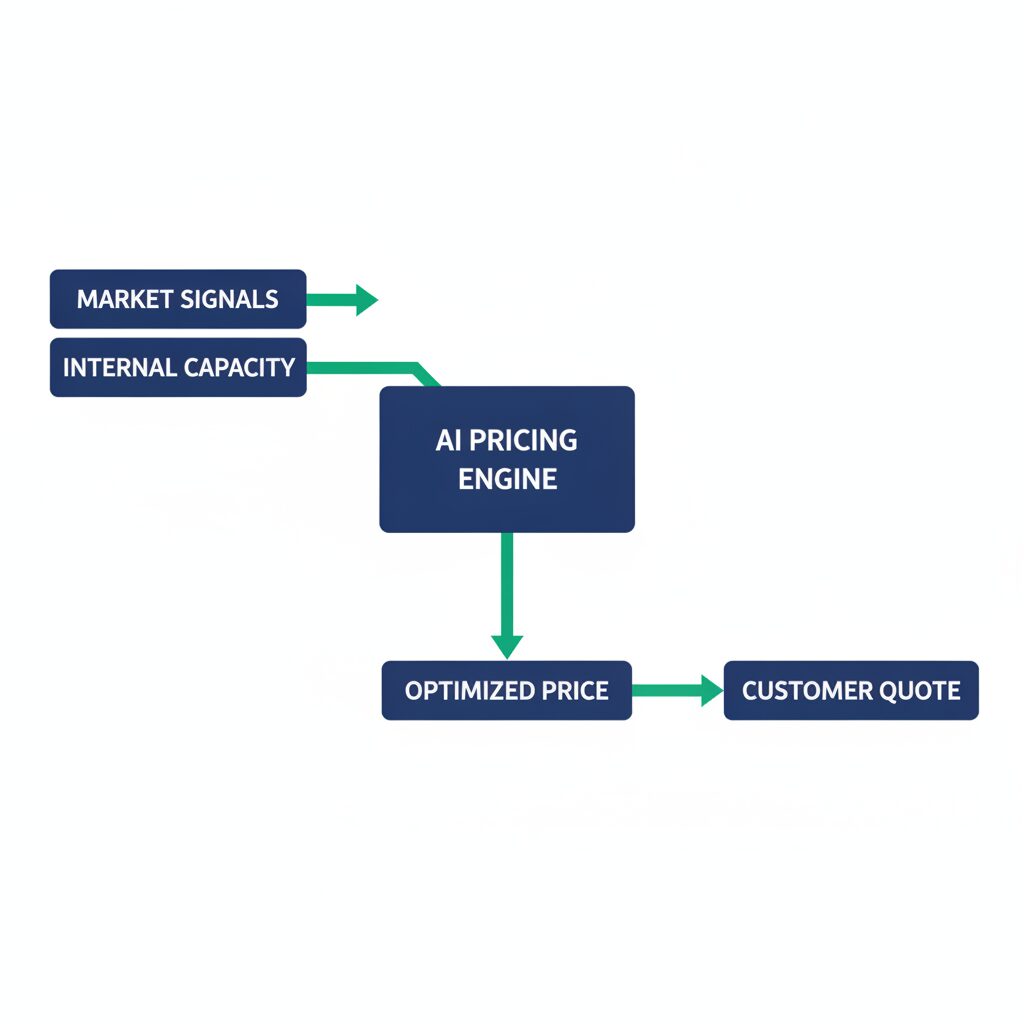
Algorithmic pricing works by processing thousands of signals at once. It tracks historical conversion rates, competitor price pivots, and your own internal capacity. The AI doesn’t just move a slider; it maps the price elasticity of the specific segment you are targeting.
The system finds the exact threshold where a price hike stops hurting your conversion rate. If your closing rate stays at 4% whether you charge $1,000 or $1,100, the AI locks in that extra $100 of pure profit. This is automated price optimization stripped of the jargon: it is simply finding the ceiling before it breaks.
Moving from ‘gut feel’ to data-driven ROI
Too many founders rely on a “gut feel” to discount deals during a sales call. This is a dangerous habit. It creates a culture of inconsistency, which means you train your customers to wait for the discount rather than value the service.
An algorithmic model removes the emotion from the room. The data dictates the discount. When we implement this for B2B agencies, we typically find that 20% of their “essential” discounts were completely unnecessary. Those customers would have paid full price if the offer had been positioned with data-backed urgency instead of a nervous discount.
Implementing dynamic pricing for SMBs without alienating customers
Identifying the right triggers for price shifts
Dynamic pricing fails the moment it feels random. Customers hate feeling like they are being gambled with. To avoid this, you need hard triggers. A trigger might be a spike in demand during Q4 or a sudden drop in a competitor’s availability.
For an SMB, the smartest trigger is capacity. If your dev team is at 90% capacity, the AI raises the price for new projects. This manages your pipeline and increases the ROI on your remaining slots, which means you earn more for doing the same amount of work. It is a logical adjustment that you can explain to a client as a premium for immediate availability.
Maintaining radical transparency in automated pricing
The fear of “surge pricing” is real and valid. The fix is radical transparency. Don’t hide the logic. Tell your customers why the price is what it is. If you use a real-time dashboard to show clients the specific value they are receiving, the price becomes a reflection of that value rather than a trick.
We tell our clients to frame this as “market-aligned pricing.” When you are open about the factors influencing the cost, you build a professional relationship. Transparency turns a potential complaint into a sign of operational maturity.
Case study: SMB transition from fixed to fluid pricing
We worked with a mid-sized web development firm that had a hard project minimum of $5,000. They were winning 60% of their bids, but they were starving for cash during the slow months.
We replaced their fixed floor with a fluid model based on project load and industry volatility. During high-demand peaks, the minimum rose to $7,500. During lulls, it dipped to $4,000 to keep the team billable. In four months, their average project value climbed by 18%, yet their lead-to-close rate didn’t budge. They stopped fighting for low-margin scraps and started capturing high-margin premiums.
Maximizing profit margins through automated price optimization
The relationship between demand elasticity and AI
Demand elasticity is just a fancy way of asking how much your sales volume drops when you raise your price. AI tracks this in real time. It recognizes that a seed-stage founder has a completely different elasticity than a VP at a global enterprise.
Current B2B benchmarks show that AI-optimized pricing can boost net profit margins by 7% to 11% for service providers. The AI finds the “sweet spot” where the price is high enough to maximize profit but low enough to keep the sales velocity healthy.
Reducing zero-waste PPC spending by aligning price with acquisition cost
Most companies run their ad spend and their pricing in two different silos. That is a costly mistake. If your Cost Per Acquisition (CPA) on Google Ads spikes by 20%, but your price stays static, your margin is the thing that pays for the ad.
By linking your pricing AI with your Google Ads data, you can run zero-waste PPC. When the AI sees a keyword becoming too expensive to acquire a lead at the current price, it signals the ad team to pivot or automatically adjusts the offer price. This ensures you never pay more to acquire a customer than they are worth in profit.
Using live tracking to iterate pricing in real time
You cannot know if a price works until you test it against a live human. Live tracking lets you run A/B tests on your pricing without guessing. You can offer one segment a tiered model while another sees a flat fee.
Here is the trap: don’t test too many variables at once. Change one thing, either the base price or the packaging, and watch the impact on your real-time dashboard. This lets you iterate your strategy every week instead of waiting for an annual review.
Building your AI pricing stack under one roof
Integrating pricing AI with your existing CRM and ERP
A pricing engine is useless if it’s an island. It has to be plugged into your Customer Relationship Management (CRM) and Enterprise Resource Planning (ERP) systems. This means when the engine updates a price, the quote sent to the client updates automatically.
This level of automation kills manual error. There is nothing that kills a brand faster than sending a quote for $10,000 when the current market price is $12,000. Integration ensures your sales team is always pitching the most profitable number.
Essential KPIs for your real-time pricing dashboard
If you can’t measure it, you can’t manage it. Your pricing dashboard needs to track three specific numbers:
First, Revenue Per Lead (RPL). This tells you if your pricing is actually capturing the value of the traffic you paid for. Second, Price Realization. This is the gap between your list price and what the customer actually paid. If this gap is huge, your AI is discounting too aggressively.
Third, Win-Rate Variance. This tracks how your closing rate shifts as the price moves. If your win rate stays flat while the price goes up, you have found a massive growth lever.
Frequently Asked Questions
What is the difference between dynamic pricing and algorithmic pricing?
Dynamic pricing is the act of changing prices. Algorithmic pricing is the engine and the rulebook that does it for you without a human having to click a button.
Can small businesses implement AI pricing without expensive enterprise software?
Yes. Most SMBs start with lightweight AI agents and API bridges between their CRM and pricing sheets. You don’t need a million-dollar software suite to stop guessing your prices.
How do I prevent AI pricing from triggering a price war with competitors?
Stop using “race to the bottom” rules that only trigger when a competitor drops their price. Instead, program your AI to trigger based on your own value delivery and your team’s capacity.
What data sources are most critical for an effective AI pricing strategy?
The big three are your historical conversion data, real-time competitor pricing, and your current internal resource utilization rates.
How often should AI-driven prices be updated to maintain customer trust?
Avoid hourly shifts; they feel erratic and shady. Tie updates to specific business triggers or keep them in stable cycles, like weekly or monthly, depending on your industry.
Does AI pricing work for service-based businesses or just products?
It works exceptionally well for services by adjusting project minimums and hourly rates based on the scarcity of your experts.
Will my customers feel cheated if they see a different price than someone else?
Not if you use radical transparency. Tie the pricing to clear value drivers, such as expedited delivery or a higher tier of specialized expertise.
How long does it take to see an ROI from AI price optimization?
Most businesses see a measurable margin increase within 60 to 90 days, once the AI has enough data to find the true thresholds.
Stop leaving money on the table
Static pricing is a choice to accept inefficiency. In a market driven by AI, the winners are the companies that can adapt their value capture in real time. By bringing your pricing strategy under one roof and integrating your marketing, sales, and pricing data, you kill the guesswork.
Stop wondering if you are underpricing your expertise. Schedule a consultation for a fully integrated marketing and tech solution to automate your growth and lock in your margins. Start maximizing your ROI today with no upfront commitment.
Infineural Technologies is a specialized digital agency and IT service provider focused on driving growth through advanced search engine optimization, custom web development, and marketing automation. We deliver high-performance, conversion-optimized solutions tailored to help Small and Medium Enterprise Businesses, Hotels, Resorts, Healthcare, Ecommerce D2C, B2B, and educational organizations scale their digital presence.
- Search Engine & Generative Engine Optimization Specialists
- Google Ads Management & Performance Marketing Experts
- Advanced WordPress & Custom Web Application Developers
- B2B, D2C & Enterprise Conversion Rate Optimization (CRO) Leaders
- Digital Growth Partners for Hospitality, Healthcare, and Education
This article was drafted with AI assistance and thoroughly reviewed, edited, and fact-checked by our editorial team before publishing.