
Part of our complete guide: Google Ads Business Names: Critical Policy Rules for Brands
Build high-converting WhatsApp marketing flows. Compare API broadcast costs, conversion benchmarks, and Meta compliance rules for your brand.
The Mechanics of Systematic Conversational Architecture
Treating WhatsApp as a digital billboard produces rapid account bans, high customer block rates, and burned ad budgets. A high-yield WhatsApp Marketing Strategy requires an automated conversational pipeline that captures consent, qualifies intent within seconds, and moves qualified prospects directly into sales or checkout flows. Operating on the official Meta Cloud API removes manual bottlenecks, providing the foundation for predictable customer acquisition and retention.

In our work at Infineural, building growth pipelines for mid-market brands in retail, real estate, and professional services, we find that conversations convert only when tracking is wired in from the very first interaction. When you replace untracked outbound message blasts with event-driven triggers connected to your client dashboard and CRM, WhatsApp functions as an accountable revenue channel rather than an unmeasured communication expense.
Inbound Opt-In Triggers and Entry Points
Conversations begin with deliberate inbound triggers. Meta enforces strict consent requirements: you cannot message a consumer on WhatsApp without explicit opt-in for that specific category of communication. Designing high-intent entry points guarantees compliance and message receptivity.
Click-to-WhatsApp (CTWA) ads across Instagram and Facebook act as the primary entry point for paid acquisition. Instead of routing traffic to a landing page with high mobile bounce rates, CTWA ads open a chat window with a pre-filled contextual message prompt. When configured alongside performance marketing campaigns, these ads trigger Meta’s 72-hour free customer service window, eliminating outbound message fees during initial qualification.
On-site entry points capture organic visitors who require immediate clarification before buying. Floating chat triggers on high-intent pricing or product pages convert browsers into identifiable leads. Custom WordPress implementations use login authentication via one-time passcodes (OTP) sent through WhatsApp, creating verified user profiles while securing consent for transactional updates. Transactional platforms running billing infrastructure can also deploy dedicated webhooks, connecting systems like WHMCS or WooCommerce to trigger account verification prompts directly into the messaging queue.
Offline touchpoints bridge the physical-to-digital gap. For real estate developments, physical retail stores, and hospitality properties, dynamic QR codes placed on site collateral or product packaging pre-populate specific inquiry codes in the user’s messaging screen. A property buyer scanning a code on a construction billboard arrives in chat with the specific project code already populated, allowing your automation to identify the precise source asset without asking manual screening questions.
Automated Qualification Workflows via WhatsInfi
When an inbound interaction occurs, speed determines qualification rates. Industry data indicates that contacting a prospect within five minutes of inquiry drastically increases qualification odds compared to delayed responses. Automated flows built inside WhatsInfi handle this initial screening instantly, routing qualified buyers to sales representatives while fielding common inquiries without human intervention.
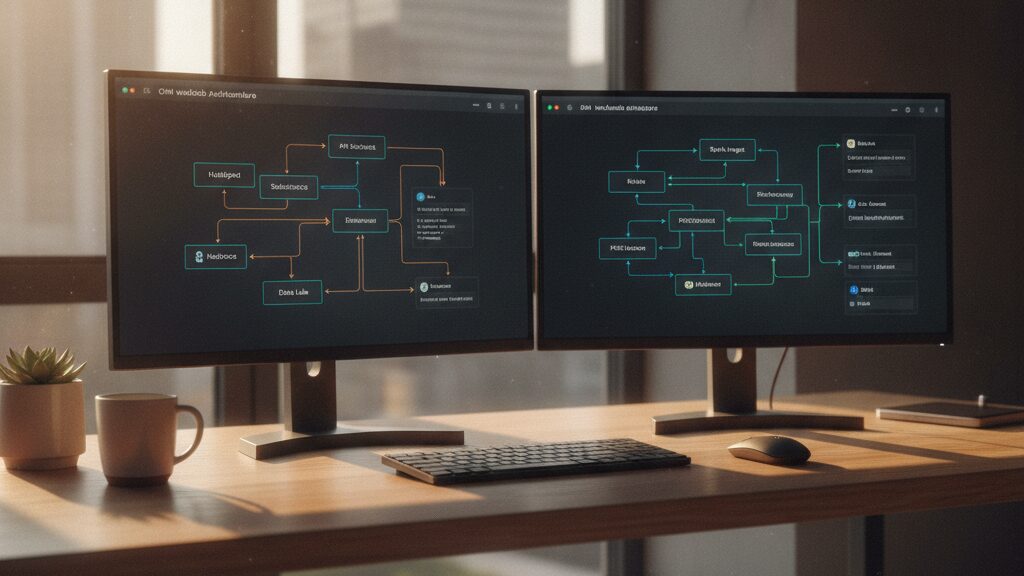
The qualification architecture operates through a strict sequence of logic nodes:
- Capture and source validation: The inbound payload captures the user’s phone number, name from their Meta profile, and ad campaign ID or URL referral tag.
- Triage and intent classification: A single interactive prompt presents distinct path options using reply buttons rather than open-ended text questions. Open text prompts introduce typing friction and syntax errors that stall conversations.
- Budget and timeline qualification: The system asks targeted questions covering purchase timeline and scope requirements, scoring the lead against defined sales parameters.
- Action routing: Leads scoring above the qualification threshold receive an embedded calendar link for immediate appointment booking, or are transferred directly to a live agent inside the shared team inbox. Unqualified inquiries receive direct links to digital resources or documentation.
A frequent failure mode in automated chat flows is conversational looping, where the system fails to recognise human frustration and repeats identical prompts. Modern flows must include intent overrides. If an incoming message contains words such as “agent,” “human,” “stop,” or displays frustration, the flow must immediately exit the loop and flag a priority ticket inside the shared team inbox.
Lifecycle Automation and Retention Workflows
Customer acquisition represents only half of the messaging architecture. Transactional and retention flows deliver sustained returns by maintaining high engagement at significantly lower transmission costs than paid acquisition campaigns.
For direct-to-consumer retail, abandoned cart workflows triggered via store integrations recover revenue that standard email notifications miss. When a checkout remains incomplete, an automated utility template fires containing product images, cart details, and a direct checkout link. Because users treat their WhatsApp inbox with greater urgency than an email inbox cluttered with promotions, prompt reminders generate immediate actions.
Post-purchase onboarding flows run on scheduled delays. A customer purchasing software or an enterprise service receives structured confirmation messages: an immediate welcome message containing credentials, an automated check-in 48 hours later offering setup guidance, and a feedback survey on day seven. Each message tracks delivery, read, and interaction metrics back to the core CRM, providing account managers with complete visibility in the client dashboard.
In B2B scenarios, contract renewal workflows eliminate manual follow-up friction. Prior to contract expiration, an automated reminder delivers renewal paperwork alongside itemised billing and account performance reports. Because these messages provide factual account information tied to an existing transaction, they qualify under Meta’s utility message pricing tier, keeping message costs low while keeping accounts informed.
Broadcast Messaging vs. Automated Event Triggers: Cost and ROI Realities
Many brands burn budget on unsegmented broadcast campaigns. Blasting contacts with a single promotional template incurs high message delivery costs while triggering spam reports that degrade the phone number’s quality score. Event-driven API messaging triggered by user actions generates higher conversion rates at a fraction of the total send volume.
Evaluating this comparison requires radical transparency about delivery fees and performance expectations:
| Metric / Factor | Generic List Broadcast | Automated API Trigger |
|---|---|---|
| Message Category | Marketing Template | Utility or Marketing Trigger |
| Send Trigger | Manual date/time blast to database | User action (cart abandonment, webhook, form) |
| Average Open Rate | Typically Lower | Consistently High |
| Typical Click-Through Rate (CTR) | Baseline levels | High (Intent-Driven) |
| Downstream Conversion Rate | Standard | Accelerated |
| Relative Delivery Cost | High (billed on entire list) | Low (billed only on active triggers) |
| Phone Number Quality Risk | High (elevated spam and block rates) | Minimal (contextual communications) |
Targeted trigger mechanisms protect working capital. Sending precise messages to users who completed portions of an onboarding flow produces more paying customers than sending unsolicited promotional announcements to cold databases. Review your actual messaging volume against current rates on our pricing page to model your operational spend accurately.
Performance Benchmarks for Click-to-WhatsApp Advertising
Evaluating CTWA ads against traditional landing page conversion campaigns requires tracking unit economics through the entire funnel. WhatsApp ads alter standard paid traffic metrics: initial click-through rates rise, cost-per-click decreases, and conversation initiation rates become the primary diagnostic metric.
Standard performance patterns drawn from active mid-market growth accounts demonstrate consistent operational trends:
- Ad Click-to-Conversation Rate: Strong initiation rates when users click the ad and transmit a pre-filled prompt.
- Automated Flow Completion Rate: Peak completion rates occur when prospects only face three core screening questions.
- Qualified Lead Acquisition Cost (CPL): Consistently lower acquisition costs compared to web landing pages for high-friction sectors like real estate, commercial services, and education.
- Live Agent Transfer Rate: A small fraction of total inbound volume requires human escalation, with the remainder handled by automated routing.
To prevent ad spend waste, conversion tracking must not stop at chat initiation. Tracking must be wired directly into Google Ads and Meta Pixel via server-side conversion APIs. When a prospect books a consultation or completes a transaction inside WhatsInfi, the webhook must send that qualified conversion event back to the ad network. This feeds algorithmic bidding engines with verified revenue data rather than shallow chat clicks, keeping your Google Ads and Meta campaigns operating with zero-waste PPC precision.
Technical Compliance and Infrastructure Management
Scaling a conversational engine requires strict adherence to Meta’s technical policies. Violating message tier limits, abusing template categorisation, or mishandling opt-outs triggers automated rate limits or total account termination.
Teams deploying high-volume campaigns must integrate a technical compliance checklist into their standard operating procedure:
- The 24-Hour Customer Service Window: When a user sends your business a message, a 24-hour customer service session opens. Inside this window, you can send free-form text, images, and documents without pre-approval. Meta applies standard billing rates for service conversations once you exceed your monthly account allowance of 1,000 free service conversations. Once that 24-hour clock expires, you can only re-engage that user by sending a pre-approved message template.
- CTWA 72-Hour Free Window: Conversations initiated by a user clicking a Click-to-WhatsApp ad or a Facebook Page call-to-action button open a 72-hour window where standard messaging fees do not apply. Use this window to complete onboarding and qualification without incurring extra per-conversation service fees.
- Template Categorisation and Tiering: All proactive outreach sent outside an open service window requires Meta-approved templates classified into one of three buckets: Marketing, Utility, or Authentication. Submitting promotional copy disguised as a utility template causes immediate template rejection and can trigger an account quality review. Accounts start at Tier 1 (1,000 unique business-initiated recipients per 24 hours) and upgrade automatically as send volumes rise while maintaining a high quality rating.
- Phone Number Quality Rating: Meta monitors user sentiment using three statuses: Green (High Quality), Yellow (Medium Quality), and Red (Low Quality). If your number drops to Red, your daily messaging tier is restricted. High block rates, frequent user reports, and aggressive marketing frequency degrade this score.
- Opt-Out Protocol and PII Protection: Privacy regulations and Meta policy mandate an explicit opt-out mechanism in every promotional campaign. Every marketing template should include a quick-reply “Stop Promotions” button or clear instructions to reply with STOP. When an opt-out keyword is detected, your webhook must instantly flag the CRM record, revoke messaging permissions, and suppress future outbound sends. Demanding excessive personally identifiable information (PII) before answering basic questions triggers immediate chat abandonment and user reports. For brands managing enterprise data compliance, maintaining strict control over user data records is a core pillar of a sustainable first-party data strategy.
Maintaining infrastructure stability demands clear architectural separation: use the official WhatsApp Cloud API rather than unofficial web wrappers that expose your customer records to security breaches and guarantee eventual telephone number blacklisting.
Frequently Asked Questions
What is the difference between WhatsApp Business App and WhatsApp Business API?
The Business App is built for micro-businesses operating on a single handset with strict limitations on broadcast volumes and team collaboration. The Cloud API connects directly to platforms like WhatsInfi, supporting unlimited multi-agent access, automated database webhooks, and programmatic messaging.
How does Meta charge for WhatsApp Business API messaging?
Meta applies charges per conversation based on the recipient’s country code and the specific message category, split into Marketing, Utility, Authentication, and Service conversations. Inbound user-initiated conversations from Click-to-WhatsApp ads grant a 72-hour window free of standard messaging fees.
What triggers a decrease in WhatsApp phone number quality rating?
A rating drops from Green to Yellow or Red when recipients frequently block your number or submit spam reports following a message send. This occurs when businesses send unsolicited marketing blasts, use misleading template categories, or message contacts without recorded consent.
Can our business send cold outreach messages through WhatsApp API?
Cold outreach without verifiable opt-in consent violates Meta’s Business Messaging Policy and leads to rapid number suspension. All outbound template messaging requires prior verifiable consent captured through web forms, checkout flows, physical opt-ins, or inbound chat prompts.
What happens when the 24-hour service window closes?
Once 24 hours have passed since the customer’s last message, your team cannot send free-form non-template replies. You must send a pre-approved template message to re-engage the customer, and a new service window opens only when they reply.
How do Click-to-WhatsApp ads track conversions to our CRM?
Ads pass unique click identifiers and campaign parameters into the chat payload when the user initiates contact. Automated webhooks then transmit these attribution parameters alongside lead qualification data directly into your CRM database via server-side APIs.
How should a business manage contact unsubscribe requests?
Opt-out management must be instantaneous by programming keyword listeners for inputs such as STOP, UNSUBSCRIBE, or quick-reply opt-out buttons. The system must update the contact’s opt-in status in the central database immediately, terminating automated campaigns without asking further questions.
How many messages can a brand send per day on WhatsApp API?
Sending limits apply to proactive, business-initiated conversations and start at 1,000 unique recipients per rolling 24-hour period. As your volume grows while maintaining high quality scores, Meta automatically upgrades your account tier to accommodate larger daily recipient volumes.
Audit Your Conversational Pipeline
Stop wasting ad spend on unmeasured chat broadcasts and disconnected messaging tools. Schedule a diagnostic consultation with the growth engineering team at Infineural to review your messaging infrastructure, map your qualification logic, and deploy an accountable conversion engine. Backed by a written scope, a fixed quote, and a transparent work log, you own the accounts and the code. Operating month-to-month with no lock-in ensures we deliver data-driven outcomes, functioning strictly as one team one invoice.
Infineural is a digital marketing, development and hosting company based in Nashik, India, founded in 2018. It runs SEO, Google Ads, performance and WhatsApp marketing, builds custom WordPress sites, web apps and mobile apps, manages hosting, and makes Infineural CRM and WhatsInfi. Every engagement starts with a written scope and runs through a client dashboard showing the work log, billing and results.
- Search Engine & Generative Engine Optimization Specialists
- Google Ads Management & Performance Marketing Experts
- Advanced WordPress & Custom Web Application Developers
- B2B, D2C & Enterprise Conversion Rate Optimization (CRO) Leaders
- Digital Growth Partners for Hospitality, Healthcare, and Education