Stop Guessing Where to Spend Your Budget
You have a marketing budget. It probably isn’t infinite. Every time you open your wallet to buy leads, you face the same dilemma: Facebook or Google?

I hear this question constantly. New agents want to know where the “cheap” leads are. Experienced brokers want to know where the quality leads are. The answer isn’t about which platform is “better.” It’s about understanding user intent.
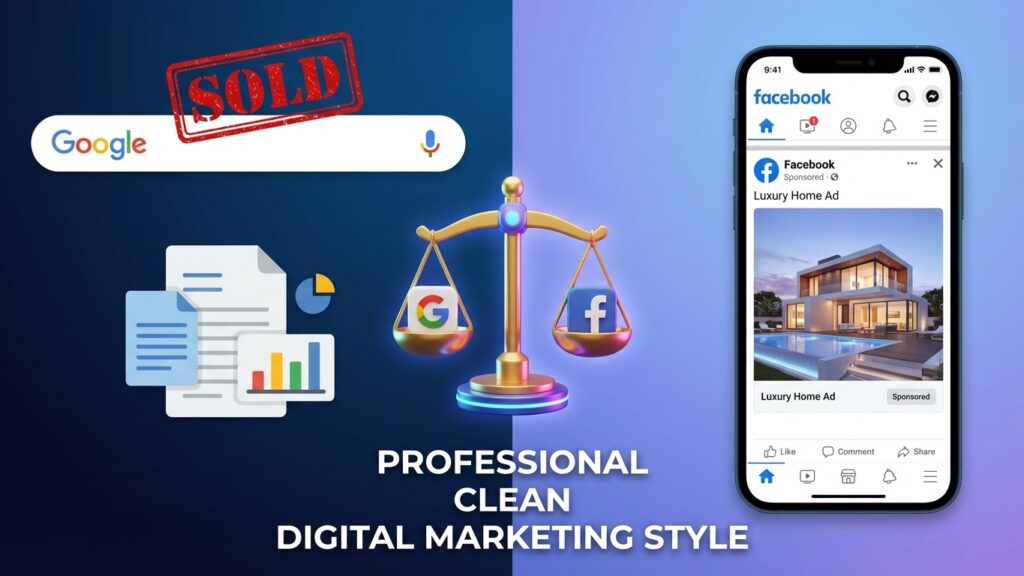
Here is the bottom line up front: If you need leads who are ready to buy or sell right now, Google Ads wins. If you want to build long-term brand recognition and nurture prospects who aren’t quite ready yet, Facebook Ads is your winner.
But that’s just scratching the surface. If you want to dominate your local market, you need to understand the mechanics of both.
Facebook Ads vs Google Ads: Search Intent vs. Pattern Interruption
Think about how you use the internet.
When you go to Google, you are on a mission. You type in "homes for sale in Austin" or "realtors near me." You have a problem, and you are actively hunting for a solution. This is called high commercial intent.
Now, think about Facebook (or Instagram). You aren’t there to buy a house. You’re there to see photos of your cousin’s wedding or watch funny cat videos. You are in passive discovery mode.
When a real estate ad pops up on Facebook, it is interrupting you. It has to work ten times harder to get your attention because you weren’t looking for it. That is the core difference.
In our analysis at Infineural Technologies, we’ve seen that Google Ads typically generate leads with a higher conversion rate because the user initiated the contact. However, Facebook Ads often generate a higher volume of leads at a lower cost, even if those leads are colder.
Facebook Ads vs Google Ads for Real Estate: 2026 Benchmarks
In 2026, the gap between lead volume and lead quality has widened. Based on our internal data at Infineural, here is how the two platforms stack up for real estate professionals:
| Metric | Google Ads (Search/LSA) | Facebook Ads (Meta) |
|---|---|---|
| Average CPL | $45 – $120 | $8 – $25 |
| Lead Intent | High (Ready to buy/sell) | Low to Medium (Browsing) |
| Conversion Speed | Fast (1-3 months) | Slow (6-18 months) |
| Best For | Immediate Listings/Buyers | Brand Awareness & Nurturing |
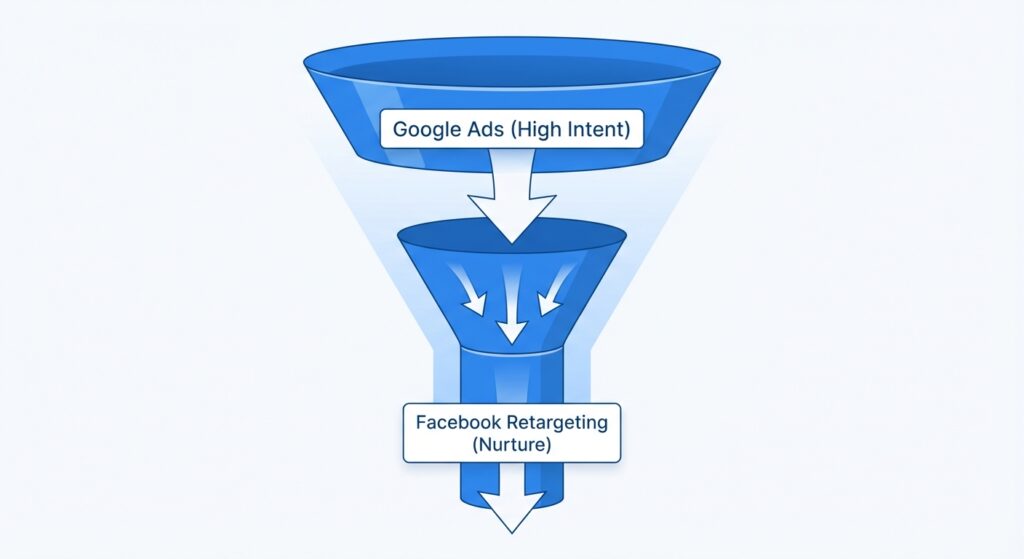
While Facebook Ads vs Google Ads for Real Estate is often framed as an ‘either/or’ choice, the most successful agents in 2026 use a 70/30 budget split. They use Google to capture the high-intent ‘bottom of funnel’ traffic and Facebook to retarget those same users with video testimonials and local market updates.
Google Ads for Real Estate: Capturing High-Intent Buyers and Sellers
Google Ads allows you to bid on keywords. This is powerful because you are getting in front of people exactly when they are looking for you.
If someone searches for "sell my house fast," they are likely months—or even weeks—away from a transaction. You don’t have to convince them they need a realtor. They already know.
Why Your IDX Website and Landing Page Experience is the Real Make-or-Break Factor
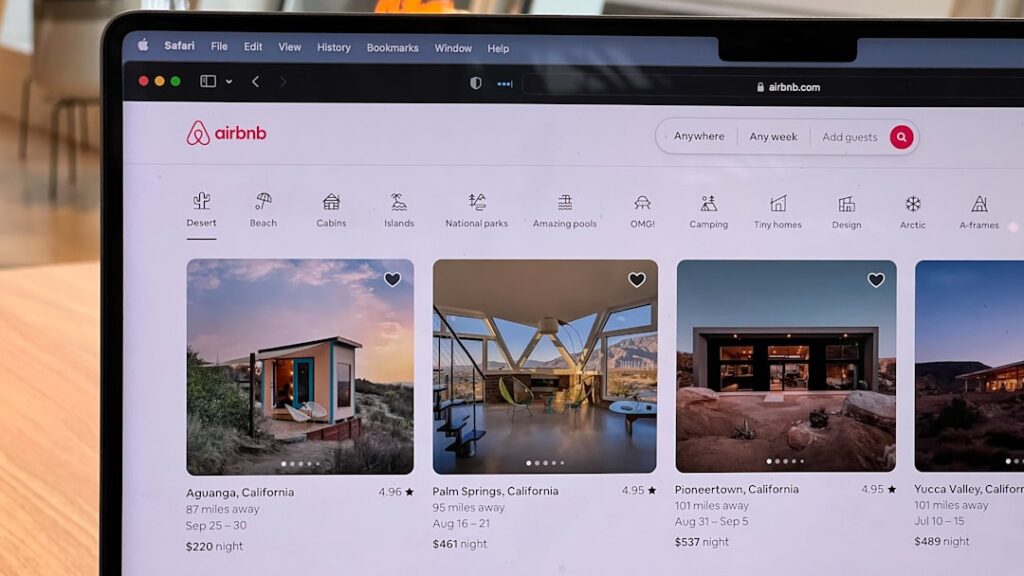
Whether you choose Facebook Ads vs Google Ads for Real Estate, your traffic has to land somewhere. A common mistake agents make is spending thousands of dollars on high-intent Google clicks, only to send that traffic to a generic homepage with no clear call-to-action (CTA). In 2026, user experience and page speed are non-negotiable conversion factors.
The Landing Page Strategy for Google Ads
Because Google searchers have high commercial intent, your landing page must deliver exactly what they searched for. If they searched for ‘homes for sale in Austin under $500k,’ the landing page must display a curated list of active listings matching that exact criteria. To maximize conversions, implement these elements:
- IDX Integration: Ensure your Internet Data Exchange (IDX) feed is seamless, fast, and mobile-optimized. Users should be able to filter listings effortlessly.
- Forced vs. Soft Registration: Test soft registration (allowing users to view 3-4 homes before asking for an email) versus forced registration. Soft registration typically leads to higher-quality leads who actually want to work with you.
- Speed is Key: A one-second delay in page load time can drop conversions by up to 20%. Optimize your images and reduce heavy scripts.
The Lead Capture Strategy for Facebook Ads
Since Facebook users are in passive discovery mode, sending them to a complex IDX search page usually fails. They aren’t ready to browse hundreds of homes yet. Instead, use these high-converting lead magnets:
- Meta Lead Forms (Instant Forms): Keep the user on the platform. Instant Forms auto-populate the user’s name, email, and phone number from their profile, drastically lowering your Cost Per Lead (CPL).
- Curated Lists: Advertise a specific list of properties (e.g., ‘Top 10 Foreclosures’ or ‘New Construction Homes Under $400k’) and deliver it via a simple PDF download or direct email.
The Pros of Google Ads
- High Intent: Leads are further down the funnel.
- Immediate Results: You can turn a campaign on and start getting calls within hours.
- Local Targeting: You can target specific zip codes with extreme precision.
The Cons of Google Ads
If you are looking for a deep dive on setting this up, check out our guide on Digital Marketing For Real Estate: The 2026 Playbook For Agents. It breaks down the technical setup in more detail.
Facebook Ads for Real Estate: Scaling Volume and Lowering Cost Per Lead
Facebook (Meta) Ads are different. You aren’t targeting keywords; you are targeting people based on demographics, interests, and behaviors.
Real estate is a visual industry. Selling a home is emotional. Facebook allows you to showcase stunning imagery and video tours that Google text ads simply can’t match. You are trying to stop the scroll.
Navigating 2026 Housing Ad Policy Restrictions (Meta Special Ad Category vs. Google HEC)
One of the biggest hurdles real estate agents face when comparing Facebook Ads vs Google Ads for Real Estate is compliance. Both platforms have strict rules designed to prevent discrimination in housing, but they enforce them very differently. Understanding these limitations is critical to preventing your ad account from getting shut down in 2026.

Meta’s Special Ad Category (Housing)
When you run real estate ads on Meta (Facebook and Instagram), you must select the Housing Special Ad Category. This triggers severe targeting restrictions:
- No ZIP Code Targeting: You cannot target by specific ZIP codes. The minimum geographic radius you can target is a 15-mile radius around a specific address or city.
- No Demographic Targeting: You cannot target by age, gender, or parental status.
- Restricted Interest Targeting: Many real-estate-specific interest options are completely unavailable or severely restricted.
To succeed on Facebook despite these restrictions, you must rely on broad targeting and let Meta’s AI algorithm find your audience based on how users interact with your video creatives and ad copy.
Google’s Personalized Advertising Policies
Google Ads also enforces strict policies for housing under its Housing, Employment, and Credit (HEC) guidelines. Similar to Meta, Google restricts targeting based on gender, age, parental status, marital status, or ZIP code for housing-related ads.
However, Google Ads offers a major loophole: Search Intent. While you cannot target a specific ZIP code demographically, you can bid on keywords that contain ZIP codes or neighborhood names (e.g., ‘homes for sale in 78701’ or ‘luxury condos in downtown Austin’). Because the user explicitly typed the location, Google allows you to serve ads to them, making Google incredibly powerful for hyper-local real estate targeting.
The Pros of Facebook Ads
- Visual Storytelling: You can use carousels and video walkthroughs to hook buyers.
- Lower Cost Per Lead (CPL): It is generally cheaper to get a form fill on Facebook than Google.
- Retargeting Magic: This is the killer feature. You can show ads specifically to people who visited your website but didn’t contact you.
The Cons of Facebook Ads
For agents trying to avoid the grind of dialing specifically cold leads, Facebook can be a goldmine if you have a follow-up system. Read more in our article on Digital Marketing For Real Estate: Get Leads Without Cold Calling (2026).
The Numbers: Cost Comparison
Let’s talk money. That’s why you’re here, right?
According to data from WordStream and Hubspot, the average Cost Per Click (CPC) for real estate on Google is roughly $2.37, while on Facebook it is around $1.72. However, the Cost Per Action (CPA)—meaning the cost of an actual lead—tells a different story.
On Google, you might pay $40-$60 per lead. But that lead might close in 3 months.
On Facebook, you might pay $10-$20 per lead. But that lead might not be ready to buy for 12 months.
So, which is cheaper? It depends on your timeline. If you need a commission check next month, Google is actually “cheaper” relative to the time invested in nurturing.
The Strategy That Actually Works: The Hybrid Model
Why choose? The smartest real estate agents—the ones scaling to seven figures—don’t pick one. They use them together.
Here is the winning play:
Step 1: Use Google Ads for Intent.
Bid on high-intent keywords like “realtor in [city]” or “home valuation.” Drive this traffic to a high-converting landing page.
Step 2: Use Facebook for Retargeting.
Most people (about 96%) won’t convert on their first visit to your site. Install the Meta Pixel on your landing page. Then, create a Facebook campaign targeting only the people who clicked your Google Ad but didn’t sign up.
This is effective for two reasons. First, you know they are interested (because they searched on Google). Second, you stay top-of-mind cheaply (because retargeting audiences are small and inexpensive).
To execute this, you need the right tech stack. You can’t just wing it. Review the 21 Best Digital Marketing Tools for Real Estate Professionals (2026 Review) to see what software helps automate this hand-off.
Common Mistakes to Avoid
I see agents burning money every day. Avoid these traps:
Sending traffic to your homepage.
Never do this. If you pay for a click, send them to a page dedicated to one thing. If the ad is about “Free Home Valuation,” the page should only have a valuation form. No “About Me,” no blog posts.
Ignoring Speed to Lead.
Internet leads go cold in 5 minutes. If you are generating leads on Facebook but calling them back 24 hours later, you are wasting your money.
Forgetting Mobile Optimization.
Most of your traffic, especially from Facebook, is on mobile. If your site is slow, they will bounce. Speed is a ranking factor and a conversion factor. We’ve written extensively about site performance. If your WordPress site is lagging, check out Optimizing WordPress for Core Web Vitals: The 2026 Speed Guide.
Conclusion
Digital marketing for real estate isn’t about finding a magic button. It’s about math.
If you have a larger budget and need deals now, start with Google Ads. If you have a smaller budget and plenty of time to nurture leads, start with Facebook Ads.
But eventually? You need both.
Frequently Asked Questions
1. Which is better for new agents, Facebook or Google Ads?
Facebook Ads are generally better for new agents because the cost of entry is lower. You can start generating leads with a budget of $5-$10 a day while you build your pipeline.
2. How much should I spend on real estate ads?
A common rule of thumb is to allocate 10% of your desired commission income to marketing. If you want to make $100,000, plan to invest roughly $10,000 over the year.
3. Do Facebook Lead Forms work?
Yes, they reduce friction because the user doesn’t have to leave Facebook. However, the lead quality is often lower than sending them to a dedicated landing page.
4. Can I do this myself or should I hire an agency?
You can do it yourself, but the learning curve is steep. If you have the budget, hiring an expert saves you from wasting money on poor targeting.
5. What is a good click-through rate (CTR) for real estate?
On Google Ads, a CTR of 3-5% is solid for real estate. On Facebook, anything above 1% is considered acceptable.
6. How do I target home sellers specifically?
On Google, bid on keywords like “value of my home” or “sell my house.” On Facebook, target demographics likely to move, such as empty nesters or growing families.
7. Why are my Google Ads so expensive?
You might be bidding on broad keywords or have a low Quality Score. Improving your landing page relevance can lower your costs.
8. Is Instagram better than Facebook for real estate?
Instagram is better for luxury visuals and reaching younger demographics (Millennials/Gen Z). However, Facebook still offers robust targeting for older demographics who may be more likely to list a home.
Ready to stop wasting your ad spend? at Infineural Technologies, we build custom acquisition systems for real estate professionals who are tired of shared leads and empty promises. Click here to schedule your strategy session today.
The 2026 Hybrid Strategy: The ‘Retargeting Loop’
To truly win the ROI battle, you shouldn’t choose just one. The ‘Retargeting Loop’ is the gold standard for real estate marketing in 2026. Here is how it works:
- Step 1: Use Google Ads to drive high-intent traffic to your landing page for keywords like ‘sell my home fast.’
- Step 2: Install the Meta Pixel (Conversion API) to track these visitors.
- Step 3: Use Facebook Ads to show ‘Social Proof’ ads—video tours and client reviews—to the people who visited your site but didn’t convert.
This strategy leverages the high intent of Google with the low-cost visibility of Facebook. By staying top-of-mind across both platforms, you significantly increase your lead-to-close ratio without doubling your spend.