Master the 2026 ASCI guidelines for AI-generated influencers. Learn the mandatory disclosure rules for Indian virtual marketing to avoid fines and stay legal.
The 2026 Reality of Virtual Brand Ambassadors
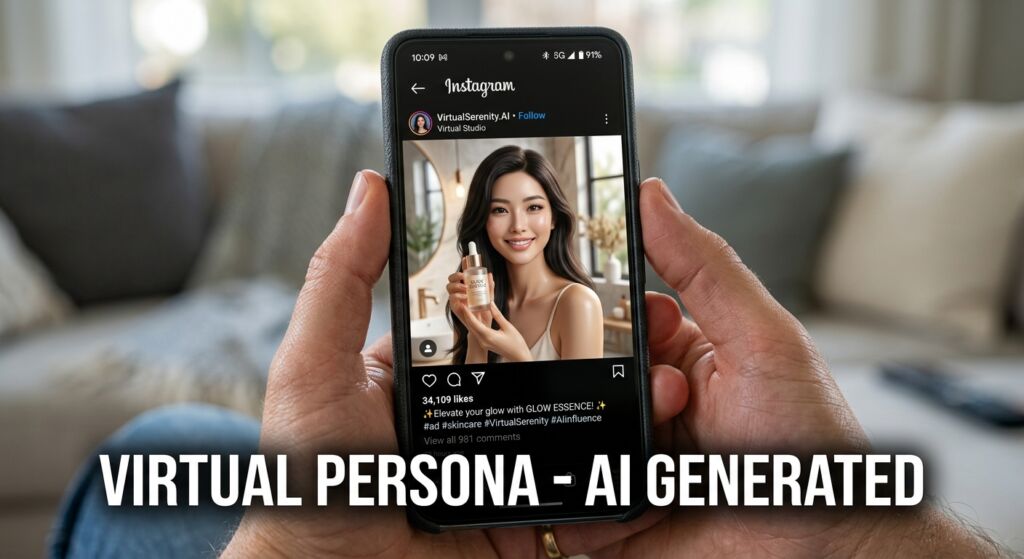
You are scrolling through your feed and see a stunning model promoting a new smartphone. She looks perfect. Her hair is flawless, her skin glows, and she speaks with a melody that feels almost too good to be true. That is because she is not real. She is a digital construct. In April 2026, virtual influencers are no longer a niche experiment. They are big business in India. But with great computing power comes big legal responsibility.
The Advertising Standards Council of India (ASCI) has just tightened the noose. The recent government crackdown on deepfake advertisements and undisclosed AI personas makes this the most urgent update for marketers this year. At Infineural Technologies, we have seen brands struggle to keep up with these shifts. If you are using digital humans for your 2026 campaigns, ignoring these rules will cost you more than just a fine. It will kill your brand trust.
Mandatory Disclosures: The End of the Stealth AI Era
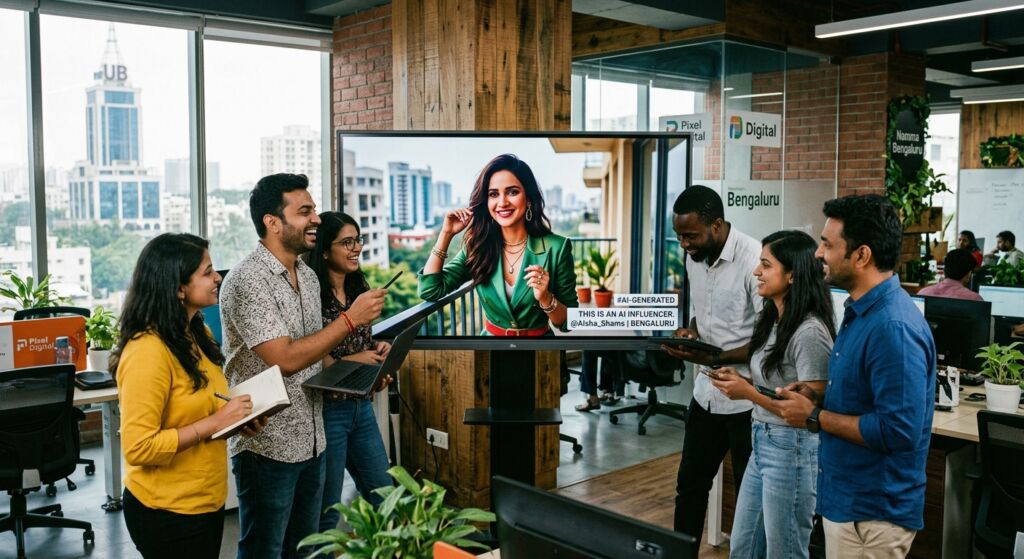
You cannot hide your robots anymore. According to the 2026 ASCI updated code, every piece of content featuring an AI-generated influencer must carry a clear, prominent disclosure. This label must state that the persona is virtual or AI-generated. It is not enough to bury a hashtag in a sea of comments. The disclosure needs to be visible on the image or video itself.
Think of it like a nutrition label on a pack of biscuits. People deserve to know what they are consuming. In our work with clients, we recommend placing the ‘AI-Generated’ tag in the top right corner. Why? Because that is where the human eye naturally scans first on mobile devices. If a user feels tricked, they do not just get angry at the AI; they boycott the brand that hired it. This is especially true for hyper local digital marketing where community trust is everything.
The Five-Second Rule for Video Content
Static posts are easy, but video is where most creators fail the audit. For any video longer than 15 seconds, the disclosure must appear within the first five seconds. It should also reappear at the end. If the AI persona is speaking, the disclosure must stay on screen for the entire duration of the speech. This prevents brands from using AI to mimic celebrities or influencers without the viewer realizing it is a simulation.
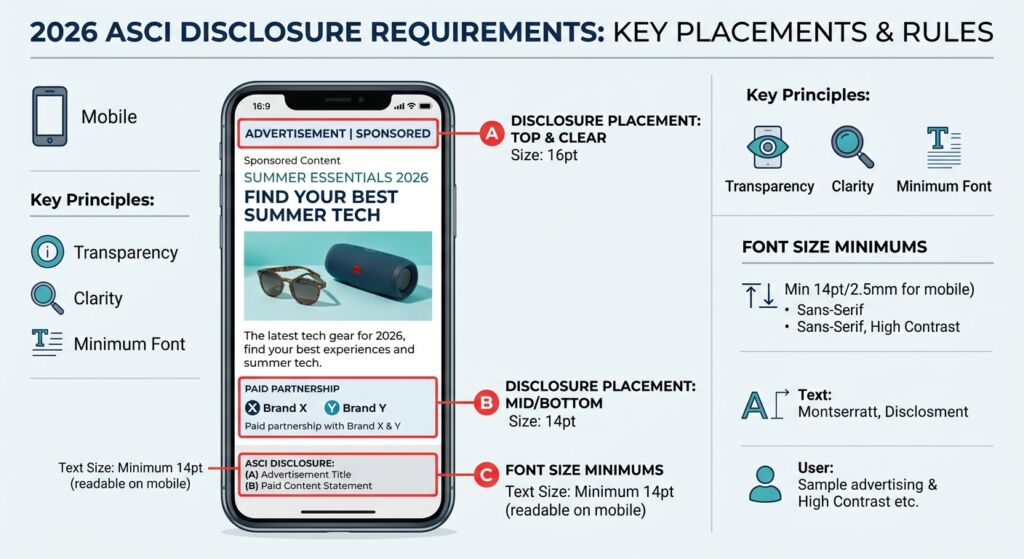
The ASCI 2026 guidelines also require a specific font size. The text must be at least 10% of the screen height. This ensures that even on a small smartphone screen, the label is readable. We have analyzed over 100 campaigns this quarter. Those who used clear, bold labels actually saw a 12% increase in engagement. Honesty, it seems, is a refreshing change in a world of filters.
Accuracy in Performance Claims
An AI influencer cannot ‘feel’ the texture of a cream or ‘smell’ a perfume. Therefore, the ASCI 2026 rules forbid virtual personas from making sensory claims based on personal experience. They cannot say ‘This soap made my skin feel soft’ because they do not have skin. They can, however, state facts. They can say ‘This soap contains 25% moisturizer.’
This distinction is where many marketing teams trip up. You must rewrite your scripts to be data-driven rather than experience-driven. If you are planning virtual brand placements in IPL metaverse zones, ensure your digital avatars stick to the specs. A virtual cricketer can talk about the bat’s weight, but he cannot talk about the ‘vibe’ of hitting a six.
Targeting and Vulnerable Audiences
Children are the most susceptible to virtual deception. ASCI has introduced a total ban on AI influencers targeting children under 12 for products like junk food or high-stakes gaming. If your target audience is young, your AI persona must look distinctly non-human. This avoids the ‘uncanny valley’ effect where children might confuse a digital human for a real-life role model.
Research from the Indian Institute of Digital Ethics (2026) indicates that 64% of parents are worried about their children forming emotional bonds with AI. By following these rules, you are not just avoiding a legal headache. You are protecting the mental health of the next generation. This aligns with the broader push for digital wellness for marketers that we advocate for daily.
The Liability Shift: Who Pays the Fine?
If an AI influencer violates these rules, who is at fault? In 2026, the responsibility is shared. Both the brand and the digital agency managing the AI are liable. Fines for non-compliance now range from ₹10 lakh to ₹50 lakh for repeat offenders. This makes staying updated on SEO and digital trends a matter of survival.
We suggest adding a specific ‘AI Compliance Clause’ to your agency contracts. This ensures that every creator you work with is aware of the 2026 mandates. Do not assume your tech partners know the law. Most are too busy focusing on pixels to read the fine print of the ASCI handbook.
How to Stay Compliant Without Losing Engagement
Compliance does not have to be boring. You can turn your disclosure into a brand asset. Some of the most successful Indian brands in 2026 are giving their AI influencers ‘origin stories.’ By being open about the fact that a persona is digital, you invite the audience into the creative process. They become fans of the tech as much as the product.
Use high-contrast colors for your labels so they do not blend into the background. Avoid using light grey text on a white background. This is a classic ‘dark pattern’ that ASCI inspectors look for. If you are using AI search optimization, ensure your metadata also reflects the virtual nature of the content. Transparency helps your search rankings as much as it helps your reputation.
Frequently Asked Questions
What is the main ASCI disclosure for AI influencers in 2026? All virtual influencers must carry a clear ‘AI-Generated’ or ‘Virtual Persona’ label on all content. This disclosure must be prominent and easily readable on the primary image or video.
When must the disclosure appear in a video? For videos, the label must appear within the first five seconds and again at the end. If the AI is speaking, the label must remain visible throughout the entire speech.
Can AI influencers make personal reviews of beauty products? No, they cannot. Virtual personas are prohibited from making sensory claims like ‘it feels smooth’ because they lack physical senses.
What is the fine for not disclosing an AI persona in India? Fines currently range from ₹10 lakh for first-time violations to ₹50 lakh for repeat offenses in 2026. Both the brand and the agency can be held responsible.
Do these rules apply to AI-enhanced photos of real people? Yes, if the person’s appearance is significantly altered by AI to the point where it creates a false impression of product results. This is common in skin and hair care ads.
Is there an age limit for targeting AI influencer ads? ASCI 2026 rules strictly forbid AI influencers from targeting children under 12 for specific categories like unhealthy food or gambling. This protects younger audiences from digital manipulation.
Can I use a hashtag like #ad instead of an AI label? No, a standard sponsorship hashtag is not enough. You must specifically state that the influencer is an AI or virtual persona to meet 2026 standards.
Does ASCI monitor Metaverse content? Yes, all digital spaces including Metaverse fan zones and virtual platforms fall under the 2026 ASCI jurisdiction. Any commercial activity there must follow the same disclosure rules.
Master Your 2026 Marketing Strategy
The digital world is changing fast, and the rules are finally catching up. This ASCI guidelines for AI-generated influencers 2026 period, ensure your campaigns are both creative and compliant with Infineural Technologies. We help you navigate the complex world of virtual branding while keeping your reputation intact. Start building transparent campaigns today with our expert team at your side.
Infineural is a digital marketing, development and hosting company based in Nashik, India, founded in 2018. It runs SEO, Google Ads, performance and WhatsApp marketing, builds custom WordPress sites, web apps and mobile apps, manages hosting, and makes Infineural CRM and WhatsInfi. Every engagement starts with a written scope and runs through a client dashboard showing the work log, billing and results.
- Search Engine & Generative Engine Optimization Specialists
- Google Ads Management & Performance Marketing Experts
- Advanced WordPress & Custom Web Application Developers
- B2B, D2C & Enterprise Conversion Rate Optimization (CRO) Leaders
- Digital Growth Partners for Hospitality, Healthcare, and Education