
Stop Letting Big Tech Watch Your Every Click
Do you feel like someone is watching you online? Because they are. In April 2026, privacy isn't just a buzzword. It's a survival skill. Every time you search for a new pair of shoes or a medical symptom, a profile is being built about you. Your data is the product. But you can stop it right now.

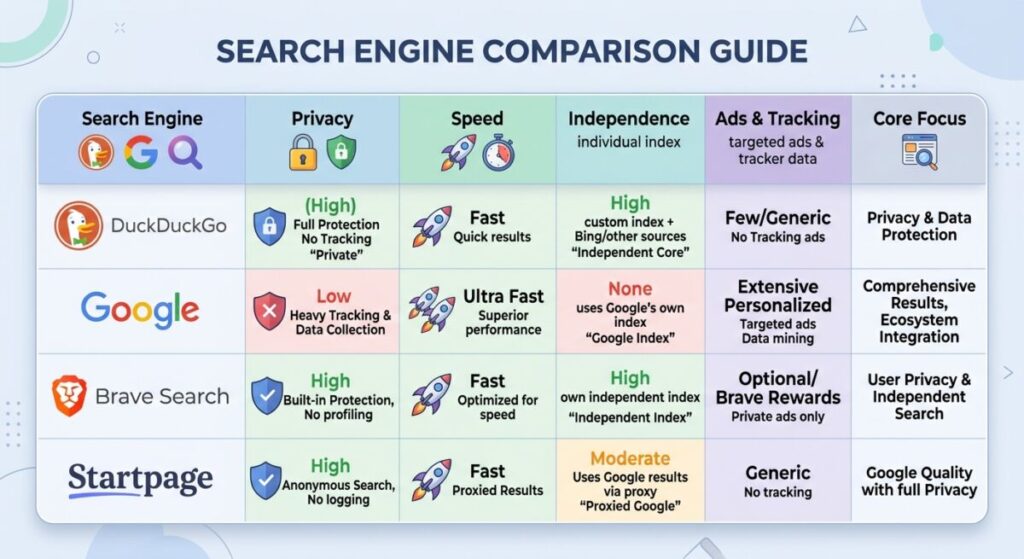
The bottom line? If you want to reclaim your privacy, you need to switch to a search engine that doesn't build a "shadow profile" of your life. DuckDuckGo, Startpage, and Brave Search are the top contenders in 2026 because they don't track your IP address or store your search history. They give you the results you need without the creepy follow-up ads.
At Infineural Technologies, we've tested dozens of platforms to find the ones that actually keep their promises. It isn't just about avoiding ads. It's about controlling your personal information. Are you ready to see who actually protects you? Let's get into it.
The Privacy Crisis of 2026: Why Google Isn't Enough
Google is great at finding things. We all know that. But the cost of that convenience has skyrocketed. By now, most major engines have integrated deep AI tracking that monitors not just what you search, but how you interact with the answers. They know your intent before you even finish typing. Does that sit right with you?
And it gets worse. According to a 2025 study by the Digital Rights Watch, over 70% of search data is shared with third-party brokers within milliseconds. You aren't just a user. You are a data point in a massive auction. This is why private search engines have seen a 40% surge in users over the last year. People are tired of being followed.
But wait. Not every "private" engine is actually private. Some are just wrappers for Bing or Google that still pass along certain identifiers. You need to know the difference between a meta-search engine and an independent index. If you want to understand the broader market, check out our Top Search Engines List: 12 Best Platforms for Traffic (2026) to see how the giants stack up against the newcomers.
1. DuckDuckGo: The Household Name for a Reason
DuckDuckGo is the giant of the privacy world. Why? Because they made privacy simple. You don't have to be a tech genius to use it. You just go to the site and search. They don't store your personal info. They don't follow you with ads. It's that simple.
In 2026, their "Global Privacy Control" has become a standard. It tells websites you visit not to sell or share your data. And their search results? They've improved drastically. They no longer rely solely on Bing. They have their own crawler now, which means more diverse results. But is it perfect? Not quite. Some users still find the local search results a bit lacking compared to the big guys.
Still, if you want a "set it and forget it" solution, this is it. They even have a browser that blocks trackers across the entire web. It’s a complete package for anyone who wants to disappear from the data brokers' radar.
2. Startpage: Google Results Without the Google Tracking
What if you love Google's results but hate their tracking? That is where Startpage comes in. They pay Google for their search results but strip away all the tracking. They act as a buffer. Google sees a search coming from Startpage, not from you. Your IP address is never shared.
We've used Startpage heavily at Infineural Technologies when we need pinpoint accuracy for technical queries. The "Anonymous View" feature is a game-changer. It lets you visit websites through a proxy so the site itself can't track you either. Think of it as a mini-VPN for every click you make. Want to know more about how these types of engines work? Read our guide on how meta search engines differ from traditional engines.
But here is the catch. Because they have to pay for the results, you might see more "sponsored" links at the top. They have to keep the lights on somehow. But those ads aren't based on your history. They are based only on the keyword you just typed. That is a fair trade, don't you think?
3. Brave Search: The Independent Powerhouse
Brave is doing something bold. They built their own search index from scratch. Most "alternative" engines are just skinning Bing or Google. Not Brave. In 2026, they are the only real independent threat to the monopoly. And they are fast. Really fast.
Because they own the index, they have total control over privacy. They don't track you, your searches, or your clicks. And they've integrated "Leo," their private AI assistant. Unlike other AI bots, Leo doesn't retain your conversations to train its model. Your prompts stay yours. This is a big deal for professionals who want to use AI without leaking company secrets.
If you want to see how Brave compares to the old guard, we have a deep dive into the DuckDuckGo vs Startpage battle which touches on why Brave's independence matters so much. Brave is the choice for people who want to support a truly decentralized web.
4. Mojeek: Truly Independent and No Tracking
Mojeek is for the privacy purists. Based in the UK, they were the first search engine to have a non-tracking privacy policy. Like Brave, they have their own index. They don't rely on anyone else. This means the results you get are "unbiased" by the algorithms of the big tech giants.
Is the index as big as Google? No. You might not find that obscure local restaurant as easily. But for general information and research, it’s refreshing. You see a different side of the web. It’s like stepping out of an echo chamber. If you are a researcher or a journalist, Mojeek is an essential tool in your kit.
5. Swisscows: The Family-Friendly Privacy Option
Swisscows is exactly what it sounds like—Swiss. And Switzerland has some of the strictest privacy laws in the world. They don't store any data. Period. No IP addresses, no search history, nothing. But they also have a unique feature: they are "family-friendly."
They automatically filter out violent or pornographic content. For parents, this is a huge win. You get the privacy you want and the safety your kids need. They also use semantic data recognition, which means they try to understand the "context" of your search to give better answers. It's clever tech that doesn't require spying on you.
6. Ecosia: Privacy That Plants Trees
Can searching the web save the planet? Ecosia thinks so. They use their profits to plant trees. But they are also very focused on privacy. They don't sell your data to advertisers and they don't use third-party trackers. They even anonymize all searches within a week.
In 2026, they've expanded their reforestation projects to every continent. We actually analyzed the benefits of eco-friendly search engines recently. It’s a great way to do some good while keeping your data safe. Just know that they do use Bing's technology for their results, so it isn't a fully independent index.
How to Choose the Right One for You
So, which one should you use? It depends on what you value most. Do you want the best results? Go with Startpage. Do you want to support an independent web? Brave or Mojeek are your best bets. Do you want to protect your kids? Swisscows is the winner.
The important thing is to just start. You don't have to switch everything at once. Try using a private engine for your personal searches first. You'll notice something interesting. The "creepy" ads will start to disappear. You'll feel a bit more anonymous. And in 2026, that feeling is a luxury.
We've seen businesses at Infineural Technologies drastically reduce their data footprint just by changing the default search engine on company laptops. It’s the easiest security upgrade you can make. No software to install. No fees to pay. Just a better way to browse.
The Future of Search is Private
The era of "free" search in exchange for your soul is ending. People are waking up. We are seeing a shift toward decentralized search and local AI processing. In the coming years, your search engine will likely live on your device, not on a server in California. But until then, these private engines are your best line of defense.
Don't wait for a data breach to take your privacy seriously. The big tech companies aren't going to stop tracking you voluntarily. You have to take control. Switch your default today. Your future self will thank you.
Frequently Asked Questions
Are private search engines really private? Yes, the reputable ones like DuckDuckGo and Startpage do not store your IP address or search history. They make money through non-targeted ads based on your current search term only.
Is DuckDuckGo better than Google? For privacy, yes, absolutely. While Google may have a slightly larger index, DuckDuckGo provides high-quality results without the invasive tracking and data profiling.
Do private search engines show different results? Yes, because they don't use your past history to "personalize" results, you often see a more objective view of the web. This helps you avoid the "filter bubble" effect common on mainstream platforms.
Can I use a private search engine on my phone? Most private search engines have dedicated apps or can be set as the default search provider in mobile browsers like Safari, Chrome, or Brave. It takes less than a minute to switch in your settings.
Does Startpage use Google's data? Yes, Startpage pays Google for its search results, but it acts as a protective layer. It strips out your personal identifiers so Google never knows who made the request.
Is Brave Search better than DuckDuckGo? Brave Search is unique because it uses its own independent index, whereas DuckDuckGo still relies partially on other providers. If you want total independence from big tech infrastructure, Brave is a strong choice.
Are there any free private search engines? All the major private search engines like Ecosia, Mojeek, and Swisscows are free to use. They support their operations through keyword-based advertising that doesn't require tracking you.
How do these companies make money without tracking me? They use "contextual advertising," which means if you search for "mountain bikes," you see an ad for a bike. They don't need to know your age, location, or search history to show you that ad.
Take Control of Your Digital Footprint Today
Privacy isn't a destination; it's a practice. Choosing the right tools is the first step toward digital freedom. At Infineural Technologies, we are committed to helping you navigate the complex world of search and SEO in 2026. Whether you are looking to protect your personal data or optimize your business for the next generation of search, we have the expertise to guide you. Contact Infineural Technologies today to learn how we can help you build a secure, privacy-first digital strategy that actually works.