
Stop Using General Search for Medical Expertise
You probably use Google every single day. Most people do. But when you are looking for specific clinical data or a rare drug interaction in 2026, Google often fails you. It gives you SEO-optimized blog posts for patients instead of peer-reviewed data for clinicians. That is a problem. You need precision. You need accuracy. And you need it fast.

In our work at Infineural Technologies, we have seen how much time medical professionals waste filtering through junk content. The noise on the open web has reached an all-time high this year. If you want to find real evidence-based answers, you have to go where the data lives. That means using specialized tools built for the healthcare industry. Ready to see what is actually working right now?
The Gold Standard: PubMed and Beyond
PubMed remains the king of medical research in 2026. But it is not the same PubMed you used five years ago. The National Institutes of Health (NIH) recently updated the interface to include real-time AI summarization. Now, instead of just reading abstracts, you can get a bulleted summary of the findings instantly. It saves hours of manual reading. But do not just stop at the search bar. Use the Advanced Search Builder. It allows you to filter by MeSH terms (Medical Subject Headings) to find exactly what you need.
Look at the Cochrane Library if you want the highest level of evidence. Cochrane is famous for systematic reviews. In 2026, they have expanded their database to include more rapid reviews of emerging pathogens. It is the best place to go when you need a definitive answer on whether a treatment actually works or if it is just hype. If you are looking for a broader view of the web, check out our Top Search Engines List: 12 Best Platforms for Traffic (2026) to see how general search compares to these powerhouses.
The Rise of AI-First Medical Search Engines
The biggest shift we have seen in March 2026 is the explosion of AI-powered medical agents. These are not just chatbots. They are search engines that understand clinical context. Tools like Consensus and Elicit have become essential for healthcare professionals. They search through millions of papers and provide answers backed by citations. But you have to be careful. Always verify the citations. AI is getting better, but human oversight is still the most important factor in patient care.
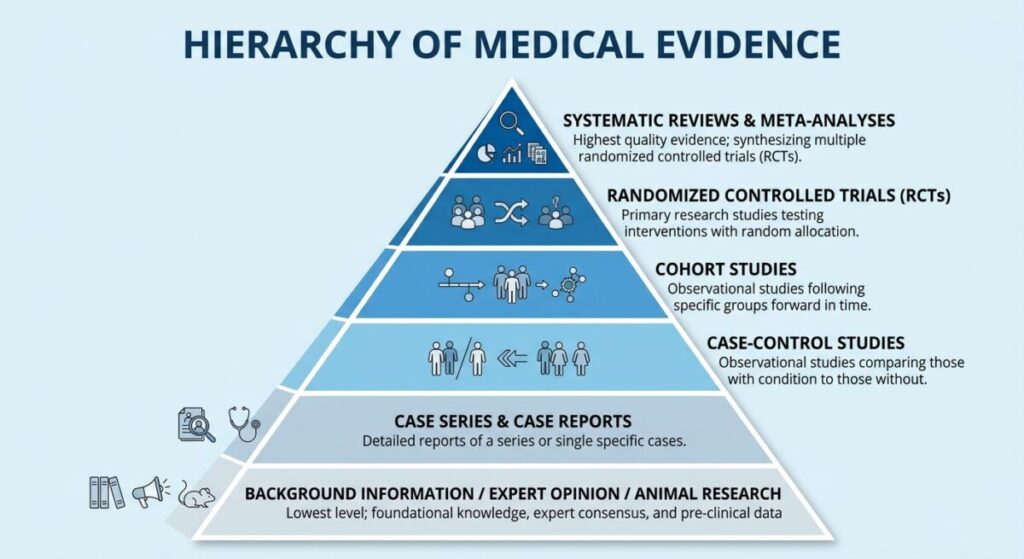
And here is a tip. Use the TRIP Database (Turning Research Into Practice). It is a smart tool that sorts results by the hierarchy of evidence. It places systematic reviews at the top and lower-level studies at the bottom. This helps you maintain a high standard of care without digging through pages of less relevant data. Medical research often overlaps with scholarly work. I have written about the 10 Best Academic Search Engines Beyond Google Scholar (2026) which covers these intersections in more detail.
Niche Tools for Drugs and Rare Diseases
Sometimes you need something very specific. If you are looking for drug info, DailyMed is the official provider of FDA label information. It is updated daily. It is the most reliable source for package inserts and side effect profiles. But what about rare diseases? The GARD (Genetic and Rare Diseases Information Center) search engine is built specifically for these cases. It connects you to research and clinical trials that general search engines usually miss.
Patient privacy is a big deal in 2026. You might want to use the 7 Best Private Search Engines for Total Anonymity in 2026 to keep your browsing data off the grid when researching sensitive cases. It is about protecting your research and your patients. Why would you want your search history sold to advertisers? You wouldn't. So take your privacy seriously.
How to Use These Engines Like a Pro
Knowing the list is only half the battle. You need a strategy. Start with the PICO framework. Population, Intervention, Comparison, and Outcome. When you use these terms in a specialized engine like the TRIP Database, your results become 10x more relevant. It is a simple trick that separates the experts from the amateurs. Most people just type in a few keywords and hope for the best. Don't be that person.
Another thing. Set up alerts. Almost every major medical engine allows you to save a search and get an email when new papers are published. This is how you stay ahead of the curve in 2026. The medical world moves fast. If you are reading about a study three months after it came out, you are already behind. Be proactive. Use technology to do the heavy lifting for you.
The Future of Clinical Search in 2026
We are moving toward a world of decentralized medical data. Some new search engines are starting to use blockchain to verify the integrity of clinical trial results. This prevents data manipulation. It is still early days, but it is something to watch. At Infineural Technologies, we are following these trends closely. The goal is always the same: better data for better outcomes.
Think about this for a second. How much more effective could you be if you had the right information at your fingertips in 30 seconds instead of 30 minutes? That is the power of using a specialized medical search engine. It is not just a tool. It is a competitive advantage. It makes you a better clinician. It makes you a more informed expert. And in 2026, that is exactly what the healthcare industry demands.
Frequently Asked Questions
What is the best medical search engine for clinical trials in 2026? ClinicalTrials.gov remains the most comprehensive source for ongoing and completed trials globally. It is the gold standard for finding experimental treatments and study results.
How does PubMed differ from Google Scholar? PubMed is curated by the National Library of Medicine and focuses strictly on life sciences and biomedicine. Google Scholar is broader and includes non-peer-reviewed content which can lower its reliability for clinical decisions.
Is there a free search engine for drug interactions? Yes, Medscape and Drugs.com offer professional-grade interaction checkers that are free for healthcare providers. These tools are updated in real-time as new FDA data becomes available.
Can I trust AI search engines for medical advice? You should never rely on AI alone for clinical decisions in 2026. Use AI tools to find and summarize papers, but always read the original source to verify the findings.
What is the TRIP database? TRIP stands for Turning Research Into Practice and is a search engine designed to find high-quality clinical evidence quickly. It categorizes results based on the hierarchy of evidence, such as systematic reviews or guidelines.
Are there search engines specifically for rare diseases? Yes, the Genetic and Rare Diseases (GARD) Information Center provides a specialized search tool for finding research on orphan diseases. It is a vital resource for clinicians treating patients with uncommon conditions.
How do I stay updated on the latest medical research? Use the ‘Create Alert’ feature on PubMed or Cochrane to receive notifications when new research matches your specialty. This ensures you never miss a major development in your field.
What is MeSH and why should I use it? MeSH stands for Medical Subject Headings and is a controlled vocabulary used for indexing articles in PubMed. Using MeSH terms makes your searches much more precise than using simple keywords.
Ready to Master the Search Game?
The world of search is changing fast, and staying on top of it is what we do best. Whether you are looking for medical data or trying to rank your own healthcare site, precision is everything. At Infineural Technologies, we help you navigate the complexities of modern search. Don't settle for generic results. Let us help you find the edge you need to succeed in 2026. Reach out today and let's build something great together.