Stop Using Basic Search for Your Research
Are you still relying on a standard Google search for your thesis or white papers? You are likely missing 90% of the data. General search engines are great for finding a pizza place. They are terrible for finding peer-reviewed, high-impact scholarly articles. In our work at Infineural Technologies, we've seen researchers waste dozens of hours because they used the wrong tools. You need the best search engines for academic research and scholarly articles to get the job done right in 2026.

Here is the bottom line. If you want verified data, you must use specialized databases. These platforms index the deep web where journals, patents, and repositories live. By the end of this guide, you will know exactly which tools to use to find better sources in half the time. Want to see how these fit into the bigger picture? Check out our Top Search Engines List: 12 Best Platforms for Traffic (2026) for a broader view of the search world.
1. Google Scholar: The Reliable Heavyweight
Google Scholar remains the king. It is massive. It is free. It indexes almost every format of scholarly literature across the globe. But is it enough in 2026? Not quite. While it is the most comprehensive, it lacks the surgical precision of newer AI tools. You get a lot of noise with the signal. Still, you cannot ignore it. It captures everything from court opinions to technical reports.
Why do we keep coming back to it? The "Cited by" feature is gold. It lets you track how a specific idea has grown over time. In 2026, Google added an "AI Synthesis" sidebar that summarizes long papers instantly. This saves you from reading 40 pages just to find out the study was inconclusive. But remember, it is a starting point, not the finish line. Use it to cast a wide net before you switch to more specialized tools.
2. Semantic Scholar: The AI-First Alternative
If Google Scholar is the library, Semantic Scholar is the personal research assistant. This engine uses artificial intelligence to understand the context of a paper. It doesn't just look for keywords. It looks for intent. Have you ever struggled to find a paper because you didn't know the exact terminology? Semantic Scholar solves that. It identifies the "highly influential citations" so you know which papers actually changed the field.
At Infineural Technologies, we love the "TL;DR" feature. It gives you a one-sentence summary of every paper. You can scan 100 results in five minutes. That is efficiency. And since we are talking about cutting-edge tech, you might also want to look into 7 Top AI Powered Search Engines for Research (2026 Guide) to see how deep these tools go. Semantic Scholar is vital because it filters out the junk. It focuses on impact, not just popularity.
3. Consensus: The Answer Engine for Science
Imagine if you could ask a question and get an answer backed by 200 million research papers. That is Consensus. It is a total shift in how we do research in 2026. You don't search for "Impact of Vitamin D on sleep." You ask, "Does Vitamin D improve sleep?" The engine then analyzes the literature and gives you a "Consensus Meter."
It tells you what percentage of studies say "Yes" versus "No." This is a lifesaver for debunking myths or finding solid ground for a claim. It pulls directly from peer-reviewed sources. No blogs. No opinion pieces. Just hard data. We use this specifically when we need to verify a statistic for a client report. It is fast, accurate, and incredibly easy to use. But what if you need something more obscure? You should explore 10 Best Academic Search Engines Beyond Google Scholar (2026) for those niche cases.
4. CORE: The Open Access Powerhouse
Do you hate paywalls? We all do. CORE (Connecting REpositories) is the world's largest aggregator of open-access research papers. It is a nonprofit service that collects millions of items from thousands of repositories. If a paper is available for free legally, CORE will find it. This is a must-have for independent researchers who don't have a university library login.
CORE is not just a search bar. It provides an API that many developers use to build other research tools. It is the backbone of the open research movement in 2026. When you use CORE, you are getting the raw, unedited science. It is great for finding pre-prints and older studies that might be buried elsewhere. Plus, it is completely transparent. You know exactly where the data comes from every time.
5. PubMed: The Gold Standard for Medicine
If your research is in the life sciences or medicine, PubMed is your home. It is maintained by the National Library of Medicine. It is the most authoritative source for clinical trials and biological research. But it can be intimidating. The interface is built for experts, not casual browsers. You need to understand MeSH (Medical Subject Headings) to get the most out of it.
In 2026, PubMed integrated better visual data tools. You can now see citation maps directly in the search results. This helps you see how different medical discoveries are linked. For those in healthcare, this isn't just a tool; it is a necessity. If you are a doctor or a student, you likely already know this. But are you using the advanced filters? You can filter by study type, like "Randomized Controlled Trial" or "Systematic Review." This level of detail is why it stays at the top. For more specific tools, see our list of Medical Search Engines for Healthcare Professionals (2026).
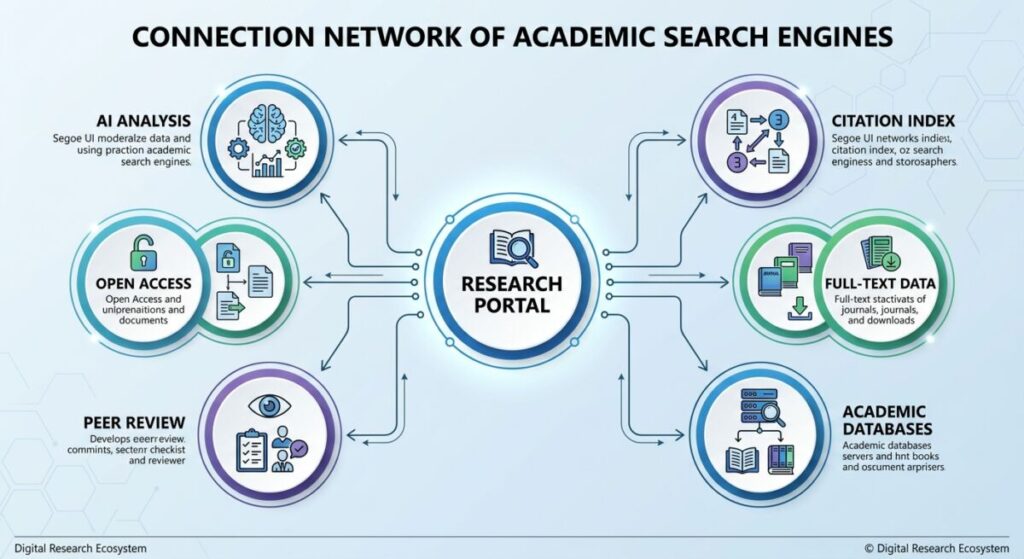
6. ResearchGate: The Social Network for Scientists
ResearchGate is unique. It is part search engine, part social network. It allows researchers to upload their own papers. This often includes "full-text" versions that you can't find anywhere else. You can follow specific authors. You can even message them to ask questions about their data. It makes science feel human again.
But be careful. Not everything on ResearchGate is peer-reviewed. Since authors upload the content themselves, you must check the quality. Always look for the journal name and the date. In April 2026, the platform introduced a "Verification Badge" for high-quality, replicated studies. This makes it much easier to trust what you read. It is a fantastic place to find the very latest research before it even hits the major journals.
7. Microsoft Academic (The Successor Era)
Microsoft Academic was technically shut down years ago, but its legacy lives on through the Microsoft Academic Graph (MAG). Today, tools like OpenAlex have taken over that data. OpenAlex is a fully open and free catalog of the global research system. It is massive. It tracks authors, institutions, and journals in a way that is highly connected.
Why does this matter? Because it allows for complex queries. You can ask for "all papers on AI ethics published in 2026 by researchers in Germany." Most search engines can't handle that. OpenAlex can. It is built for the modern data scientist. If you want to build your own research tools or do deep bibliometric analysis, this is the place to start. It is the engine behind many of the other "fancy" tools you see today.
How to Choose the Right Engine
So, which one should you use? It depends on your goal. Are you doing a broad sweep? Start with Google Scholar. Do you need a quick answer to a specific question? Go to Consensus. Are you looking for free PDFs? CORE is your best bet. Most experts use a combination of at least three engines. This ensures you don't miss anything vital due to an algorithm bias.
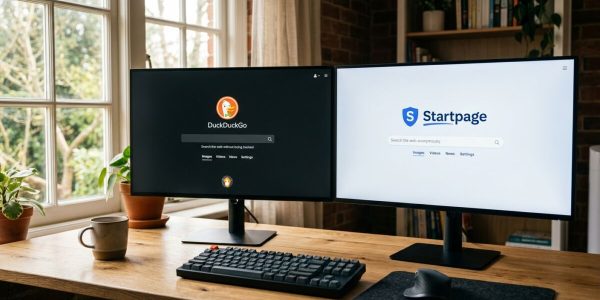
Don't forget about privacy either. Some research is sensitive. If you are looking for data on a private company or a controversial topic, you might want to use a privacy-focused engine first. Check out our comparison of DuckDuckGo vs Startpage for Privacy in 2026 to see how to keep your search history off the grid.
Common Research Mistakes to Avoid
The biggest mistake? Using only one keyword. Research is an iterative process. You find a paper, look at its keywords, and then search again. Another mistake is ignoring the date. In fast-moving fields like AI or medicine, a paper from 2023 might already be outdated. Always filter for the last two years if you want the latest breakthroughs. According to a 2026 study by the Open Science Foundation, over 40% of researchers fail to check for the most recent updates to a study, leading to errors in their work.
Finally, don't trust the abstract alone. Abstracts are like movie trailers. They show the best parts, but they can be misleading. Always look at the methodology section. Did they use a large enough sample size? Was there a control group? These questions are what separate a good researcher from a mediocre one. You want the truth, not just a catchy headline.
FAQ
What is the best search engine for academic research for free?
Google Scholar and CORE are the best free options for most users. They provide access to millions of papers without requiring a subscription.
Is Google Scholar still relevant in 2026?
Yes, it remains the largest index of scholarly work. However, many researchers now supplement it with AI-powered tools like Semantic Scholar for better filtering.
How can I find scholarly articles for free?
Use CORE or the "Open Access" filter on engines like BASE to find papers that are not behind paywalls. You can also check ResearchGate for author-uploaded versions.
What is the difference between a search engine and a database?
A search engine like Google Scholar indexes the web, while a database like PubMed is a curated collection of specific types of literature. Databases usually offer more precise search filters.
Which AI search engine is best for students?
Consensus is excellent for students because it provides direct answers to questions based on research. This helps in understanding complex topics quickly.
Are results on ResearchGate peer-reviewed?
Not always. While many peer-reviewed papers are uploaded there, anyone can share their work, so you must verify the source yourself.
How do I cite a paper I found online?
Most academic search engines provide a "Cite" button. Always double-check the citation against your required style guide, like APA or MLA.
What is the most accurate academic search engine?
PubMed and Web of Science are often considered the most accurate due to their strict indexing standards. They have very high bars for which journals they include.
The Future of Research is Here
Finding the best search engines for academic research and scholarly articles is just the start. In 2026, the real skill is knowing how to use these tools together. You need to be fast, but you also need to be accurate. Don't let a poor search strategy hold your career back. Use the tools we've discussed to build a stronger, more credible body of work.
Ready to take your digital strategy to the next level? At Infineural Technologies, we help businesses and researchers navigate the complex world of search and data. Whether you need SEO strategy or custom research tools, we have the expertise to help you win. Contact Infineural Technologies today and let's build something great together.