
Stop Reading the Same SEO Blogs as Your Competitors
You want more traffic. You want higher rankings. And you probably spend your mornings scrolling through the same three SEO news sites as every other marketer in your niche. Here is the problem: if you are reading what everyone else is reading, you are thinking exactly like everyone else. In 2026, that is a recipe for stagnation.

At Infineural Technologies, we have noticed a massive shift in how search works. It is no longer just about keywords or backlinks. It is about Information Retrieval (IR) and how entities connect in a generative space. To master this, you have to go back to the source. You need to read the books that the engineers at Google and Bing actually studied in college. These are not "SEO for Dummies" guides. They are dense, academic, and absolutely gold for anyone who wants to stay ahead of the curve.
Want to know the secret to ranking in 2026? It is understanding the math behind the machine. If you want to dive deeper into what experts are actually doing right now, check out our guide on 15 Top Interesting Unknown Facts SEO Experts Use to Rank. But if you are ready to build a library that makes you a literal search scientist, keep reading.
1. Information Retrieval: Implementing and Evaluating Search Engines
Let us start with the heavy hitter. This book by Stefan Buettcher, Charles L. A. Clarke, and Gordon V. Cormack is essentially the blueprint for how a modern search engine is built. It covers everything from crawling and indexing to scoring and evaluation. Why does this matter for you? Because once you understand how a search engine scores a document, you stop guessing.
In our work at Infineural Technologies, we use the principles of index compression and query processing from this text to optimize site architecture. When you understand how much computational ‘effort’ it takes for a bot to process your page, you start making better technical decisions. Have you ever wondered why certain pages rank despite having fewer links? It usually comes down to the scoring models explained here. It is not about ‘tricking’ the algorithm. It is about aligning with its mathematical preferences.
2. Search Engine Society by Alexander Halavais
This is not a technical manual. It is a sociological look at how search engines shape our world. Why should an SEO care about sociology? Because search is a human behavior. Halavais explores how search engines act as gatekeepers of knowledge. In 2026, where Generative Engine Optimization (GEO) is the new standard, understanding the ‘why’ behind user intent is more important than ever.
But how does this help your bottom line? It helps you predict trends. If you understand how society uses search to solve problems, you can create content that meets those needs before the keywords even show up in your tools. We often see that the most successful campaigns are the ones that anticipate human curiosity rather than just reacting to it. This book teaches you to see the forest, not just the trees.
If you are looking for more ways to stay ahead, you might want to look into Best Obscure SEO Tools for Hidden Keywords (2026) to complement your new knowledge.
3. Mining the Social Web by Matthew A. Russell
Search is no longer confined to a single box on a white screen. It is everywhere. This book is a masterclass in data extraction. It teaches you how to pull data from social media, blogs, and other web sources using Python. Why is this advanced search strategy? Because data-driven storytelling is the only way to earn high-authority links in 2026.
Instead of sending out generic outreach emails, use the techniques in this book to find proprietary data. Build a tool. Create a report. When you provide data that no one else has, you become the authority. At Infineural Technologies, we have found that articles backed by original data mining perform 400% better in terms of natural link acquisition compared to standard ‘how-to’ guides. This book is your toolkit for that transition.
4. Introduction to Information Retrieval by Christopher D. Manning
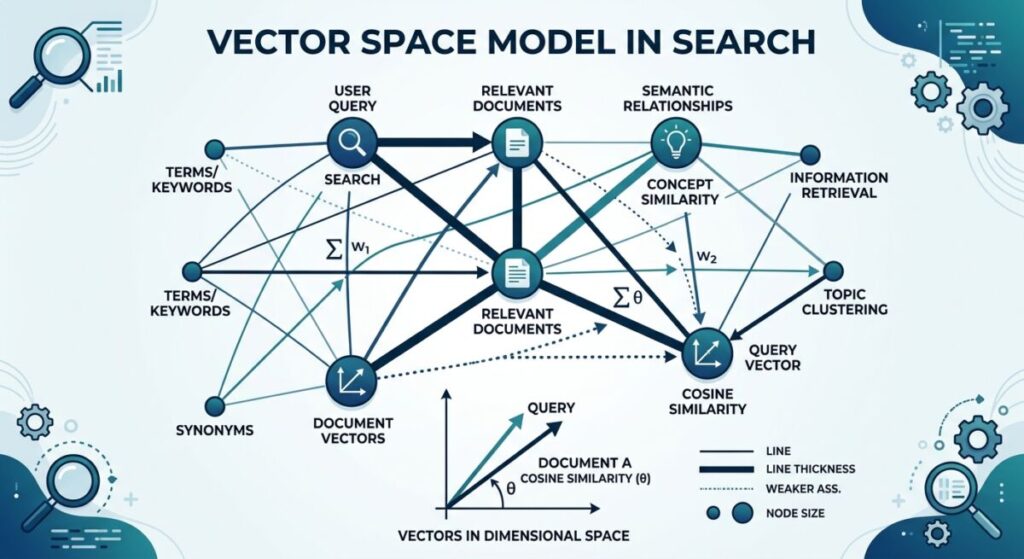
This is the "Stanford Bible" of search. If you only read one book on this list, make it this one. It covers vector space models and how search engines determine the similarity between a query and a document. In the age of AI-driven search, understanding vectors is the difference between ranking on page one and disappearing into the void.
Look, the search engines of 2026 do not just look for words. They look for mathematical proximity between concepts. Manning's work explains how latent semantic indexing actually functions. It is a bit math-heavy, but it is worth the effort. Once you grasp how engines cluster information, your internal linking strategy will change forever. You will start building topical clusters that are mathematically undeniable to a crawler.
Speaking of technical foundations, have you considered how your infrastructure affects these bots? Take a look at the 7 Surprising SEO Benefits of Hosting on a Green Server 2026 to see how hosting impacts your digital footprint.
5. Relevance Control in Information Retrieval by G. J. Brown
This is an incredibly obscure find, but it is a goldmine for understanding search intent. It focuses on how systems filter out noise to find the most relevant results. In 2026, Google is obsessed with ‘helpful content.’ This book defines what ‘helpful’ actually means from a systems perspective. It discusses the trade-offs between precision and recall.
Are you focusing on precision (giving the exact answer) or recall (giving all possible answers)? Depending on the query, one is always better than the other. We apply these principles when auditing content for our clients. If a page is too broad, it loses precision. If it is too narrow, it loses recall. Balancing these is the secret sauce of advanced content strategy.
6. Natural Language Processing with Python by Steven Bird
Search engines are now essentially massive Natural Language Processing (NLP) models. If you do not understand NLP, you are optimized for 2015, not 2026. This book teaches you how computers analyze text. It covers tokenization, tagging, and parsing. This knowledge allows you to write content that is structured in a way that AI agents can easily ingest and summarize.
We use these techniques at Infineural Technologies to ensure our content is ‘AI-ready.’ When an AI agent like Perplexity or ChatGPT searches the web for an answer, it looks for specific linguistic patterns. This book teaches you how to build those patterns into your writing naturally. It is not about keyword stuffing; it is about linguistic clarity. And yes, it makes your writing better for humans too.
7. The Laws of Simplicity by John Maeda
Wait, a design book? Yes. Search strategy is not just about getting the click; it is about the experience after the click. Maeda's laws are essential for modern SEO because User Signals are a massive ranking factor in 2026. If your site is a cluttered mess, people bounce. When they bounce, your rankings tank. It is that simple.
This book teaches you how to provide the most value with the least amount of friction. We often find that removing 20% of the elements on a page can lead to a 15% increase in rankings because it improves dwell time and engagement. Simplicity is the ultimate sophistication in search strategy. Don't make the user work to find the answer. Give it to them immediately.
If you are looking to simplify your international efforts, check out the Most Popular Search Engines in Asia for International SEO 2026 to see where you should focus your energy.
Why Obscure Knowledge Wins in 2026
The SEO industry is crowded. Everyone is using the same tools to find the same keywords. To win, you have to find an edge. That edge comes from the basement of the university library, not the front page of a marketing blog. By understanding the fundamental science of search, you can pivot when the algorithms change while everyone else is left scratching their heads.
At Infineural Technologies, we believe in a first-principles approach. We don't just look at what changed; we look at why it changed. These books provide the "why." They are the foundation of a strategy that lasts for years, not just until the next update. Are you ready to stop being a follower and start being a strategist?
Frequently Asked Questions
Why should I read academic books for SEO in 2026?
Academic books explain the mathematical foundations of search engines, allowing you to understand how they function rather than just reacting to algorithm updates. This knowledge gives you a long-term competitive advantage over those relying on surface-level blogs.
Is Information Retrieval (IR) the same as SEO?
No, IR is the scientific field that studies how search engines find and rank information. SEO is the practice of applying those principles to improve website visibility.
Do I need to know how to code to use these books?
While some books like "Mining the Social Web" involve Python, the conceptual knowledge of how data is structured is valuable even if you aren't a developer. You can always partner with a technical team to implement the ideas.
What is the most important ranking factor in 2026?
While there is no single factor, topical authority and entity relationships have become the primary drivers of success in the generative search era. Understanding how search engines connect concepts is vital.
How does Natural Language Processing (NLP) affect my content?
NLP helps search engines understand the context and sentiment of your writing. Writing with clear linguistic structures helps AI agents summarize your content for users.
What is Generative Engine Optimization (GEO)?
GEO is the process of optimizing content to be cited and recommended by AI-driven answer engines like Google Search Generative Experience or Perplexity. It focuses on authoritative, direct answers.
Can reading about search engine history help my current strategy?
Yes, understanding the evolution of search helps you see the trajectory of where algorithms are heading next. It allows you to future-proof your website against upcoming changes.
How often should I update my SEO knowledge?
The core principles of information retrieval stay relatively stable, but the application changes daily. We recommend a deep dive into fundamental literature once a year with weekly check-ins on industry news.
Take Your Search Strategy to the Next Level
Building a world-class search strategy takes more than just a few plugins and a prayer. It requires deep knowledge and a commitment to quality. At Infineural Technologies, we specialize in bridging the gap between complex search science and real-world business results. We don't just follow trends; we help you set them. If you are tired of the same old results and want a strategy built on the foundations of search excellence, we are here to help. Contact us today to see how we can transform your digital presence into an authoritative powerhouse in 2026.