The Secret Sauce of Search in 2026
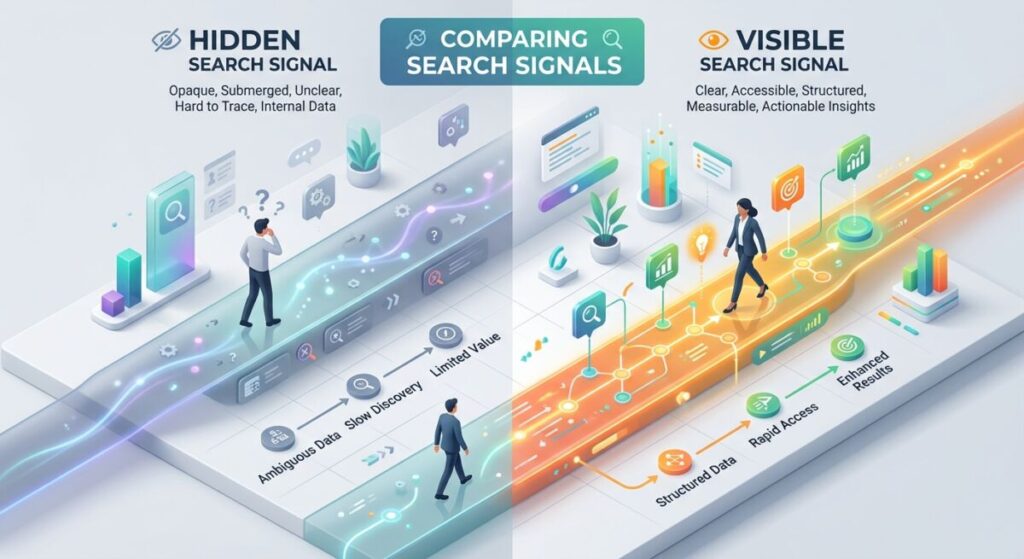
Want to know a secret? Most of what you hear about search engine optimization (SEO) is outdated. People tell you to focus on keywords. They tell you to build backlinks. And they tell you to write long content. But here is the truth. That is only 20% of the puzzle. At Infineural Technologies, we have analyzed thousands of pages. We found that the hidden mechanics of search are what actually move the needle. Search engines are smarter than ever. They do not just look at your text. They look at how users feel when they land on your page.

SEO is not a guessing game anymore. It is a data science. And if you are not looking at the weird, technical details, you are losing money. Ready to see what is happening under the hood? Let us get into the things the gurus do not talk about.
1. Google Uses Your Chrome Data (Sort Of)
Do you use Google Chrome? Most people do. And Google sees everything you do on that browser. While they claim they do not use individual browsing history for ranking, they definitely use aggregate data. This is called the Chrome User Experience Report (CrUX). It tells Google how fast your site loads for real people. Field data is more important than lab data. If your site feels slow to a user in New York, Google knows it. And they will penalize you for it. This is why you must optimize for Core Web Vitals immediately. It is not just about a score. It is about the actual user experience recorded by the world’s most popular browser.
2. The First Result Does Not Always Win
Everyone wants to be number one. But did you know the first result often gets fewer clicks than the second or third? This happens because of ‘SERP crowding’. When Google puts a massive AI Overview or a featured snippet at the top, people skip the first organic link. The ‘Golden Triangle’ of search has shifted. Sometimes, being in a ‘People Also Ask’ box is worth more than a top ranking. You have to think about ‘visual real estate’. If your competitor has a massive image block, you need to use schema markup to fight back. It is a war for attention, not just a list of links.
3. Punctuation in URLs Actually Matters
Think your URL structure is fine? Think again. Many people use underscores in their slugs. Big mistake. Google sees a hyphen as a space. It sees an underscore as a character that joins words. If your URL is ‘best_seo_tips’, Google reads it as one long word. But ‘best-seo-tips’ is read as three distinct keywords. Hyphens are the gold standard for URLs. Keep them short. Keep them clean. And never use special characters like percentage signs or emojis. It confuses the crawler. And a confused crawler will never rank your content well.
4. Outbound Links to Authority Sites Help You
Some people are afraid to link out. They think they are ‘leaking’ SEO juice. That is a myth. In fact, linking to high-quality, authoritative sources shows Google that you are a part of a ‘good neighborhood’. It provides context. If I am writing about privacy and I link to the best private search engines, it tells the algorithm that my content is well-researched. External links build trust. Just make sure they open in a new tab. You want to keep the user on your site while also being a helpful resource. It is a win-win for everyone involved.
5. The ‘Ghost’ of Your Old Content Lingers
Deleted a page recently? You might think it is gone. But Google has a long memory. If you have 404 errors on your site, it acts like a weight dragging you down. Crawlers hate hitting dead ends. At Infineural Technologies, we always recommend a strict 301 redirect strategy. Never just delete a page. Always point it to the next most relevant piece of content. This preserves your link equity. And it keeps the ‘crawl budget’ focused on your active pages. If you have too many dead links, Google might stop visiting your site as often. And that is a recipe for a traffic collapse.
6. Stop Words Are Not Always Ignored
Old SEO school taught us to ignore ‘stop words’ like ‘the’, ‘and’, or ‘of’. But modern search engines are semantic. They understand intent. If you search for ‘The Who’, you are looking for a band. If you search for ‘Who’, you might be looking for the World Health Organization. Context is king in 2026. You should write naturally. Do not try to strip out words to make a ‘perfect’ keyword string. If it sounds robotic to a human, the AI will catch it. And trust me, the AI is getting very good at spotting ‘keyword stuffing’.
7. Image Alt Text Is for AI Now
We used to say alt text is for the visually impaired. And that is still true. But now, it is also a primary way for Google’s computer vision to understand your page. Images are data points. When you describe an image, you are giving the search engine a reason to show your site in Image Search. This is a huge source of untapped traffic. Don’t just name your file ‘image1.jpg’. Name it ‘seo-strategy-chart-2026.jpg’. And use descriptive alt text. It helps you rank in more places than just the standard search results. You might want to check out our technical guide on site speed to make sure those images load fast too.
8. Domain Age Is a Tiny Factor
People obsess over buying old domains. They think it is a shortcut to ranking. But here is the reality. A new site with incredible, fresh content will beat an old, stagnant site every time. Relevance beats age. Google cares about what is useful *now*. If your content is five years old and hasn’t been updated, your ‘domain authority’ won’t save you. We see this all the time in the competitive search engine space. Small, agile blogs are outranking massive corporations because they answer questions better. Focus on the user, not the registration date of your URL.
9. Social Signals Are Indirect Ranking Factors
Does a Tweet help you rank? Not directly. Google doesn’t use ‘likes’ as a ranking signal. But wait. If your post goes viral on social media, what happens? People link to it. People search for your brand. And people spend more time on your site. Social media creates a ripple effect. It drives the metrics that Google *does* care about. So, don’t ignore Facebook or X. Use them to start the fire. The SEO benefits will follow naturally as people discover your work. It is all about building a brand that people actually recognize.
10. Freshness Decay Is Real
You can’t just publish and forget. Content has a ‘shelf life’. Depending on your niche, your traffic might start to drop after just six months. This is ‘freshness decay’. Google loves updated information. Even a small update—adding a new paragraph or a recent statistic—can signal to the crawler that the page is still relevant. We suggest an audit every quarter. Look for pages that are losing traffic. Give them a facelift. It is much easier to keep a ranking than it is to earn a new one from scratch.
11. Your ‘Contact Us’ Page Affects SEO
This sounds crazy, right? But it is part of E-E-A-T (Experience, Expertise, Authoritativeness, and Trustworthiness). Google wants to know you are a real business. If you don’t have a physical address, a phone number, or a clear contact page, why should they trust you? Transparency builds rankings. A clear ‘About Us’ page and a privacy policy are essential. It tells the algorithm that you are a legitimate entity. For businesses in high-stakes industries, this is non-negotiable. If you want to see how we handle this, look at our digital marketing playbooks for professionals. It is all about building a footprint of trust.
12. The Length of Your Content Is Not a Rule
You have heard that you need 2,000 words to rank. That is simply not true. If a user wants to know ‘what time is it in London?’, they don’t want a 2,000-word essay on the history of time. They want a one-word answer. Match the length to the intent. If the top results are all short lists, don’t write a novel. You will just bore the user. And if the user leaves immediately, your ‘dwell time’ drops. That tells Google your page didn’t satisfy the search. Focus on being helpful, not being long-winded.
13. Hidden Text Can Kill Your Site
Some people still try to hide keywords by making the text the same color as the background. Don’t do it. This is a 1998 tactic that will get you banned in 2026. But there is a modern version: ‘hidden’ tabs or accordions. While Google *can* read text in accordions, it sometimes gives it less weight. If it is important, put it in plain sight. Don’t make the user click five times to find the answer. The easier it is for a human to read, the easier it is for a search engine to value. Keep your design clean and your most important keywords visible.
14. Click-Through Rate (CTR) Is a Feedback Loop
Google looks at how many people click your link compared to others. If you are at position #3 but everyone is clicking #4, you will eventually swap places. Your meta title is your sales pitch. It needs to be catchy. It needs to stand out. Use brackets. Use numbers. Use emotional triggers. If you can increase your CTR by even 1%, you can leapfrog competitors without building a single new link. It is the highest ROI activity in all of search marketing. Spend time on your headlines. They are the gatekeepers to your traffic.
15. Semantic Distance Is the New Keyword Density
Stop counting how many times you say your keyword. Instead, look at ‘semantic distance’. This is how closely related your secondary topics are to your main topic. If you are writing about ‘SEO’, Google expects to see words like ‘algorithm’, ‘indexing’, and ‘crawling’ nearby. Build a web of meaning. If these related terms are missing, the search engine thinks your content is thin. Use natural language. Cover the topic from every angle. When you do this, you rank for thousands of ‘long-tail’ keywords you didn’t even target. That is how you build a real traffic powerhouse.
SEO Frequently Asked Questions
Does site speed affect rankings? Yes, it is a confirmed ranking factor through Core Web Vitals. Fast sites provide a better user experience, which Google rewards with higher visibility.
Are backlinks still important in 2026? Backlinks remain a top three ranking factor because they act as votes of confidence. However, the quality of the link matters much more than the total number of links.
How often should I update my blog? You should aim to update your most important posts at least once a year. Keeping content fresh signals relevance to search engines and keeps your audience engaged.
Can social media improve my SEO? While social shares are not a direct ranking signal, they increase brand awareness and lead to more natural backlinks. This indirectly boosts your authority and search presence over time.
Is AI content bad for SEO? AI content is not inherently bad, but it must be high-quality and provide real value to the reader. Google penalizes low-effort, spammy content regardless of whether a human or AI wrote it.
Do meta descriptions help rankings? Meta descriptions do not directly affect your rank, but they impact your click-through rate. A better description leads to more clicks, which can eventually improve your position.
What is E-E-A-T in SEO? It stands for Experience, Expertise, Authoritativeness, and Trustworthiness. It is a framework Google uses to evaluate the quality and credibility of content creators.
Should I use a subfolder or a subdomain for my blog? Most SEO experts recommend using a subfolder (site.com/blog) because it keeps all link equity on the main domain. Subdomains are often treated as separate entities by search engines.
Master Your Search Strategy with Infineural
Search is always changing. What worked yesterday might not work today. That is why you need a partner who understands the deep, technical side of the web. At Infineural Technologies, we don’t just follow trends. We set them. Whether you need to fix your technical SEO or build a content machine that generates leads, we are here to help. Ready to dominate the SERPs? Let us take your digital presence to the next level. Contact us today and let’s start building your search engine future.