
The Secret Signals Google Doesn’t Talk About
Do you feel like you are doing everything right? You have the keywords. You have the backlinks. But your niche site is still stuck on page two. Why? It is because Google uses over 200 signals, and most people only focus on five of them. The truth is that ranking a small site requires more than just high-volume keywords. You need to trigger the specific signals that prove you are a real authority in your corner of the internet.

At Infineural Technologies, we have seen that niche authority is built on user behavior and brand signals rather than just technical checklists. If you can master the small things, like repeat visitor rates and long-click percentages, you can outrank sites with ten times your budget. It is not about working harder. It is about working smarter on the factors your competitors do not even know exist.
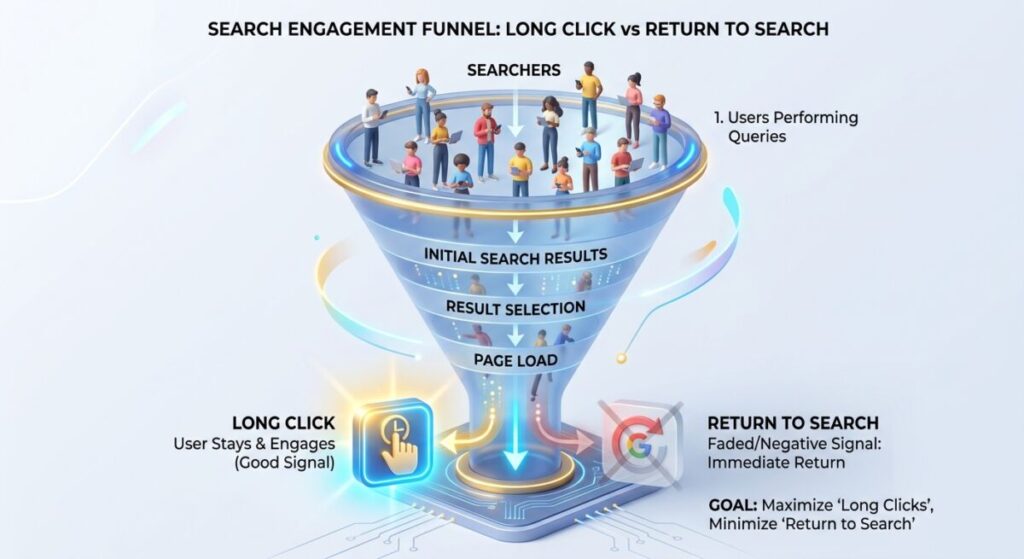
1. Return-to-Search vs. Long Clicks
Have you ever clicked a result, stayed for five seconds, and then hit the back button? That is pogo-sticking. Google hates it. For niche websites, this is a massive ranking factor that nobody tracks. If a user stays on your page for five minutes and never goes back to the search results, Google marks that as a successful session. This is known as a "long click."
But how do you keep them there? You give them what they want immediately. No long intros. No fluff. Just answers. And if you want to see how the pros handle these subtle shifts, you should look at the 15 Top Interesting Unknown Facts SEO Experts Use to Rank. It explains the baseline you need before you worry about these advanced signals.
2. Direct Traffic as a Trust Signal
Google looks at how many people type your URL directly into their browser. Why? Because it proves you have a brand. If people remember your name, you are an authority. For a niche site, this is a powerful way to separate yourself from "made-for-AdSense" garbage. Start a newsletter. Build a following on social media. Get people to come to you without needing a search engine first. When Google sees direct traffic growing, your organic rankings usually follow.
3. Sentiment Analysis of Comments and Reviews
Did you know Google reads your comment section? They do. They use Natural Language Processing (NLP) to see if people are happy or angry. If your niche site has a community that leaves positive, helpful comments, Google views that as a trust signal. But if your comments are full of spam or complaints, it hurts you. In our work at Infineural Technologies, we have found that engaging with your audience in the comments can actually boost your SEO. It shows the site is alive and helpful.
4. Entity Association and LLM Training Data
Google is no longer just looking at keywords. It is looking at entities. An entity is a thing or a concept that is unique and well-defined. If your niche site is about "mechanical keyboards," Google expects to see your site mentioned alongside other big brands in that space. They look at how your site is mentioned in LLM training data and across the web. If you are linked to other experts, Google assumes you are an expert too. And if you want to grow that authority, check out the Top Search Engines List to see where else you should be visible.
5. Chrome Usage Data
Let’s be real. Google owns the most popular browser in the world. They see how people interact with your site even if they did not find you through search. They see your load times. They see how far people scroll. They see if users bookmark your pages. All of this data feeds back into the algorithm. If your site is slow or hard to navigate, Chrome tells Google. This is why tools like WP Rocket vs Autoptimize are so important for niche sites. Speed is not just a "nice to have" anymore.
6. The "Glass Ceiling" of Topical Breadth
Niche sites often make the mistake of going too broad too fast. Google assigns your site a "topical authority" score. If you write about fishing lures, stay on fishing lures until you own that topic. If you suddenly start writing about boat engines, Google might get confused. This confusion limits your rankings. You need to build a pillar-and-cluster structure. Start with a deep guide and build ten smaller posts that link back to it. This creates a web of relevance that Google cannot ignore.
7. Image Search Relevancy
Most people ignore image SEO. But for niche sites, image traffic is a huge relevancy signal. If people find your original photos in Google Images and click through to your site, it tells Google your content is visually authoritative. Do not use stock photos. Take your own. Label them with descriptive alt text. It sounds simple, but it is one of those rarely known google ranking factors for niche websites that actually works. We have seen sites gain 20% more traffic just by fixing their image strategy.
8. Unlinked Brand Mentions
Google is smart enough to know when people are talking about you even without a link. If a popular forum mentions "Infineural Technologies" but does not link to us, we still get a small boost. This is called an implied link. For a niche site, you want people talking about your brand name. Join the subreddits. Answer questions on Quora. Be the person people mention when they have a problem in your niche. These mentions build your "entity" strength.
9. Interaction to Next Paint (INP)
You have heard of Core Web Vitals. But have you focused on INP? This is a newer metric that measures how long it takes for your site to respond to a user action, like clicking a button. If a user clicks a menu and it takes half a second to open, it feels laggy. Google tracks this. For niche sites, a snappy UI is a competitive advantage. You can learn more about fixing this in our Interaction to Next Paint WordPress Optimization Guide. A faster site keeps people on the page longer.
10. Repeat Visitor Ratio
Google tracks how many people come back to your site. A high repeat visitor ratio tells Google that your content is valuable. Most niche sites are "one and done." Someone finds the answer and leaves. But if you can get them to return—via a bookmark or a link in an email—you become a destination. Destinations rank higher than temporary answers. Focus on building a community, not just a list of articles.
11. Specificity of Citations
Google loves data. If you make a claim, back it up. But do not just link to Wikipedia. Link to the original research or a niche-specific authority. According to recent data, sites that use high-quality, relevant outbound links tend to rank better than those that link to nothing. It shows you have done your homework. It proves you are part of the professional ecosystem of your niche.
Frequently Asked Questions
What is the most important hidden ranking factor? User interaction signals like long clicks are likely the most impactful hidden factors. If users stay on your page and do not return to search, Google knows your content is the best answer.
Does social media traffic help SEO? Indirectly, yes. While social links are usually "nofollow," the traffic they drive increases brand mentions and repeat visitors, which are ranking signals.
Are unlinked mentions as good as backlinks? No, a backlink is still more powerful. However, unlinked mentions help build your brand entity and authority in Google’s Knowledge Graph.
How many internal links should a niche post have? Aim for three to five relevant internal links per 1,000 words. This helps Google crawl your site and understand the relationship between your topics.
Does site speed still matter for small sites? Yes, site speed is a tie-breaker. If two sites have equal content, Google will always rank the faster site higher because it provides a better user experience.
Should I use AI to write my niche content? You can use AI for research, but you must edit it for human quality. Google rewards "Experience" (the E in E-E-A-T), which AI often lacks.
How long does it take for these signals to work? SEO is a long game. You will usually see the impact of these hidden factors within three to six months as Google gathers enough user data.
Can I rank without high-quality backlinks? Yes, if your niche is specific enough and your user interaction signals are perfect. But eventually, you will need links to compete for high-volume terms.
Ready to Scale Your Niche Authority?
Ranking a niche website in 2026 is about more than just keywords. It is about becoming a brand that people—and Google—trust. By focusing on these hidden signals, you can build a site that stays at the top of the search results for years. But you do not have to do it alone. At Infineural Technologies, we specialize in helping brands navigate the complex world of search. If you are ready to stop guessing and start growing, reach out to us today. Let’s build something great together.