
The Bottom Line: Search is Changing
You want more privacy, right? But you also want search results that actually help you find what you need. In 2026, the old way of searching — where big tech companies track every click — is fading. Decentralized search engines are the new standard for anyone moving into the Web3 space. They don’t just protect your data; they often pay you to use them.

Using these tools isn’t as hard as it sounds. It is mostly about shifting your habits and connecting a few digital dots. In our work at Infineural Technologies, we've seen that users who switch to decentralized options reclaim 100% of their search privacy while discovering content that Google often hides. Decentralized search is about ownership, not just observation.
What Makes Web3 Search Different?
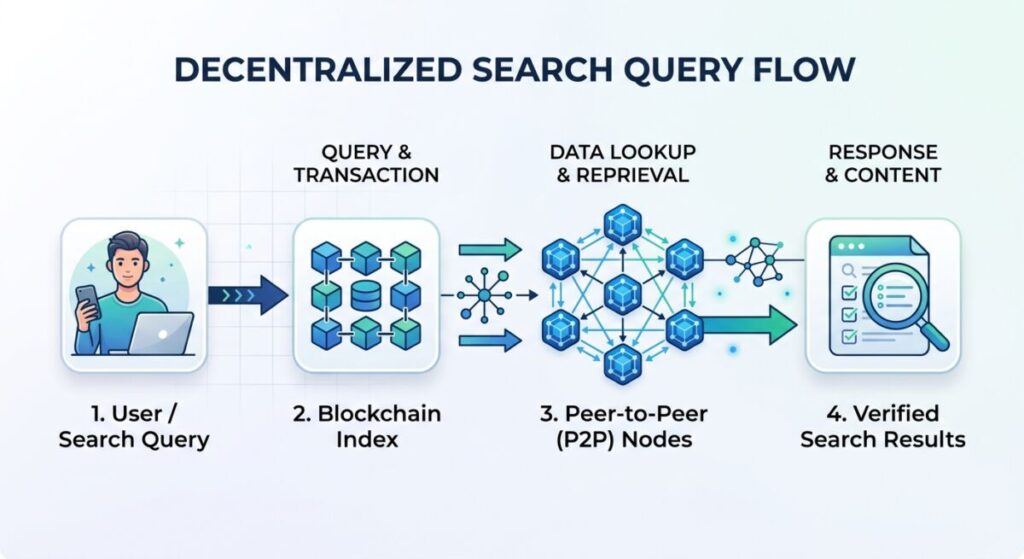
Traditional search engines use centralized servers. They own the index. They own the data. And they own you. Web3 search engines use peer-to-peer networks or blockchain technology to index the web. There is no single point of failure. There is no CEO who can decide to shadowban your favorite site on a whim.
But why should you care? Because decentralized search is built on transparency. You can see how the algorithm works. Plus, most of these platforms use a "Proof of Search" model. This means you earn tokens for every query you make. It turns your daily browsing into a micro-income stream. If you are looking for more options, check out our Top Search Engines List: 12 Best Platforms for Traffic (2026) to see how the market is shifting.
Step 1: Set Up Your Web3 Identity
You can't really use a decentralized search engine to its full potential without a wallet. Think of your crypto wallet as your passport for the 2026 internet. Whether you use MetaMask, Phantom, or a hardware-linked setup, this is how you'll collect rewards.
Most engines will ask you to "Connect Wallet" at the top right. Do it. This doesn't give them your private keys. It just gives them a place to send your tokens. We've found that setting up a dedicated "search wallet" is the best way to keep your primary assets separate from your daily browsing rewards. It is a simple security step that saves a lot of headaches later.
Step 2: Choose Your Engine
Not all decentralized engines are created equal. Some focus on speed. Others focus on deep-web indexing. Presearch remains a leader in March 2026, but newer players like Sepana are making noise by indexing decentralized social media protocols like Lens and Farcaster.
If you want total privacy, you might look at specialized tools. There are many best private search engines for total anonymity that now offer Web3 integrations. Pick one that matches your goals. Are you here for the rewards? Or are you here to avoid the trackers? Your choice determines which engine you should set as your browser default.
Step 3: Configure Your Browser
You don't have to type in a URL every time you want to search. That's annoying. Instead, add your chosen decentralized engine to your browser's search settings. If you're using a Web3-native browser like Brave or Decentr, this is even easier.
Go to Settings > Search Engine > Manage Search Engines. Add the URL of your decentralized provider. Now, every time you type in your address bar, you are searching the decentralized web. This small tweak ensures you never accidentally default back to the old trackers. It's about building a friction-free workflow.
The Secret to Better Results: Staking
Here is something most people miss. In Web3 search, you can often "stake" tokens on specific keywords. This helps the engine know which results are high quality. As a user, you can sometimes participate in this curation process.
By staking your earned tokens, you help improve the index. And in return? You often get a higher share of the ad revenue generated by that keyword. It is a circular economy that rewards everyone involved. In 2026, the search engine works for you, not the other way around.
SEO in the Decentralized Era
If you are a creator, you need to know how to show up in these results. It isn't just about backlinks anymore. It's about on-chain presence. You need to ensure your site is indexed on InterPlanetary File System (IPFS).
And you should definitely submit your website to alternative search engines for free to make sure these new crawlers can find you. The technical barriers are falling. But the first-mover advantage is real. Those who optimize for decentralized search now will dominate the traffic of the late 2020s.
Common Pitfalls to Avoid
Don't expect a 1:1 replica of Google. Decentralized engines are still growing. Sometimes the results for local news might be slightly slower. But the trade-off is worth it for the security you gain.
Also, watch out for "fake" decentralized engines. Some platforms claim to be Web3 but still store your IP address on a central server. Always check the documentation. If they don't let you use a wallet for rewards, they probably aren't fully decentralized. Stick to verified protocols that have been audited by the community.
Frequently Asked Questions
Do I need crypto to use a decentralized search engine? No, you can search for free just like on Google. You only need a wallet if you want to collect and withdraw the rewards you earn from searching.
Are decentralized search results as accurate as Google? They are getting very close in 2026, especially for technical and Web3-related topics. For general queries, they often aggregate results from multiple sources to ensure accuracy.
Can I use these engines on my phone? Yes, most have dedicated apps or can be added to mobile browsers like Safari or Chrome. Most Web3 users prefer using the Brave mobile app for a seamless experience.
How do these engines make money? They use decentralized ad platforms where advertisers pay in tokens. A large portion of that payment goes directly to the users and node operators instead of a tech giant.
Is my search history public on the blockchain? No, your searches are usually encrypted or handled off-chain. Only the rewards transaction is recorded, keeping your specific queries private.
Will decentralized search replace Google? It is unlikely to replace it entirely by 2026, but it is capturing a massive share of the privacy-conscious market. It serves as a necessary alternative for the decentralized web.
What is the best engine for 2026? Presearch is currently the most user-friendly option for beginners. However, Sepana is better for searching actual blockchain data and smart contracts.
Is it legal to use decentralized search? Absolutely. Using these engines is a legal way to protect your privacy and participate in the digital economy.
Ready to Take Control?
The web is evolving. You can either stay behind with the trackers or move forward with the builders. Decentralized search is the easiest entry point into the Web3 world. It requires zero investment and offers immediate privacy benefits. Start by switching your default engine today.
If you're looking to stay ahead of the curve in the digital marketing space, Infineural Technologies is here to help. We build strategies that thrive in the decentralized world. Contact us today to see how we can future-proof your online presence.