Do you really know who your customers are?
Most marketers think they do. They create a fictional character named “Marketing Mary.” They give her a generic job title. They assume she likes coffee. Then, they file the document away and never look at it again.

This is a mistake. A massive one.
If you want to dominate your niche, you cannot rely on guesswork. You need data. You need specific, actionable insights. In short, you must create effective buyer personas that dictate every single marketing decision you make.
Why does this matter? Because targeting everyone means targeting no one. When you narrow your focus, your conversion rates go up. Your ad costs go down. And your revenue grows.
In this guide, we will show you exactly how to build personas that work. We will move beyond basic demographics. We will look at psychographics, behavioral data, and real-world pain points. At Infinerual Technologies, we have used this exact process to help clients double their qualified leads. Now, we are sharing it with you.
Why Most Buyer Personas Fail (And How to Fix Yours)
Let’s be honest. Most buyer personas are useless. They are created in a boardroom by people who never speak to customers. They focus on irrelevant details like “hobbies” instead of buying triggers.
However, a truly effective persona is different. It is a composite sketch of your ideal customer based on market research and real data. It tells you exactly what keeps your prospect awake at night.
Here is the reality. If your persona doesn’t help your sales team close deals, it is broken. If it doesn’t help your content team write better headlines, it is a waste of time.
So, how do we fix this? We stop guessing. We start analyzing. We look at the data you already have.
The Difference Between Target Audience and Buyer Personas
Many people confuse these two terms. But they are not the same.
Your target audience is a broad bucket. For example, “Marketing Managers in the UK.” That is a starting point. But it is not enough.
A buyer persona is specific. It zooms in. It looks like this: “Steve, a Senior Marketing Manager at a SaaS company who is frustrated by high churn rates and needs a better CRM integration.”
Do you see the difference? One is a category. The other is a person. When you write for Steve, your copy becomes sharp. It becomes persuasive. It connects.
Step 1: Gather Real Data (Stop Guessing)
You cannot build a house without a foundation. You cannot build a persona without data. Therefore, your first step is research.
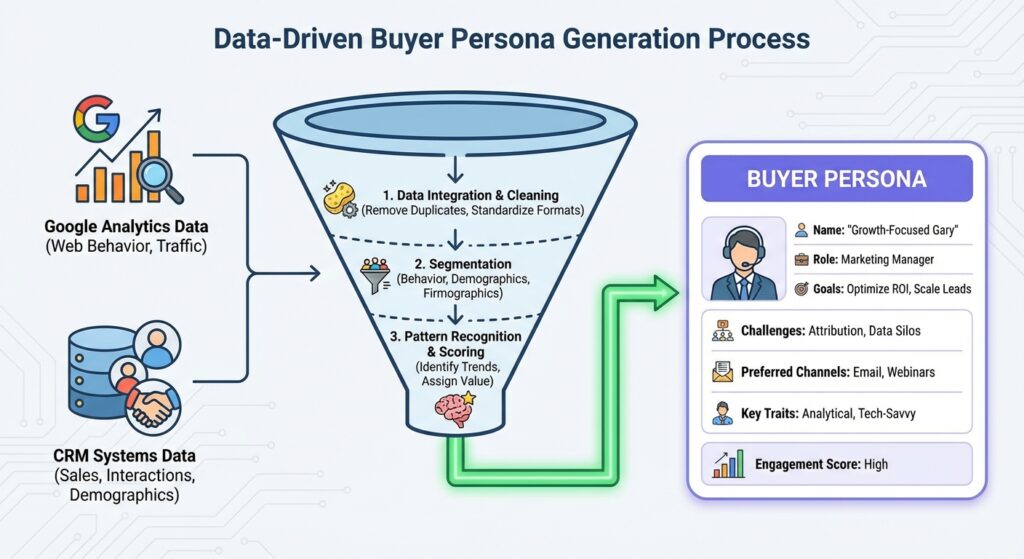
Do not just brainstorm with your team. You must look at the hard numbers. If you have set up your analytics correctly, you are sitting on a goldmine of information.
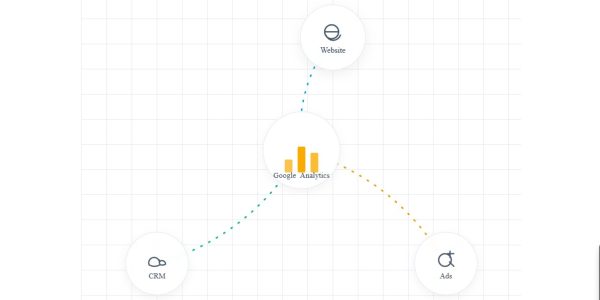
For instance, check your Google Analytics 4 integration. Look at where your visitors come from. Look at which pages they visit. How long do they stay? This behavior tells a story.
Analyze Your Current Customer Base
Your best future customers look like your current best customers. So, analyze them.
- Who spends the most? Look for patterns in industry or company size.
- Who stays the longest? Retention is a key indicator of product-market fit.
- Who is the easiest to support? High-maintenance clients often eat up your profit margins.
In our experience at Infinerual Technologies, we often find that the customers you think you want are different from the ones who actually generate profit. You might be chasing enterprise giants, but your sweet spot is actually mid-market tech firms.
Talk to Your Sales Team
Your sales team is on the front lines. They talk to prospects every day. Consequently, they know the objections better than anyone.
Ask them these questions:
- What is the number one reason people don’t buy?
- What competitor do leads mention most often?
- What problem are leads trying to solve right now?
Aligning these insights is vital. If you want to dive deeper into this, read our guide on how to align your sales and marketing teams.
Step 2: Identify Pain Points and Motivations
People do not buy products. They buy solutions to problems. Therefore, your persona must focus heavily on pain points.
What is frustrating your ideal customer? Are they losing time? Are they losing money? Are they afraid of looking bad to their boss?
For example, if you sell cybersecurity software, your persona’s pain point isn’t “I need a firewall.” It is “I am terrified of a data breach that will get me fired.” That is an emotional trigger. You must find it.
The “Jobs to Be Done” Framework
Think about the job your customer is hiring your product to do. Sometimes, the job is functional. “I need to send emails.”
But often, the job is social or emotional. “I need to look like an innovator to my peers.”
When you understand the “job,” you can craft messaging that resonates. You can position your product as the only logical choice. This is especially true for complex technical sales. For instance, explaining what a REST API is requires knowing if you are talking to a developer or a CTO. The developer cares about documentation. The CTO cares about scalability.
Step 3: Segment by Demographics and Firmographics
Now that you have the psychological data, you can add the hard facts. This helps you target your ads effectively.
If you are in B2B, focus on firmographics:
- Company Size: Revenue and employee count.
- Industry: Tech, Healthcare, Finance, etc.
- Job Role: Decision maker vs. influencer.
- Location: Global, national, or local.
If you are in B2C, look at demographics:
- Age and Gender: Basic but necessary.
- Income Level: Can they afford you?
- Location: Urban vs. rural.
However, be careful. Do not let these stats define the persona entirely. A 30-year-old in London and a 50-year-old in New York might have the exact same problem. If so, they might belong in the same persona bucket based on intent rather than age.
Step 4: Draft Your Persona Profile
It is time to put it all together. You should create a one-page document for each persona. Make it easy to read. Use bullet points.
Here is a template we use at Infinerual Technologies:
- Name: CEO Sarah.
- Role: Founder of a Series A startup.
- Goals: Rapid growth, securing the next round of funding.
- Pain Points: Marketing is too slow, ROI is unclear, tech stack is messy.
- Objections: “Is this too expensive?” “Will it integrate with my current tools?”
- Preferred Content: Case studies, ROI calculators, short videos.
Once you have this, share it with everyone. Your copywriters need it. Your designers need it. Your product developers need it. In fact, it should guide your social media growth strategy completely.
Step 5: The Secret Weapon – Negative Personas
Here is a pro tip that most marketers ignore. You also need to define who you do not want.
These are called negative personas. They are the people who drain your resources. They complain. They don’t pay. They are a bad fit.
For example, if you sell enterprise software, a “Student” or “Hobbyist” is a negative persona. You do not want your sales team calling them. You do not want to spend ad money on them.
By identifying these groups, you can exclude them from your campaigns. This saves you money. It increases your efficiency. It ensures you focus only on high-value targets.
Validating Your Personas with A/B Testing
You have built your personas. Great. But are they accurate?
You must validate them. The best way to do this is through testing. Run different ad campaigns targeting different pain points. See which one performs better.
For instance, run one ad focusing on “saving time” and another on “saving money.” If the “saving time” ad wins, update your persona. It means efficiency is a bigger driver than cost.
We recommend using robust tracking for this. If you haven’t set it up yet, check our guide to setup conversion tracking flawlessly. Without data, you are flying blind.
Using Personas for Content Strategy
Your personas should dictate your content calendar. If “CEO Sarah” is your target, stop writing basic “how-to” articles. She doesn’t read them. She wants high-level strategy.
On the other hand, if you are targeting “Developer Dave,” he wants technical depth. He wants to know about API security best practices or how to upgrade MariaDB. He hates fluff.
Match the content format to the persona. Does your persona commute? Maybe they want a podcast. Are they visual? Use infographics. Are they analytical? Give them data reports.
SEO and Keyword Research
Your personas also determine your keywords. Different people search for different things.
A beginner might search for “what is SEO.” An expert searches for “structured data SEO rich snippets.” Knowing who you are targeting helps you pick the right battles in search results.
Common Mistakes to Avoid
Even smart marketers mess this up. Here are the traps you must avoid.
1. Creating Too Many Personas
Do not create 20 personas. You cannot target them all. Start with 3 or 4. Focus on your core revenue drivers. You can always add more later.
2. Relying on Stereotypes
Do not assume all millennials love avocado toast. Do not assume all older executives hate technology. These are lazy assumptions. Use data. Look at behavior. The truth is often surprising.
3. Never Updating Them
The market changes. Technology changes. Your personas must change too. Review them every 6 to 12 months. If you launched a new product, you might have a new buyer. Stay agile.
Integrating Personas into Paid Media
This is where the money is made. When you know your persona, your PPC campaigns become lethal.
You can use advanced Google Ads account structures to segment campaigns by persona. You can write ad copy that speaks directly to their fears.
For example, use ad extensions to highlight features that specific personas care about. If one persona values support, use a callout extension for “24/7 Support.” If another values speed, use “Instant Setup.”
Furthermore, look into Performance Max campaigns. Google’s AI can help find users who match your persona’s signals. But you have to feed it the right audience data first.
Conclusion: Take Action Now
Creating effective buyer personas is not an academic exercise. It is a revenue strategy. It is the difference between shouting into the void and whispering directly into your customer’s ear.
You have the tools. You have the framework. Now, you need to do the work. Dig into your analytics. Talk to your sales team. Build the profiles.
Don’t let your marketing budget go to waste on the wrong people. Focus your efforts. Refine your message. Watch your sales grow.
If you are ready to take your digital strategy to the next level, we can help. At Infinerual Technologies, we build data-driven campaigns that deliver real ROI.
Frequently Asked Questions
How many buyer personas should I create?
Start small. We recommend creating 3 to 5 core personas that represent your most valuable customer segments to avoid diluting your marketing focus.
What is a negative buyer persona?
A negative persona represents the type of customer you do not want. Identifying them helps you save money by excluding bad fits from your advertising campaigns.
How often should I update my personas?
You should review your personas at least once a year. However, if you launch a new product or enter a new market, you should update them immediately.
Can I create personas without customer interviews?
You can start with analytics and sales data, but interviews provide the emotional insights that data misses. We strongly recommend doing both for the best results.
What is the difference between a buyer persona and a user persona?
A buyer persona is the person who pays for the product, while a user persona is the person who uses it. In B2B, these are often different people with different goals.
How do I find demographic data for my personas?
Use tools like Google Analytics 4, Facebook Audience Insights, and your CRM data. These platforms provide age, location, and interest data on your current audience.
Should I give my personas names?
Yes, giving them names like “Manager Mike” makes them feel real to your team. It helps everyone in the company visualize who they are working for.
Why are my buyer personas not working?
They likely lack specific pain points or are based on guesses rather than data. Ensure your personas address real problems and are validated by actual customer behavior.